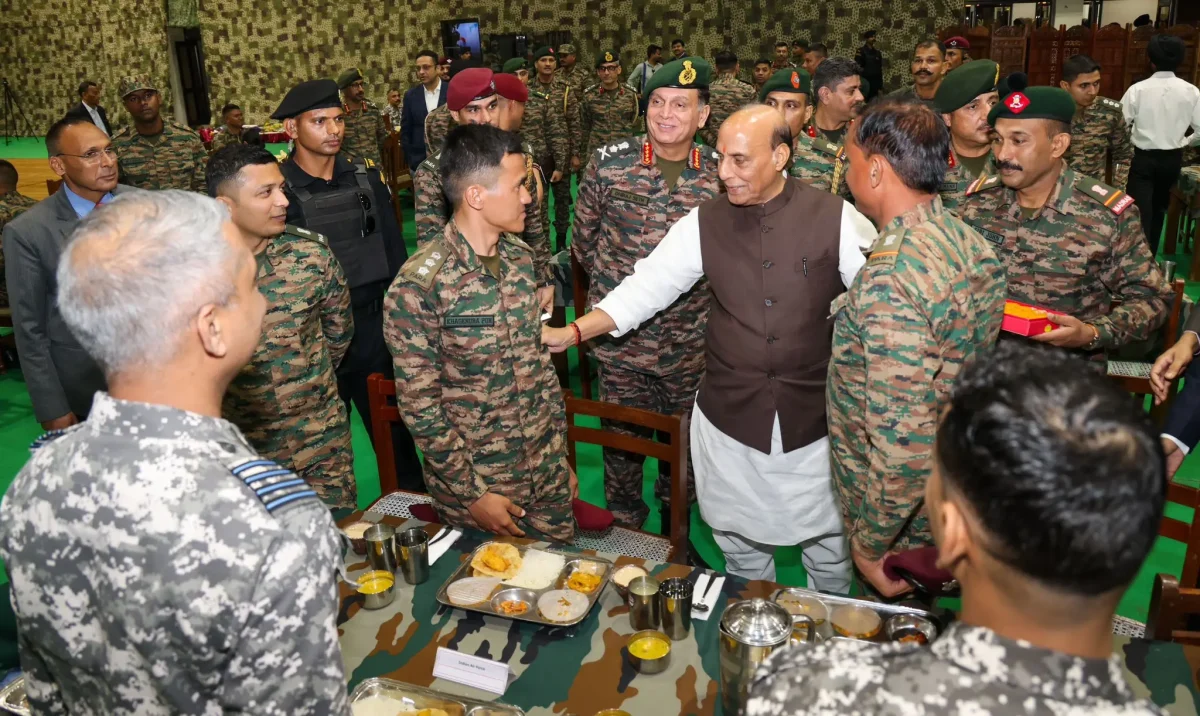
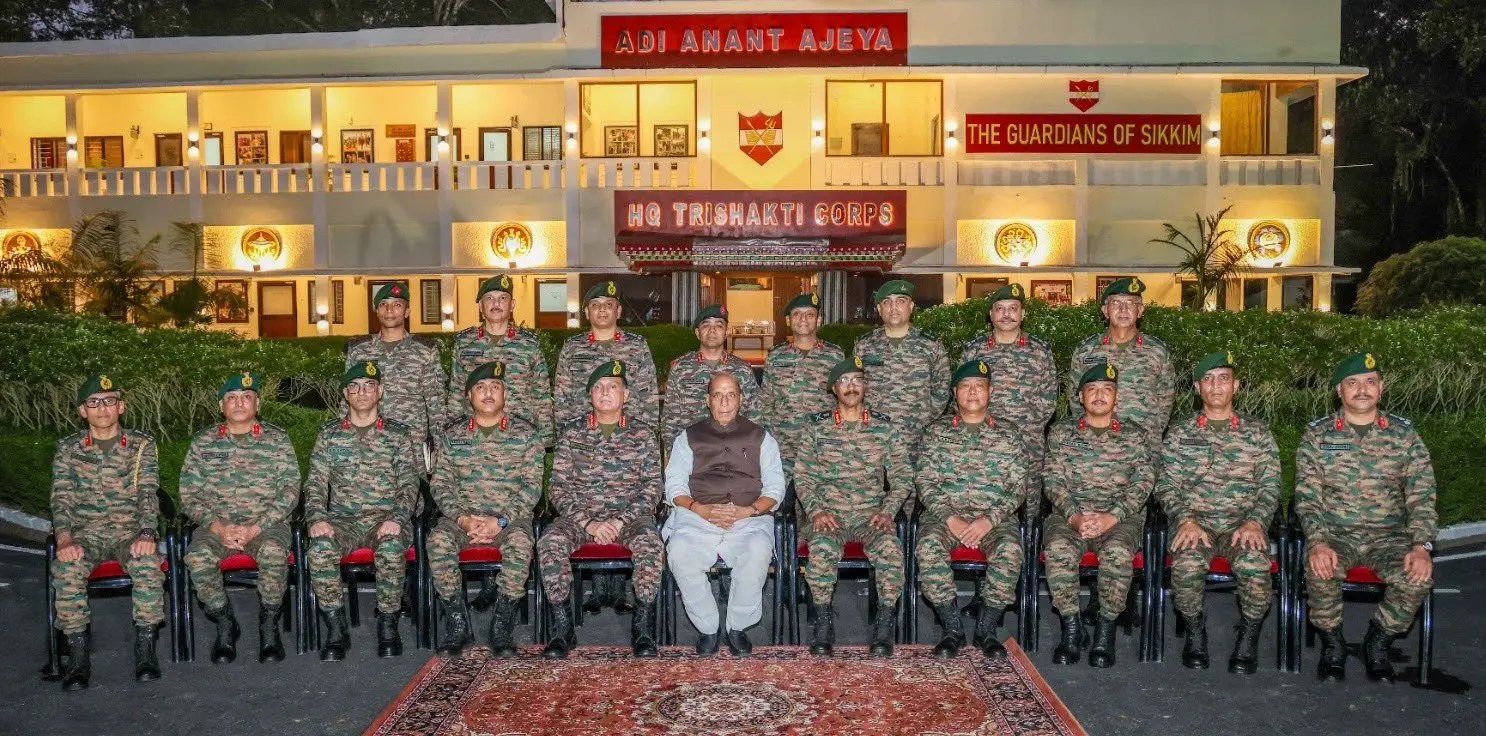
Border infrastructure, troop readiness and the ability to sustain forces in forward areas were central to Raksha Mantri Shri Rajnath Singh’s visit to Sukna, West Bengal, on November 7, 2026. He reviewed the operational preparedness of Trishakti Corps and received a briefing on development along the Line of Actual Control (LAC), including the deployment of advanced military equipment and emerging technologies.
Singh said he was satisfied with the Corps’ preparedness and recognised its work on infrastructure and community welfare in border areas. He noted the value of such initiatives in supporting development and strengthening ties with local communities in strategically important regions.
Chief of the Army Staff General Dhiraj Seth, General Officer Commanding-in-Chief, Eastern Command, Lt Gen VMB Krishnan, and General Officer Commanding, 33 Corps, Lt Gen Man Raj Singh Mann, attended the visit with other senior Army officers.
Logistics and readiness at Sukna
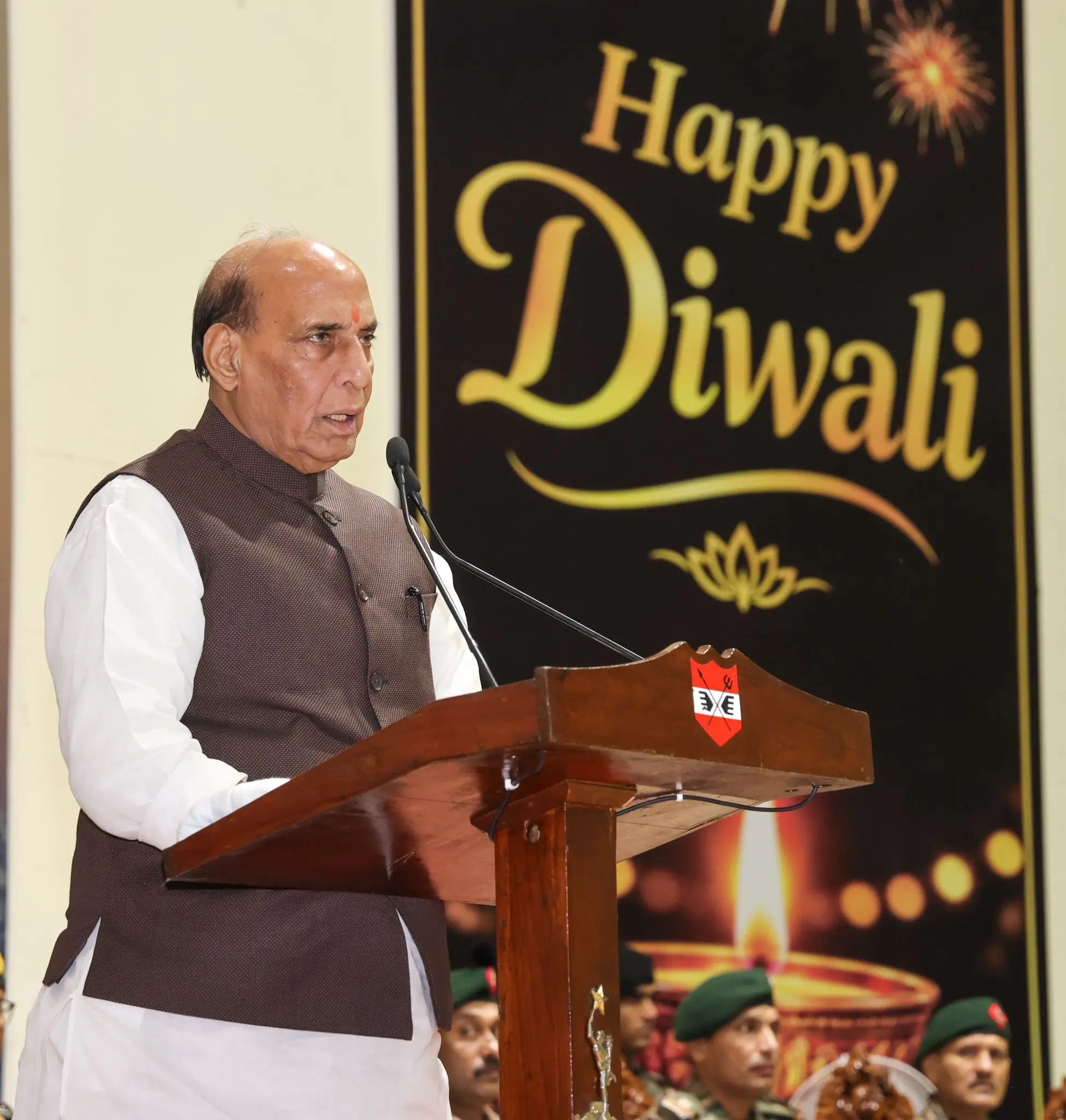
On the eve of Diwali, Singh addressed soldiers at a Barakhana. He praised their courage, professionalism and dedication to protecting the country’s frontiers in challenging operational conditions, and stressed the importance of sustaining readiness and morale among personnel serving in forward areas.
He described Sukna and the surrounding region as a crucial route for moving supplies, weaponry, food, medical provisions and personnel to forward locations. Singh said its role in Eastern India’s security architecture, together with the area’s geographical sensitivity, made round-the-clock operational readiness essential.
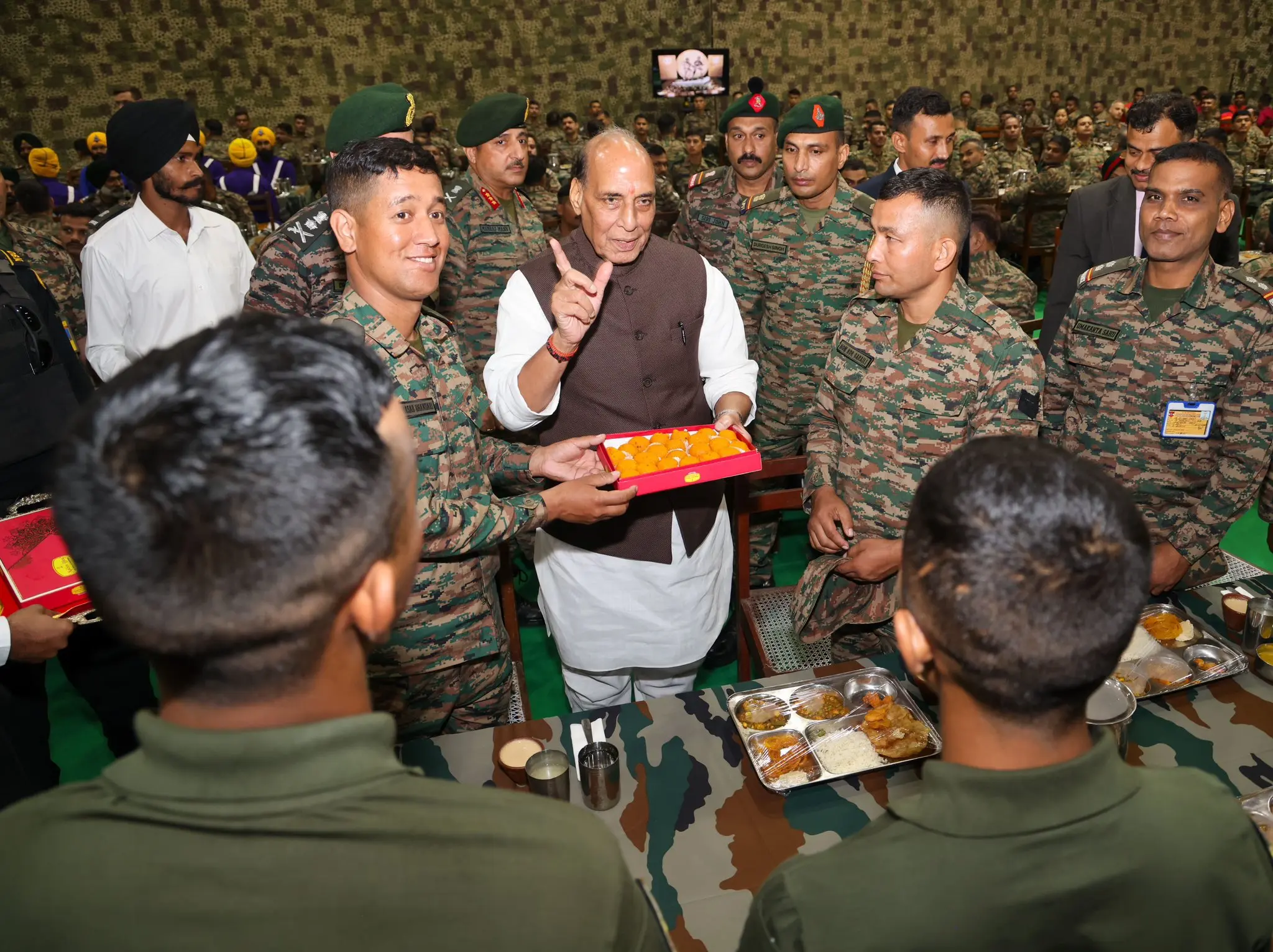
Singh said the Government, under the leadership of Prime Minister Shri Narendra Modi, was working to strengthen supply chains and ensure essential supplies reached soldiers at forward locations. He underscored the importance of reliable logistics infrastructure in sustaining troops and supporting operations in strategically sensitive areas.
He also cited increased budgetary allocations for roads, tunnels, border infrastructure and modern military equipment. Singh said India was progressing towards ‘Aatmanirbhar Bharat’, with domestic start-ups and industries playing a growing part in developing advanced defence technologies.
“Our start-ups and industries are now manufacturing drones, anti-drone systems, and other state-of-the-art equipment for the soldiers. It is a matter of pride that our Defence Forces are actively embracing emerging technologies, learning drone operations, enhancing their understanding of cyber security, and undergoing training in new methodologies. This transformation will prepare us for the future,” he said.
Preparing for emerging threats
Singh said the changing character of warfare required the Armed Forces to prepare across multiple domains. He observed that conflict now extended beyond conventional gunfire and artillery along borders to include hybrid warfare, proxy wars, cyber-attacks, drone incursions and information warfare.
He warned that adversaries were using varied methods to challenge national security, including spreading rumours on social media, monitoring sensitive locations with drones and attempting to compromise military systems through cyber-attacks. He urged personnel to remain vigilant, build their understanding of emerging technologies and be prepared to respond across domains.
Personnel welfare and the North-East
Singh reaffirmed the Government’s commitment to measures that boost troop morale. He encouraged officers to spend quality time with soldiers, saying regular interaction could foster a sense of belonging and reinforce their confidence that the Government and the nation stood firmly with them.
He also drew attention to mental health and emotional well-being among Defence Forces personnel. Recognising the stress of separation from families and demanding military duties, he encouraged soldiers to speak openly with comrades and seek support rather than suppress their feelings.
Describing the North-East as India’s ‘first edge’ rather than its ‘last edge’, Singh said the region marked the beginning of the country’s geographical and cultural landscape and received the first rays of the morning sun. He highlighted its biodiversity, natural beauty, cultural diversity and distinctive traditions, calling it integral to India’s identity.
The visit addressed operational preparedness, border infrastructure, modernisation and logistics, as well as community engagement and the welfare of personnel serving on sensitive frontiers.