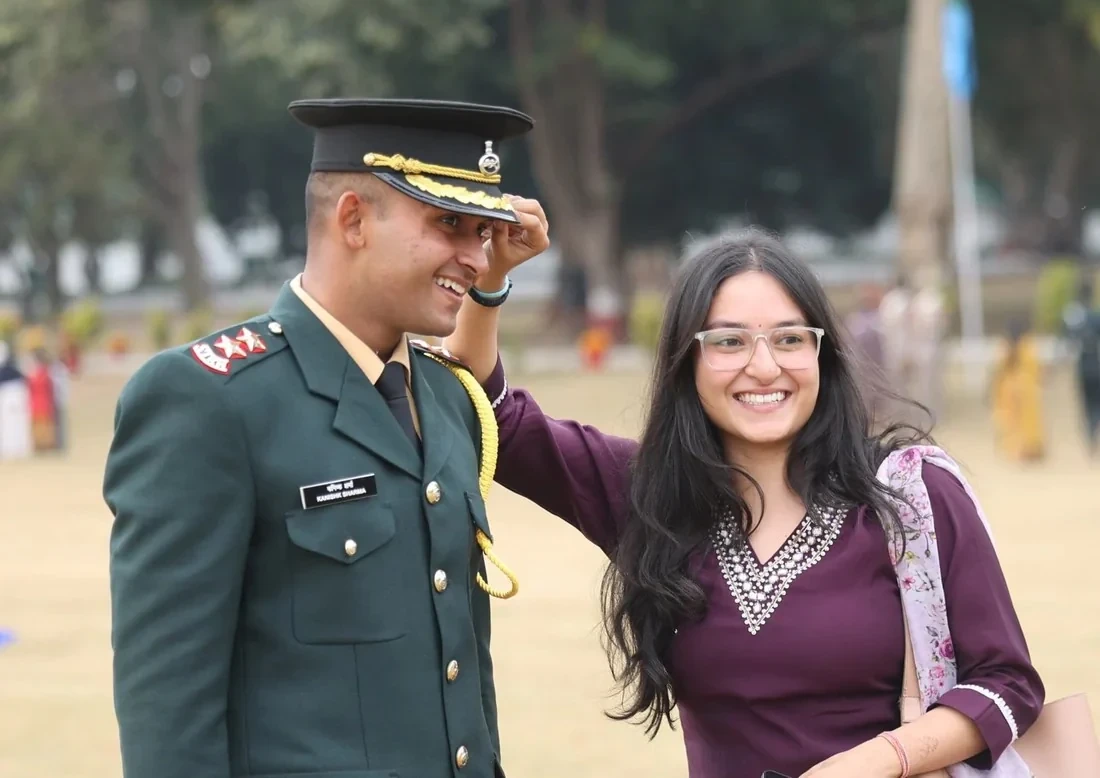
Joining the Indian Army is one of the most prestigious career opportunities for young Indians who dream of serving the nation. Whether you are studying in Class 12, pursuing graduation, completing an engineering degree or already working as a professional, there are multiple ways to join the Indian Army in 2026.
Many defence aspirants believe that the National Defence Academy (NDA) examination is the only way to become an Army officer. However, the Indian Army offers several entry schemes, including NDA, CDS, TES, TGC, SSC Technical, NCC Special Entry and JAG. Candidates can also join through Agniveer recruitment, Territorial Army selection and specialised service-entry schemes.
The eligibility criteria, age limits, educational qualifications and selection procedures vary for each entry.
In this article, we explain the top 10 ways to join the Indian Army in 2026, including opportunities after Class 10, Class 12, graduation, engineering and law.
Top 10 Indian Army Entry Schemes in 2026
Before choosing an entry scheme, candidates should understand which options match their educational qualifications and age.
| Entry Scheme | Qualification | Typical Age Limit | Selection Process |
|---|---|---|---|
| 1. NDA | Class 12 | 16.5–19.5 years | UPSC Exam + SSB |
| 2. TES | Class 12 with PCM + JEE Main | 16.5–19.5 years | Shortlisting + SSB |
| 3. CDS | Graduation | 19–25 years, depending on academy | UPSC Exam + SSB |
| 4. TGC | BE/BTech | 20–27 years | Shortlisting + SSB |
| 5. SSC Technical | BE/BTech | 20–27 years | Shortlisting + SSB |
| 6. NCC Special Entry | Graduation + NCC C Certificate | 19–25 years | Shortlisting + SSB |
| 7. JAG Entry | LLB | 21–27 years | Shortlisting + SSB |
| 8. Agniveer | Class 8, 10 or 12, depending on category | As notified | CEE + Recruitment Tests |
| 9. Territorial Army | Graduation + Gainful Employment | Generally 18–42 years | Selection as notified |
| 10. ACC / SCO / Special Entries | Serving personnel or specified qualifications | Entry-specific | Specialised Selection |
Important: These are broad eligibility ranges. Candidates must check the exact date-of-birth requirements, vacancies, gender eligibility, medical standards and selection conditions mentioned in the relevant 2026 notification.
1. National Defence Academy (NDA) Entry After Class 12
The National Defence Academy is one of the most popular routes for students who want to become commissioned officers in the Indian Army.
The NDA examination is conducted by the Union Public Service Commission (UPSC), generally twice a year.
Eligible male and female candidates can apply for the Indian Army through NDA after completing or while appearing in Class 12.
NDA Eligibility Criteria 2026
- Educational Qualification: Class 12 passed or appearing.
- Age Limit: Approximately 16.5 to 19.5 years.
- Gender: Male and Female.
- Marital Status: Unmarried.
- Examination: UPSC NDA & NA Examination.
- Type of Commission: Permanent Commission.
- Training: National Defence Academy, followed by Indian Military Academy for Army cadets.
For the Army Wing of NDA, students from Science, Commerce and Arts backgrounds can apply. However, the NDA written examination includes Mathematics, regardless of the candidate’s Class 12 stream.
NDA Selection Process
The NDA selection process consists of a written examination, SSB interview, medical examination and final merit list.
The written examination has two papers:
| NDA Subject | Maximum Marks |
|---|---|
| Mathematics | 300 |
| General Ability Test | 600 |
| Total Written Exam | 900 |
| SSB Interview | 900 |
Candidates who qualify the written examination are called for SSB assessment.
Successful candidates who satisfy the medical and merit requirements undergo training at the National Defence Academy in Khadakwasla, Pune. Army cadets subsequently undergo further training at the Indian Military Academy, Dehradun.
How to Prepare for NDA 2026
NDA preparation requires a strong foundation in Mathematics, English, Physics, Chemistry, History, Geography and Current Affairs.
Students should practise previous-year NDA questions, attempt mock tests and regularly revise important concepts.
Aspirants looking for structured preparation can explore the NDA and Other Defence Exam Online Courses offered by SSBCrackExams.
2. Technical Entry Scheme (TES) After Class 12
The Indian Army Technical Entry Scheme provides an opportunity for eligible Science students to become commissioned officers through a technical entry route.
TES is particularly suitable for students who have completed Class 12 with Physics, Chemistry and Mathematics and have appeared in JEE Main.
Unlike NDA, TES does not normally require candidates to appear in a separate UPSC written examination.
TES Eligibility Criteria 2026
- Educational Qualification: Class 12 with Physics, Chemistry and Mathematics.
- Minimum Marks: 60% aggregate in PCM, subject to the notification.
- JEE Main: Appearance in the prescribed JEE Main examination is mandatory.
- Age Limit: Approximately 16.5–19.5 years.
- Gender: As specified in the relevant TES notification.
- Type of Commission: Permanent Commission.
TES Selection Process
Candidates apply through the Indian Army recruitment portal.
Applications are shortlisted according to the criteria specified in the notification, including JEE Main performance.
Shortlisted candidates attend the SSB interview, followed by the prescribed medical examination.
Final selection depends on merit, medical fitness, available vacancies and fulfilment of the eligibility requirements.
Successful candidates undergo the applicable military and technical training programme before commissioning.
Who should choose TES? Students with a strong academic background in Physics, Chemistry and Mathematics who want to pursue a technical career in the Indian Army.
3. Combined Defence Services (CDS) Examination After Graduation
The Combined Defence Services Examination is one of the most important entry routes for graduates who want to become Indian Army officers.
The examination is conducted by UPSC, generally twice a year.
Through CDS, eligible candidates can join the Indian Military Academy or Officers Training Academy.
CDS Eligibility Criteria 2026
| Criteria | IMA Entry | OTA Entry |
|---|---|---|
| Qualification | Graduation | Graduation |
| Approximate Age | 19–24 years | 19–25 years |
| Eligible Candidates | Men | Men and Women |
| Commission | Permanent Commission | Short Service Commission |
| Training | IMA Dehradun | OTA, as notified |
Candidates pursuing the final year of graduation may also apply, subject to the conditions in the notification.
CDS Written Examination Pattern
For IMA, the written examination includes English, General Knowledge and Elementary Mathematics.
For OTA, candidates appear in English and General Knowledge only.
| Subject | IMA | OTA |
|---|---|---|
| English | 100 | 100 |
| General Knowledge | 100 | 100 |
| Elementary Mathematics | 100 | Not Applicable |
| Total | 300 | 200 |
Candidates qualifying the written examination are called for the SSB interview.
How to Prepare for CDS
CDS aspirants should prioritise English vocabulary, grammar, reading comprehension, Indian History, Geography, Polity, General Science and Current Affairs.
Candidates targeting IMA must also prepare Elementary Mathematics.
Solving previous-year question papers and practising timed mock tests can improve examination accuracy and time management.
Who should choose CDS? Graduates who want to pursue a commissioned-officer career through the UPSC examination route.
4. Technical Graduate Course (TGC) for Engineering Graduates
The Technical Graduate Course is an important entry scheme for engineering graduates who want to join the Indian Army as commissioned officers.
TGC is generally offered to eligible unmarried male engineering graduates in the notified engineering streams.
It is a Permanent Commission entry.
TGC Eligibility Criteria
- Qualification: BE/BTech in an approved engineering discipline.
- Age Limit: Generally 20–27 years.
- Gender: As specified in the notification, generally unmarried male candidates.
- Written Examination: No separate UPSC written examination.
- Selection: Shortlisting followed by SSB interview.
- Commission: Permanent Commission.
TGC Selection Process
Candidates submit their applications through the Indian Army’s recruitment website.
The Army shortlists applicants according to the academic criteria and engineering-stream vacancies mentioned in the notification.
Shortlisted candidates appear for the SSB interview, followed by medical examinations and merit-based selection.
Selected candidates undergo training at the Indian Military Academy, Dehradun.
Who should choose TGC? Engineering graduates who want to pursue a Permanent Commission and build a long-term career in the Indian Army.
5. Short Service Commission Technical Entry (SSC Tech)
Short Service Commission Technical Entry offers opportunities for engineering graduates to join the Indian Army as officers.
This entry is available for eligible male and female candidates under separately notified courses.
SSC Technical is especially suitable for engineering graduates who want to serve in technical and other assigned military roles.
SSC Tech Eligibility Criteria
- Educational Qualification: BE/BTech in notified engineering streams.
- Age Limit: Generally 20–27 years.
- Gender: Male and Female, subject to separate notifications.
- Selection: Academic shortlisting followed by SSB interview.
- Commission: Short Service Commission.
- Training Academy: As specified in the particular course notification.
SSC Tech Selection Process
Applicants are shortlisted according to the eligibility and academic requirements of the relevant recruitment course.
Selected applicants attend the SSB interview and medical examination.
Candidates who qualify and fall within the applicable merit and vacancy requirements receive joining instructions for pre-commission training.
Short Service Commission is normally granted for an initial period of 10 years, with an extension of up to four years possible under applicable conditions. Permanent Commission consideration may also be available under the prevailing rules, but it is not automatic.
Who should choose SSC Tech? Engineering graduates seeking an officer career through a technical entry without appearing for the CDS written examination.
6. NCC Special Entry Scheme
The National Cadet Corps Special Entry Scheme offers a route into the Indian Army for eligible graduates holding the prescribed NCC qualifications.
One major advantage of NCC Special Entry is that eligible candidates can be shortlisted for SSB without appearing for a separate UPSC written examination.
NCC Special Entry Eligibility
- Educational Qualification: Graduation with the prescribed minimum aggregate.
- NCC Requirement: NCC Senior Division or Senior Wing experience as prescribed.
- Certificate: NCC ‘C’ Certificate with the required grading.
- Age Limit: Generally 19–25 years.
- Gender: Male and Female, as notified.
- Commission: Short Service Commission.
The selection process involves application, shortlisting, SSB interview, medical examination and final merit.
NCC participation helps candidates develop discipline, teamwork, leadership, confidence and awareness of military life.
However, an NCC ‘C’ Certificate does not guarantee selection for the Indian Army.
Who should choose NCC Special Entry? Graduates with a valid NCC ‘C’ Certificate who meet the academic and other eligibility requirements.
7. Judge Advocate General (JAG) Entry for Law Graduates
Law graduates interested in joining the Indian Army can apply through the Judge Advocate General Entry Scheme.
The JAG Branch handles important legal responsibilities relating to military law, disciplinary proceedings, legal advice and other legal matters within the Armed Forces.
JAG Eligibility Criteria
- Educational Qualification: LLB degree from a recognised institution.
- Minimum Marks: Generally 55%, subject to the notification.
- Age Limit: Approximately 21–27 years.
- Gender: Male and Female, as notified.
- CLAT PG: A qualifying score may be required under the applicable notification.
- Additional Requirement: Eligibility for enrolment as an advocate under the prescribed rules.
- Selection: Shortlisting, SSB interview and medical examination.
Candidates who meet the requirements are shortlisted for SSB assessment.
Final selection depends on merit, medical fitness and the vacancies announced for the respective course.
Who should choose JAG? Law graduates who want to combine their legal qualifications with a career as a commissioned officer in the Indian Army.
8. Indian Army Agniveer Recruitment Under Agnipath Scheme
The Agnipath scheme provides a route for eligible young candidates to join the Indian Army as Agniveers.
Unlike NDA, CDS and other commissioned-officer entries, Agniveer recruitment is for enrolment below commissioned-officer rank.
The scheme provides military training and service experience for a four-year engagement period.
Indian Army Agniveer Categories
| Category | Educational Qualification |
|---|---|
| Agniveer General Duty | Class 10 with prescribed marks |
| Agniveer Technical | Class 12 Science or specified technical qualifications |
| Agniveer Clerk / Store Keeper Technical | Class 12 with prescribed marks and subject requirements |
| Agniveer Tradesman | Class 8 or 10, depending on the category |
The age limits and educational requirements must be checked against the notification for the applicable recruitment year.
Agniveer Selection Process
The recruitment process generally involves the following stages:
- Online registration and application.
- Common Entrance Examination (CEE).
- Shortlisting for the next recruitment stage.
- Physical Fitness Test and Physical Measurement Test, as applicable.
- Medical examination.
- Document verification and final selection.
Agniveer Salary and Service
Under the original Agnipath pay structure, the monthly package begins at ₹30,000 in the first year and increases progressively to ₹40,000 in the fourth year.
A portion of the package is contributed towards the Seva Nidhi fund, with a corresponding government contribution under the scheme.
After completing four years, up to 25% of an Agniveer batch may be selected for enrolment in the regular cadre, subject to organisational requirements and selection criteria.
The remaining Agniveers are released under the applicable terms and receive eligible exit benefits.
Who should choose Agniveer? Candidates seeking a military service opportunity through the Indian Army’s notified Agnipath recruitment system.
9. Territorial Army (TA) Officer Entry
The Territorial Army provides an opportunity for eligible gainfully employed civilians to serve in a military role while continuing their primary professional careers, subject to training and service commitments.
Territorial Army service is distinct from regular full-time Indian Army service.
Territorial Army Eligibility
- Nationality: Indian citizen.
- Age Limit: Generally 18–42 years.
- Educational Qualification: Graduation from a recognised university.
- Employment: Gainfully employed, as required by the civilian entry scheme.
- Medical Standards: Must satisfy the prescribed physical and medical requirements.
- Selection: As specified in the relevant Territorial Army recruitment notification.
The selection procedure may involve an entrance examination, interview or SSB assessment, medical examination and other specified stages depending on the category of entry.
Territorial Army personnel undergo military training and may be embodied for service according to organisational requirements.
Territorial Army service should not be treated as an ordinary weekend job. It involves genuine military obligations and periods of full-time training or service.
Who should choose Territorial Army? Eligible employed professionals who want to contribute to national defence while maintaining a civilian career.
10. Army Cadet College (ACC), Special Commissioned Officer (SCO) and Other Special Entries
Apart from civilian recruitment schemes, the Indian Army provides opportunities for eligible serving personnel to progress into officer roles.
These entries recognise the experience, discipline and military knowledge of personnel already serving in the Army.
Army Cadet College (ACC) Entry
The Army Cadet College entry scheme provides a pathway for eligible serving soldiers to become commissioned officers.
Candidates must meet prescribed service, age, educational and selection requirements.
The selection process includes the applicable written examination and SSB assessment, followed by medical and merit requirements.
Successful candidates undergo the training prescribed for the ACC entry route.
Special Commissioned Officer (SCO) Entry
The Special Commissioned Officer scheme provides commissioning opportunities to eligible serving personnel who meet the required age, service, educational and professional criteria.
The conditions and availability of this entry depend on the relevant Army policies and notifications.
Sports and Other Special Recruitment Categories
The Indian Army also announces opportunities for eligible sportspersons and certain specialised categories.
However, candidates must distinguish between recruitment as soldiers or other ranks and commissioning as officers.
Sports recruitment does not automatically result in a commissioned-officer appointment.
Who should choose these entries? Serving Army personnel seeking a commission through an approved internal scheme, or candidates eligible for separately notified specialised recruitment.
Which Indian Army Entry Is Best for You?
The right entry depends on your educational qualifications, age and career objectives.
| Your Current Qualification | Suitable Entries to Explore |
|---|---|
| Class 10 | Agniveer GD / Tradesman, subject to eligibility |
| Class 12 Arts / Commerce | NDA Army Wing |
| Class 12 Science (PCM) | NDA, TES |
| BA / BCom / BSc Graduate | CDS, NCC Special Entry |
| BE / BTech Graduate | CDS, TGC, SSC Technical |
| Law Graduate | CDS, JAG |
| NCC ‘C’ Certificate Holder | NCC Special Entry |
| Gainfully Employed Graduate | Territorial Army |
| Serving Army Soldier | ACC, SCO and eligible internal entries |
Candidates must remember that meeting an educational qualification alone does not guarantee eligibility. Age, marital status, nationality, physical standards, medical fitness and other entry-specific conditions must also be satisfied.
Indian Army Officer Selection: What Happens at the SSB Interview?
For candidates applying through NDA, CDS, TES, TGC, SSC Technical, NCC Special Entry or JAG, the SSB interview is a major stage of selection.
The Services Selection Board assesses whether a candidate possesses qualities required for military leadership.
The SSB process is generally divided into two stages.
Stage 1: Screening Test
Stage 1 normally includes the Officer Intelligence Rating Test and Picture Perception and Discussion Test.
The OIR Test evaluates verbal and non-verbal reasoning abilities.
PPDT involves observing a picture, writing a story, narrating the story and participating in a group discussion.
Candidates who qualify Stage 1 proceed to Stage 2.
Stage 2: Psychology, GTO and Interview
Stage 2 involves psychological assessments, Group Testing Officer tasks, a personal interview and the final conference.
The psychological assessment includes:
- Thematic Apperception Test (TAT).
- Word Association Test (WAT).
- Situation Reaction Test (SRT).
- Self Description Test (SDT).
GTO activities assess qualities such as cooperation, initiative, leadership, practical intelligence and teamwork.
The personal interview explores the candidate’s education, family background, responsibilities, interests, achievements, self-awareness and motivation for joining the Armed Forces.
Best Books for SSB Interview Preparation
Candidates preparing for SSB should understand the assessment format and develop genuine self-awareness, communication skills and leadership qualities.
SSBCrack Publications offers books covering different stages of SSB preparation, including Let’s Crack SSB Interview, Breaking the Code of SSB Psychological Tests and the SSB Interview Psychological Tests Workbook.
Aspirants can explore the Best SSB Interview Books for Indian Army Officer Selection to choose suitable preparation material for screening, psychology tests, GTO tasks and personal interviews.
How to Prepare to Join the Indian Army in 2026
Joining the Indian Army requires consistent preparation, irrespective of the entry scheme.
Candidates should focus on the following areas.
1. Understand Your Entry Scheme
The first step is to identify the entry that matches your qualification and age.
Class 12 students may focus on NDA or TES, while graduates can consider CDS and other eligible entries.
Engineering graduates should explore both Permanent Commission and Short Service Commission opportunities.
2. Prepare for Written Examinations
Candidates appearing for NDA or CDS must prepare according to the UPSC syllabus.
Preparation should involve conceptual learning, regular revision, previous-year question papers and mock tests.
For direct SSB entries, candidates should focus on their academic eligibility, SSB preparation and other selection requirements.
3. Develop Officer Like Qualities
The SSB assesses Officer Like Qualities (OLQs), including reasoning ability, effective intelligence, responsibility, initiative, cooperation, confidence, determination and stamina.
These qualities are developed through real-life activities, leadership responsibilities, teamwork, sports and effective communication.
4. Improve Your Physical Fitness
Candidates should maintain good physical health through regular exercise, running, sports and strength training.
Fitness is particularly important for military training after selection.
Medical standards differ by entry, and candidates should understand the requirements specified in the official notification.
5. Read Current Affairs Daily
Awareness of national and international developments is important for defence aspirants.
Candidates should follow defence developments, international relations, government policies, important appointments, technology and national security issues.
6. Practise Communication and Public Speaking
Candidates should become comfortable expressing their opinions clearly and logically.
Participating in group discussions, debates and presentations can help develop confidence and communication skills.
7. Understand the SSB Interview Process
SSB preparation should begin before receiving the interview call letter.
Candidates can benefit from understanding OIR, PPDT, psychological tests, GTO tasks and personal interviews in advance.
The goal should be authentic personality development rather than memorised or artificial responses.
Permanent Commission vs Short Service Commission in Indian Army
Candidates joining the Indian Army as officers should understand the difference between Permanent Commission and Short Service Commission.
| Feature | Permanent Commission | Short Service Commission |
|---|---|---|
| Career Type | Career commission | Limited-duration commission |
| Typical Entries | NDA, CDS IMA, TGC, TES | CDS OTA, SSC Tech, NCC, JAG |
| Service Tenure | As per applicable retirement rules | Generally initial 10 years |
| Extension | Not applicable in the same way | Up to 4 additional years, subject to rules |
| Further Service | Governed by career progression | Possible PC consideration under applicable policies |
Permanent Commission offers a long-term Army career, subject to service conditions and retirement rules.
Short Service Commission allows officers to serve for a specified period, with possible extension or Permanent Commission consideration where permitted.
Frequently Asked Questions About Joining the Indian Army in 2026
1. What are the best ways to join the Indian Army after Class 12?
NDA is one of the primary routes after Class 12. Eligible PCM students can also explore TES. Agniveer recruitment offers separate opportunities for eligible candidates who wish to join below commissioned-officer rank.
2. Can I join the Indian Army without NDA?
Yes. CDS, TGC, SSC Technical, NCC Special Entry, JAG and other schemes provide alternative officer-entry routes based on educational qualifications and age.
3. Can I become an Army officer without a written examination?
Yes. Some direct SSB entries, such as TGC, SSC Technical and NCC Special Entry, do not ordinarily involve a separate UPSC written examination. However, academic shortlisting and other eligibility conditions apply.
4. What is the minimum age to join the Indian Army as an officer?
NDA and TES generally have an age range of approximately 16.5 to 19.5 years. Graduate and professional entries have different age limits.
5. Which Indian Army entry is best for engineering graduates?
Engineering graduates can explore TGC, SSC Technical and CDS, depending on their age, gender eligibility, qualifications and preferred type of commission.
6. Can female candidates join the Indian Army?
Yes. Eligible women can apply through NDA, CDS OTA, SSC Technical, NCC Special Entry, JAG and other notified schemes.
7. Is the SSB interview compulsory for every Indian Army entry?
No. SSB is a major selection stage for many commissioned-officer entry schemes. Agniveer recruitment follows a separate process involving the Common Entrance Examination and recruitment assessments.
8. Can I join the Indian Army after graduation?
Yes. Graduates can apply through CDS and other eligible routes such as NCC Special Entry, JAG, engineering entries and Territorial Army selection.
9. What is the age limit for Territorial Army entry?
The standard civilian Territorial Army officer entry generally specifies an age range of 18–42 years, subject to the relevant notification.
10. Which entry provides a Permanent Commission in the Indian Army?
NDA, CDS IMA, TGC and TES are important routes that normally lead to Permanent Commission, subject to eligibility and successful completion of training.
11. Can I join the Indian Army after Class 10?
Eligible candidates can apply for certain Agniveer categories after Class 10. Students who want to become commissioned officers should continue their education to meet the requirements of the relevant officer-entry schemes.
12. How many times can I attempt the NDA examination?
There is no fixed numerical attempt limit for NDA. Candidates can apply while they satisfy the prescribed age, educational and other eligibility conditions.
13. Which is better: NDA or CDS?
NDA is suitable for eligible candidates after Class 12, whereas CDS is intended for graduates. Both provide opportunities to become commissioned officers, but the eligibility criteria and training routes differ.
14. Is the Indian Army SSB interview difficult?
The SSB is a competitive selection process designed to assess suitability for military leadership. Candidates who demonstrate genuine Officer Like Qualities, self-awareness, teamwork and effective communication are better prepared to perform effectively.
15. Where can I apply for Indian Army recruitment in 2026?
Candidates can apply for Army direct entries through the official Join Indian Army recruitment portal, while UPSC manages applications for NDA and CDS examinations. Applicants should use the current official notification and application portal for their chosen scheme.
Conclusion
The Indian Army offers several career opportunities for candidates from different educational backgrounds. Students can pursue officer entries through NDA and TES after Class 12, while graduates can apply through CDS, NCC Special Entry and other applicable schemes.
Engineering and law graduates have additional opportunities through TGC, SSC Technical and JAG entries. Agniveer recruitment provides a separate route for eligible young candidates, while Territorial Army and internal commissioning schemes serve other categories of applicants.
The most important step is to identify the correct entry scheme according to your age, qualification and career goals.
With consistent academic preparation, physical fitness, communication skills and understanding of the selection process, aspiring candidates can work towards their dream of wearing the Indian Army uniform and serving the nation.