




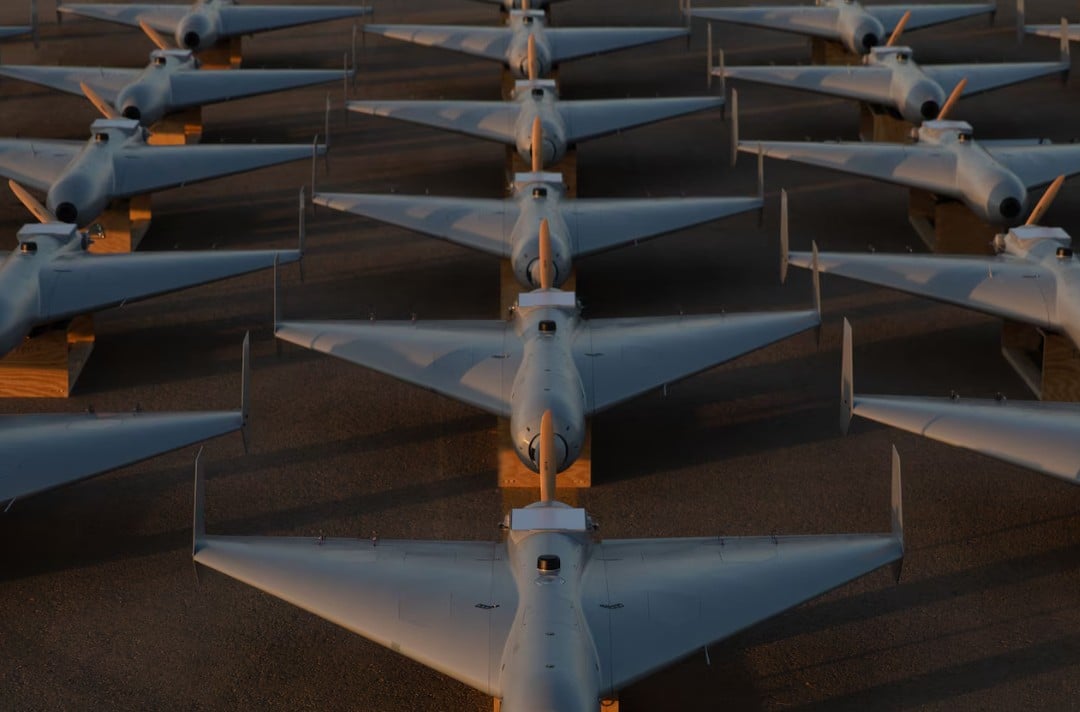
US Central Command has launched Task Force Scorpion Strike, marking the establishment of the military’s first dedicated one-way attack drone squadron specifically for operations in the Middle East. This initiative aims to expedite the deployment of cost-effective unmanned systems designed for various combat scenarios.
Task Force Scorpion Strike utilizes Low-Cost Unmanned Combat Attack System (LUCAS) drones, which are capable of conducting long-range, autonomous missions. These innovative systems can be deployed using a variety of approaches, including rail or tube catapults, rocket-assisted takeoff, and mobile ground or vehicle-mounted operations. This versatility allows LUCAS drones to function effectively from both fixed sites and maneuvering military forces.
The operations of Task Force Scorpion Strike are led by personnel from the US Special Operations Command Central, integrating seamlessly into CENTCOM’s broader strategy to rapidly deploy emerging technologies and enhance operational capabilities in the field. Admiral Brad Cooper, CENTCOM Commander, emphasized the significance of this new task force, stating, “This new task force sets the conditions for using innovation as a deterrent. Equipping our skilled warfighters faster with cutting-edge drone capabilities showcases US military innovation and strength, which deters bad actors.”
In addition to the establishment of Task Force Scorpion Strike, this initiative is part of a larger effort to outfit US forces with advanced unmanned systems and counter-drone capabilities. In September, CENTCOM brought into existence the Rapid Employment Joint Task Force to fast-track the integration of such emerging technologies for deployed units. This task force is crucial for coordinating advancements in capability development, software solutions, and technology integration across various branches of the military.
The announcement of Task Force Scorpion Strike follows the Red Sands exercise in Saudi Arabia, notable for being the Middle East’s largest live-fire counter-drone drill. During this significant event, over 300 personnel from the US and Saudi Arabia came together to test 20 different systems designed for detecting, tracking, and neutralizing drone threats.
Earlier in June, the US Army also conducted a test of the Tactical Resupply Vehicle‑150 drone within the CENTCOM area, simulating realistic battlefield conditions. This drone is capable of transporting up to 150 pounds (68 kilograms) of supplies, enabling troops to receive essential equipment without risking their safety by entering hazardous zones.
The formation of Task Force Scorpion Strike and ongoing innovations in unmanned systems underscore the US military’s commitment to enhancing its operational capabilities and readiness in an evolving threat landscape.


