




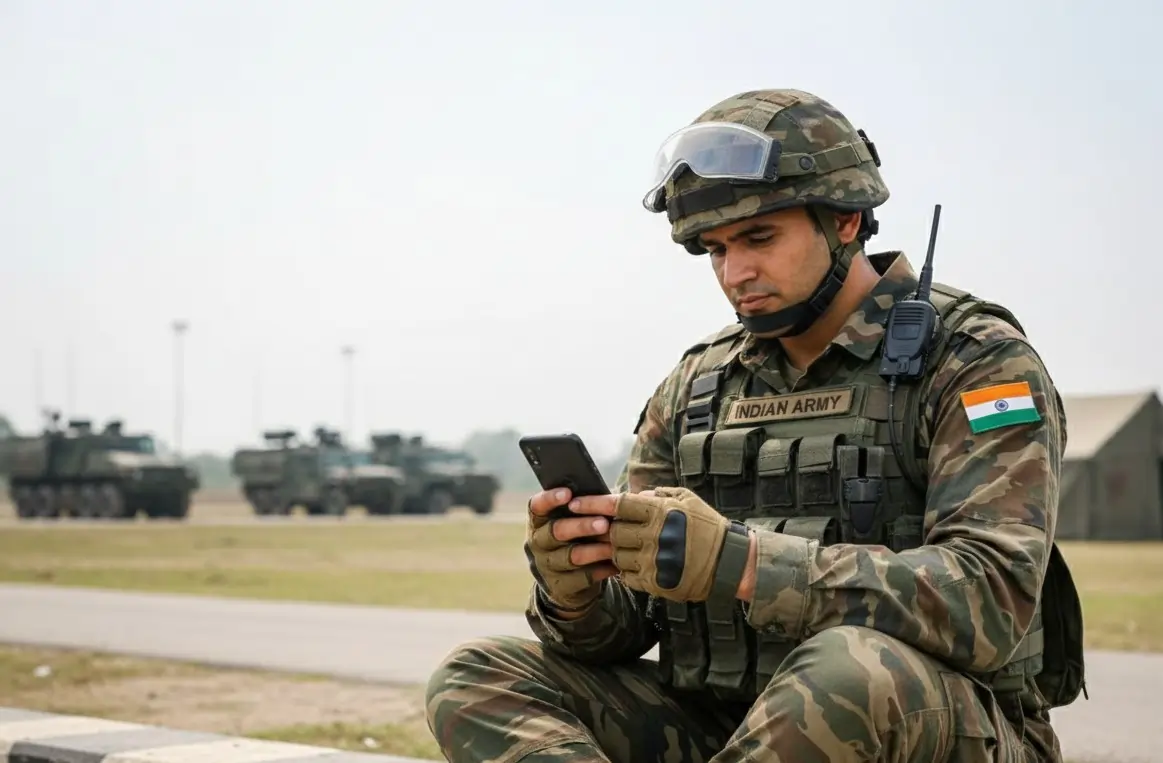
In a notable development within the Indian Army, the organization has updated its social media policy to address the complexities of modern information warfare and the pervasive influence of digital platforms. As of December 25, 2025, serving personnel are now permitted to access Instagram and other designated applications strictly for “view-only” purposes. This change, communicated by the Army Headquarters through the Directorate General of Military Intelligence (DGMI), signals a shift from prior blanket prohibitions while reiterating the commitment to operational security (OPSEC).
Historically, the Indian Army has approached social media with caution, driven by various security concerns and geopolitical tensions. Following increased border conflicts with China in July 2020, the Army ordered all officers and soldiers to delete their accounts on platforms such as Facebook and Instagram. This directive also involved banning 89 mobile applications, many linked to Chinese entities, and emphasized risks associated with espionage, data leakage, and malware attacks. Non-compliance was met with strict disciplinary measures, given the heightened vigilance against “honey traps,” where foreign agents use false identities to extract sensitive information.
The restrictions on social media were periodically reviewed, leading to stricter controls in response to incidents where soldiers inadvertently shared confidential information or operational details. Platforms like Instagram were deemed particularly susceptible to misuse. The measures taken in 2020 were part of a comprehensive national effort and coincided with the Indian government’s broader prohibitions on Chinese applications amid the heightened tensions at the Galwan Valley.
With the growth of digital literacy and recognition of the need for real-time information awareness, particularly in counteracting disinformation, the Army has adjusted its stance on social media. The revised policy acknowledges that complete detachment from social media could limit personnel’s access to vital global events and trends.
The amended guidelines include a provision for “passive participation,” permitting soldiers to observe content on platforms like Instagram without engaging in interactions. Key components of the revised policy include:
-
Instagram Access: Personnel can now use Instagram solely for monitoring content, emphasizing that no comments or interactions are allowed. This “view-only” approach minimizes the risk of exposure to digital footprints.
-
Other Social Media Platforms: Similar passive viewing guidelines apply to YouTube, X (formerly Twitter), and Quora, allowing for knowledge acquisition without active participation.
-
Messaging and Communication Apps: Apps such as WhatsApp, Telegram, Signal, and Skype can be used for exchanging unclassified information, but only with verified contacts. The responsibility for verifying the recipient lies entirely with the user.
-
Professional Usage: LinkedIn is authorized for career-related activities such as researching potential employers or uploading resumes.
- Continued Restrictions: The ban on the original 89 apps remains unchanged, along with strict warnings against utilizing VPNs, torrent sites, and unverified cloud storage, highlighting the importance of data security.
This structured approach aims to provide clarity for over 1.3 million active personnel, with the DGMI tasked with overseeing the implementation.
The rationale behind this policy shift emphasizes the need for balance between connectivity and security. As social media continues to play a crucial role in shaping narratives, passive access is viewed as a means to enhance vigilance among soldiers. By allowing them to monitor trends and discern false information without direct involvement, the policy seeks to mitigate the risks associated with past incidents while addressing morale among younger recruits accustomed to digital interactions.
Nonetheless, the policy has stirred some debate. Critics express concerns that even passive access could potentially expose devices to cybersecurity threats, while supporters view it as a progressive move in line with modern military practices. Opinions on social media have indicated a mix of acceptance and skepticism regarding the feasibility of enforcement.
For soldiers, the updated policy introduces a new avenue for engagement with the world, potentially elevating morale and situational awareness. It may also provide an advantage in countering adversarial propaganda. However, the emphasis on individual accountability means that violations could result in severe disciplinary actions, including court-martial proceedings.
On a larger scale, this adjustment reflects the Indian military’s adaptation to hybrid warfare dynamics, where control of information is as critical as traditional military capabilities. The policy’s implications might extend to other branches of the armed forces, such as the Navy and Air Force, potentially leading to coordinated updates in their own guidelines.
Challenges remain in ensuring compliance, especially in remote deployments. Enhanced training focused on digital hygiene and regular audits might become necessary components of the new policy framework. The overall success of these guidelines will depend on the disciplined adherence of personnel and continuous evaluations of emerging threats in an increasingly digital battlefield.
In summary, the Indian Army’s revised social media policy represents a calculated response to the evolving landscape of information warfare. By permitting passive access to digital platforms like Instagram, it aims to equip personnel with the tools needed to remain informed while preserving national security integrity. The effectiveness of this policy will hinge on ongoing evaluations and the commitment of soldiers to uphold operational protocols.


