




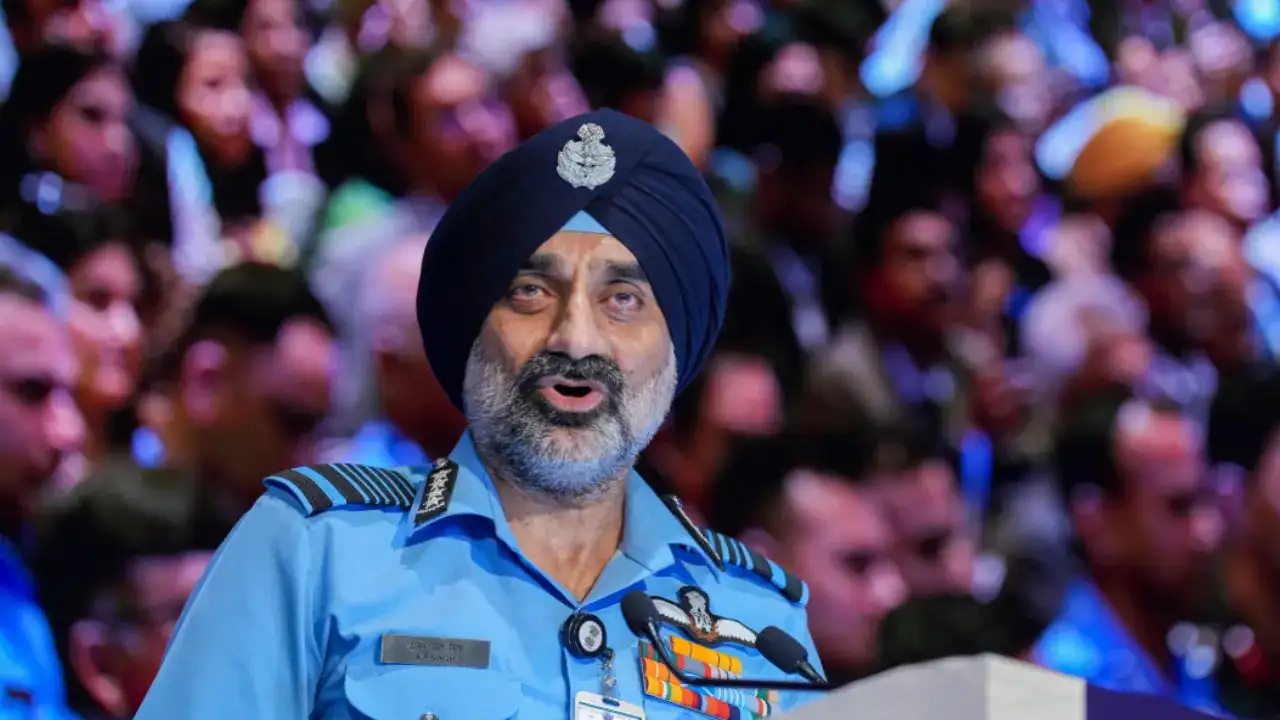
Air Chief Marshal A. P. Singh, Chief of the Air Staff, has issued a strong call to the Aeronautical Development Agency (ADA) to ensure strict adherence to delivery timelines for critical indigenous aviation projects. He expressed concern that any delays could jeopardize the Indian Air Force’s (IAF) operational readiness, particularly in an environment characterized by rapid geopolitical changes and security challenges.
These remarks were made during the inauguration of the two-day national seminar ‘Aeronautics 2047’, organized by the ADA at the Centre for Airborne Systems (CABS) in Bengaluru. The event commemorated 25 years of the flight programme for the Light Combat Aircraft (LCA) Tejas, marking a significant achievement for the ADA and the broader Indian aerospace industry.
Air Chief Marshal Singh highlighted the necessity of timely induction of aircraft like the LCA Tejas Mk-1A, stating it is essential, particularly as the IAF works to bridge existing gaps in squadron strength. He underscored that operational readiness hinges not only on successful design but also on following disciplined delivery schedules.
Dr. Samir V. Kamat, Secretary of the Department of Defence Research and Development and Chairman of DRDO, also spoke at the seminar, emphasizing the need to develop advanced indigenous technologies to lessen dependence on foreign imports. He linked the drive for defense innovation to the national vision of Viksit Bharat@2047, advocating for enhanced collaboration among government, industry, and educational institutions.
The seminar attracted a diverse audience of domain experts, industry partners, academia, and aviation professionals, focusing on various relevant topics such as next-generation aircraft manufacturing, digital manufacturing technologies, aerodynamics advancements, and the integration of AI in design processes.
A key theme of the seminar was the evolution of the LCA Tejas from its inception to its deployment in operational service. The aircraft, developed by ADA, has successfully completed over 5,600 flight sorties, supported by a network of over 100 government laboratories and academic institutions. The Tejas features advanced technologies, including carbon fiber composites, fly-by-wire systems, and a modern cockpit design, thereby securing its classification as a fourth-generation fighter. Currently, 38 units of the Tejas have been inducted into two IAF squadrons.
Looking ahead, the upcoming Tejas Mk-1A is tailored to fulfill the operational requirements of the IAF with upgraded avionics and mission systems. Additionally, active development is ongoing for the Tejas Mk-2 and naval variants to further enhance capabilities in both aerial and maritime operations.
The seminar also showcased exhibitions from Defence Public Sector Undertakings (DPSUs), private companies, and micro, small, and medium enterprises (MSMEs), illustrating the advancing sophistication of India’s aerospace manufacturing capabilities.
Air Chief Marshal Singh’s insistence on adhering to delivery timelines conveys a significant strategic message: indigenous development must go hand-in-hand with disciplined execution. As India aspires to establish itself as a leader in aerospace by 2047, the synergy between leadership, technological innovation, and industry collaboration highlighted at the Aeronautics 2047 seminar is poised to play a crucial role in ensuring the IAF maintains a robust operational edge in increasingly contested airspace.


