




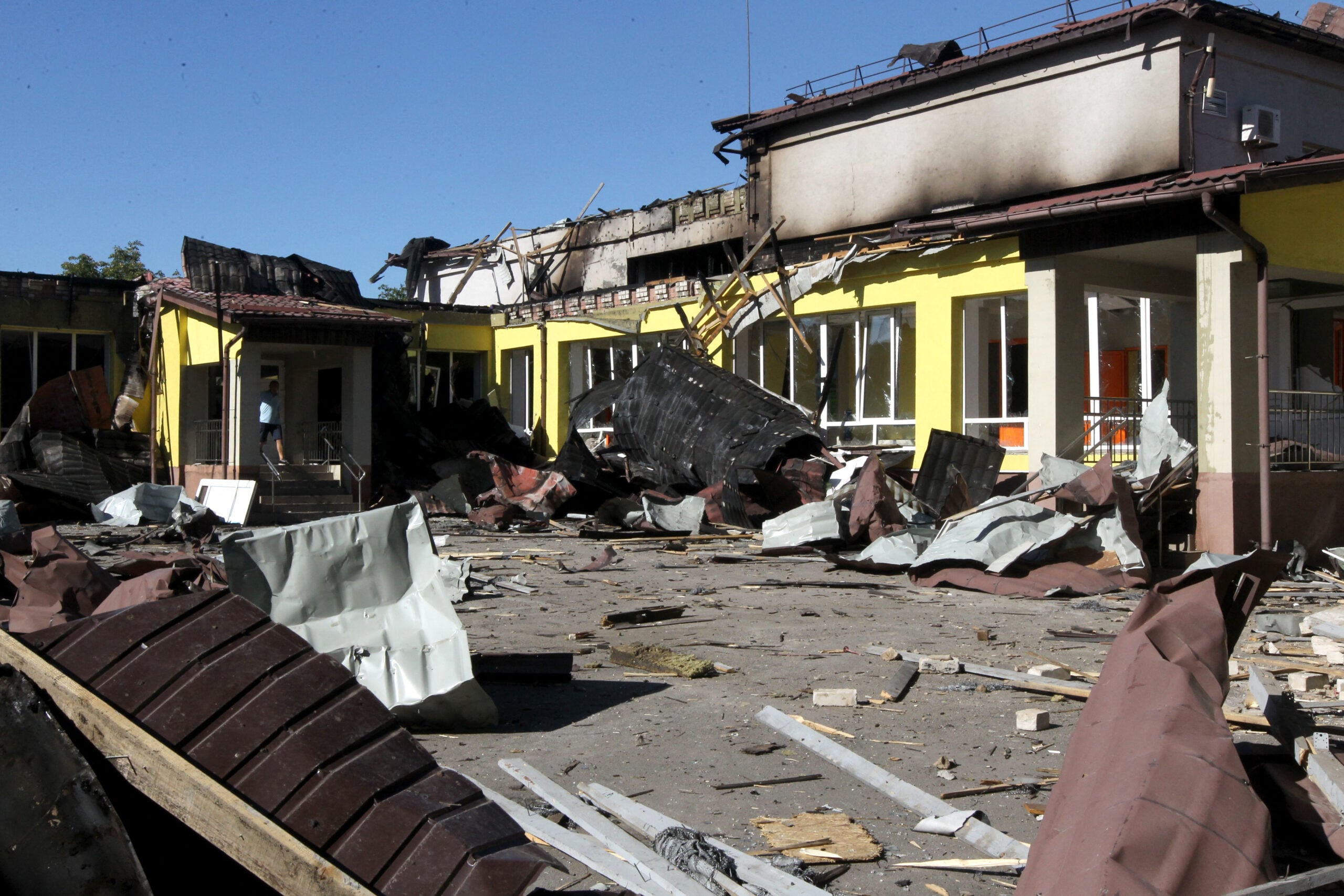
In a development that underscores the ongoing tension and conflict in Ukraine, Russian military forces announced the capture of the village of Bratske in the Dnipropetrovsk region. This area, which has been a focus of Russian advancements since last year, has seen intensified fighting despite freezing winter temperatures. The announcement comes as the conflict approaches its fourth anniversary, with no significant diplomatic breakthroughs in negotiations aimed at resolving what is now Europe’s most severe conflict since World War II.
The Russian defense ministry confirmed the latest territorial gain but noted that it does not officially claim the Dnipropetrovsk region, which lies west of the contested Donetsk region. This assertion highlights the complexities of the territorial dynamics at play, as Moscow has previously declared four eastern and southern Ukrainian regions—Donetsk, Lugansk, Zaporizhzhia, and Kherson—as part of Russia.
Simultaneously, officials in Kyiv reported that Russian nighttime assaults on the Dnipropetrovsk region resulted in power outages affecting over a million residents. Such attacks are indicative of the broader strategic push by Russia to consolidate control over vulnerable areas in Ukraine, where Ukrainian forces, although outnumbered and outgunned, are making efforts to hold the line against the advancing troops.
The fighting has escalated since Russian forces began operations in the Dnipropetrovsk region in August of last year, contributing to a relentless cycle of military engagement. The urgency of the situation has led the Ukrainian government to implement urgent evacuations for thousands of children and their families from frontline areas in both the Zaporizhzhia and Dnipropetrovsk regions.
In recent statements, Russian President Vladimir Putin reiterated his commitment to expand Moscow’s control over eastern Ukraine, emphasizing that this objective would be pursued through both military might and diplomatic channels. This declaration signifies a long-term strategy that may further complicate potential resolutions to the conflict initially ignited by Russia’s full-scale offensive beginning in February 2022.
As the situation remains fluid and fraught with uncertainty, the international community continues to monitor developments closely, hopeful for a diplomatic resolution but wary of the challenging realities on the ground.


