




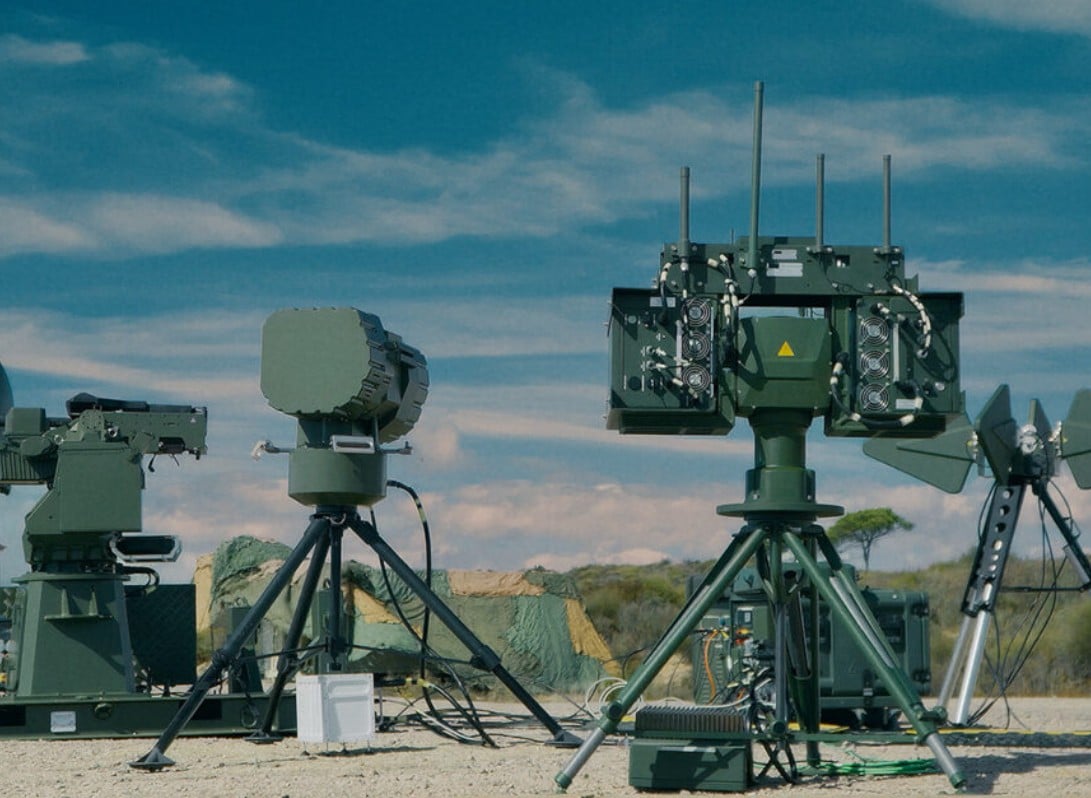
Spain has taken significant steps to bolster air defense in the Baltic region by deploying its sophisticated Crow counter-unmanned aerial system (UAS) to Lithuania. This deployment is aimed at enhancing the detection, surveillance, and neutralization of drone threats that could compromise military operations or critical infrastructure.
Currently stationed at the Šiauliai Air Base in northern Lithuania, the Crow system is operated by the Air and Space Force’s “Lobo” Tactical Unit. A dedicated team of nine personnel is responsible for continuous airspace monitoring, ensuring vigilant surveillance and protection along NATO’s eastern flank against unauthorized aerial intrusions, including drones and balloons.
The Crow system is equipped with a combination of radar, surveillance cameras, sensors, and electronic warfare capabilities, effectively functioning as a protective “smart shield” over sensitive areas. Lithuanian Minister of National Defence Robertas Kaunas praised Spain’s commitment, stating that their ongoing initiatives to enhance air defense not only reflect a strong political will but also underline NATO’s collective defense commitment. He emphasized that these actions by allied nations strengthen deterrence, send a clear signal of unity within the alliance, and are essential for the security of Lithuania and the broader eastern flank.
In addition to the Crow counter-UAS deployment, Spain is currently leading the 70th NATO Air Policing Mission in Lithuania under the Rotational NATO Air Defence framework. This mission involves a Spanish Air Force detachment operating F-18 fighter jets from the Šiauliai base, further securing NATO airspace and complementing the defensive capabilities of the Crow system.
The Crow counter-UAS system features a modular architecture that can be tailored for various environments and protection needs. Its flexibility allows for deployment in fixed sites, semi-static locations, and mobile platforms, including land and naval units. Central to the system is a command-and-control component that integrates inputs from multiple sensors, coordinating appropriate responses to detected threats.
The system processes data from all connected sensors to create a comprehensive operational picture for operators, enabling them to track and identify targets in real-time. It employs advanced algorithms and classification tools, including AI-based methods, to minimize false alarms and improve threat assessment accuracy.
Once a potential threat is identified and monitored, the Crow system can deploy various countermeasures. These include radio frequency jammers and satellite-navigation signal disruptors intended to interrupt control links, alongside kinetic options like remote weapons stations. Additionally, the system has the capacity to integrate other effectors, such as lasers and electromagnetic systems, based on the specific configuration required for a given situation.
With these advancements, Spain’s deployment of the Crow counter-UAS not only enhances its NATO allies’ security but also fortifies the collective defense posture in a region of increasing geopolitical sensitivity.


