




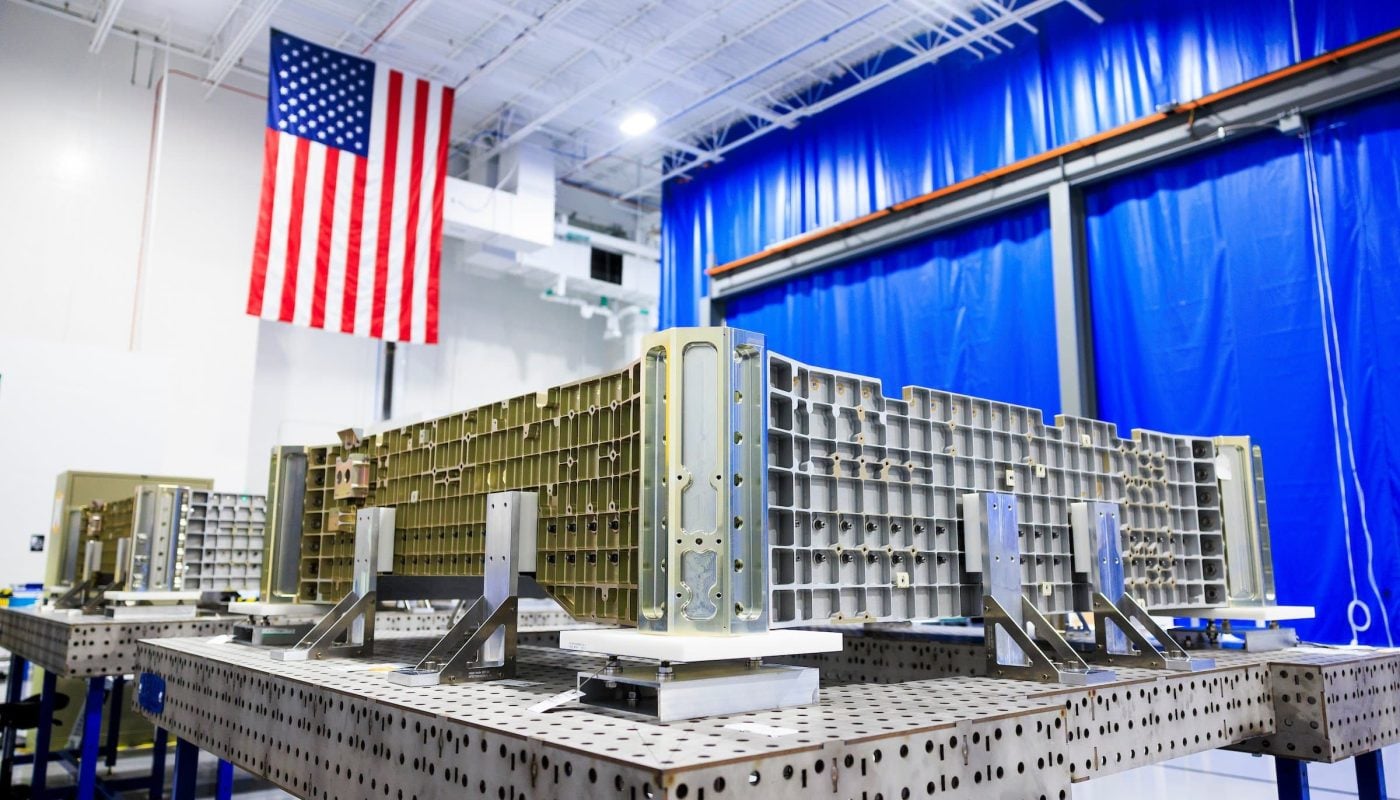
Sierra Space has announced the successful completion of the initial nine satellite structures for the Space Development Agency’s (SDA) Tranche 2 Tracking Layer, achieving this milestone three months ahead of schedule. These satellites are part of Plane 1 in an extensive 18-satellite contract, with efforts on Plane 2 already in progress.
The completed satellite structures will now transition into the next phases of assembly, integration, and testing. During this critical stage, onboard systems, subsystems, and payloads will be meticulously installed and verified in preparation for their upcoming launch.
Manufactured at Sierra Space’s Victory Works facility in Colorado, these satellites are designed to enhance the SDA’s capabilities in space-based missile detection and tracking. Following a successful critical design review, the satellites are set to play an essential role in advancing missile tracking technologies.
Equipped with advanced infrared sensors, the Tranche 2 Tracking Layer satellites will not only detect but also track a range of missile threats, including ballistic and hypersonic missiles. Some units will feature sensors capable of generating high-quality tracking data, which is vital for supporting missile defense operations as well as for early warning systems.
The broader framework of Tranche 2 aims to deploy a total of 54 satellites from multiple manufacturers, contributing to a larger Proliferated Warfighter Space Architecture. This architecture will also include a Transport Layer designed to facilitate low-latency communication between satellites and ground forces. Ultimately, the fully deployed constellation is expected to comprise approximately 270 operational satellites, enhancing the U.S. military’s situational awareness and response capabilities.
In pursuing a rapid acquisition strategy, the SDA aims to speed up production, mitigate risk, and bolster resilience by employing distributed constellations instead of relying solely on a few high-value spacecraft. The early completion of Plane 1 is a significant step forward, keeping the program aligned with its integration and launch timelines, as highlighted by Sierra Space.


