




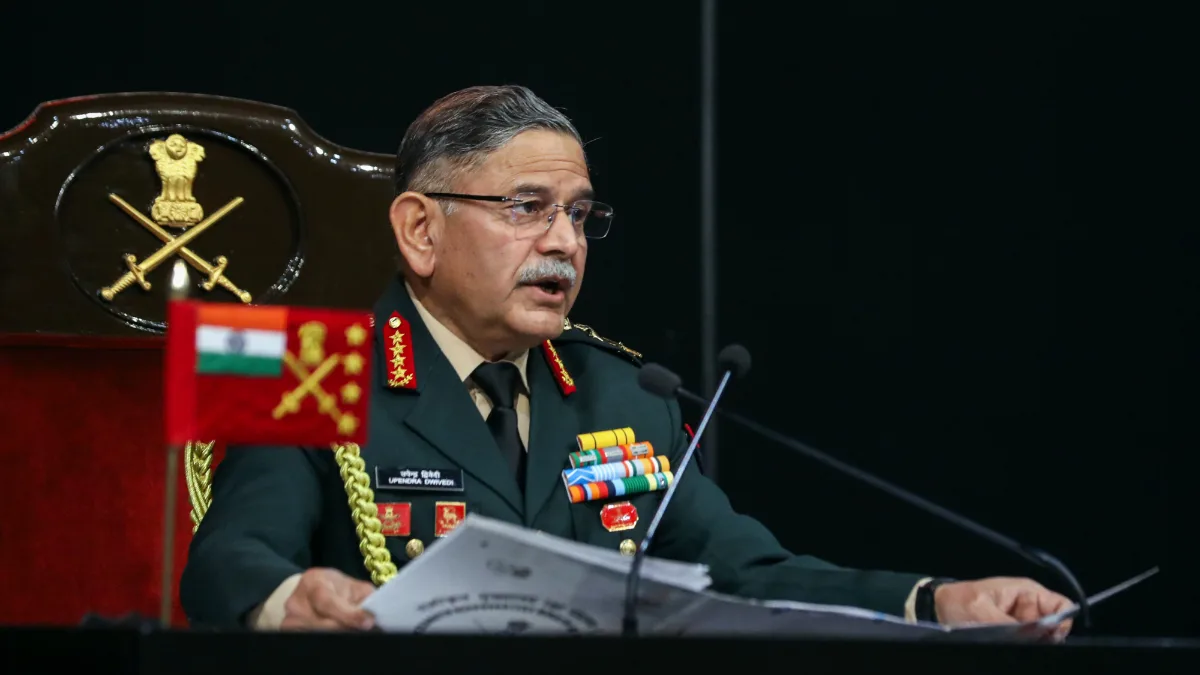
In a notable reaffirmation of the Indian Army’s commitment to integrating women into its ranks, Chief of Army Staff General Upendra Dwivedi emphasized the importance of achieving gender neutrality, indicating a readiness to include women in infantry roles, provided there is societal acceptance. This declaration was made during his annual press conference, where he reviewed ongoing efforts to bolster female participation in various military capacities.
General Dwivedi articulated a progressive perspective, asserting that women should not be viewed merely as vulnerable members of society but as capable contributors who meet rigorous standards. He stated that if operational standards and capabilities are equal, and if society is prepared to embrace this change, the integration of women into combat roles could occur without delay. This statement reflects the Army’s pragmatic strategy of balancing operational requirements with evolving social norms.
Despite this optimism, General Dwivedi acknowledged existing challenges in attaining uniform standards across genders due to constraints imposed by medical authorities and the current makeup of military teams. He explained that these limitations hinder the full realization of gender neutrality, noting, “Today, I am not able to ensure gender neutrality because there are medical authorities which do not allow me and the team of composition, where the females also say no, sir, it’s not possible.” Nevertheless, he expressed hope for progressive changes, citing initiatives like the Common Physical Test (CPT) 26, which aims to align standards for both men and women, although full integration has yet to be achieved.
Looking to the future, General Dwivedi outlined a strategic approach utilizing data over the next three to four years to gauge the performance of women officers, which will inform the expansion of their opportunities. This phased strategy will begin by integrating women into supporting arms and gradually transition to combat arms, culminating in potential roles within special forces. He referred to this as “a sequential and welcome social change,” highlighting the broader societal shifts towards more inclusive practices.
At present, the Indian Army is actively increasing the induction of women at various levels. Notably, the National Defence Academy (NDA) has enrolled 60 women cadets, with plans for an annual intake of 20. Similarly, the Officers’ Training Academy (OTA) in Chennai and Gaya aims to add 120 women annually. Proposed amendments to Section 12 of the Army Act are also under review to facilitate greater inclusion for other ranks, with ambitions for a twelve-fold increase in female personnel by 2032. Currently, around 8,000 women serve as officers, and the Territorial Army has opened opportunities for women, anticipating 110 new positions.
This initiative builds on previous advancements, including a landmark Supreme Court ruling in 2020 that granted permanent commissions to women officers, a crucial step towards achieving gender parity within the armed forces. General Dwivedi has previously recognized the outstanding performance of women officers, asserting in a statement last year that they are “doing remarkably well,” which further reinforces the commitment to expanding their roles.
The Army Chief’s comments arrive during a period of global discourse on the integration of women into military operations, where inclusive forces have shown effectiveness in various conflicts worldwide. As India continues to modernize its military—expanding capabilities through advancements like drone regiments and indigenizing ammunition—the integration of women remains a foundational element of reform, aimed at enhancing the force’s adaptability and inclusivity.


