




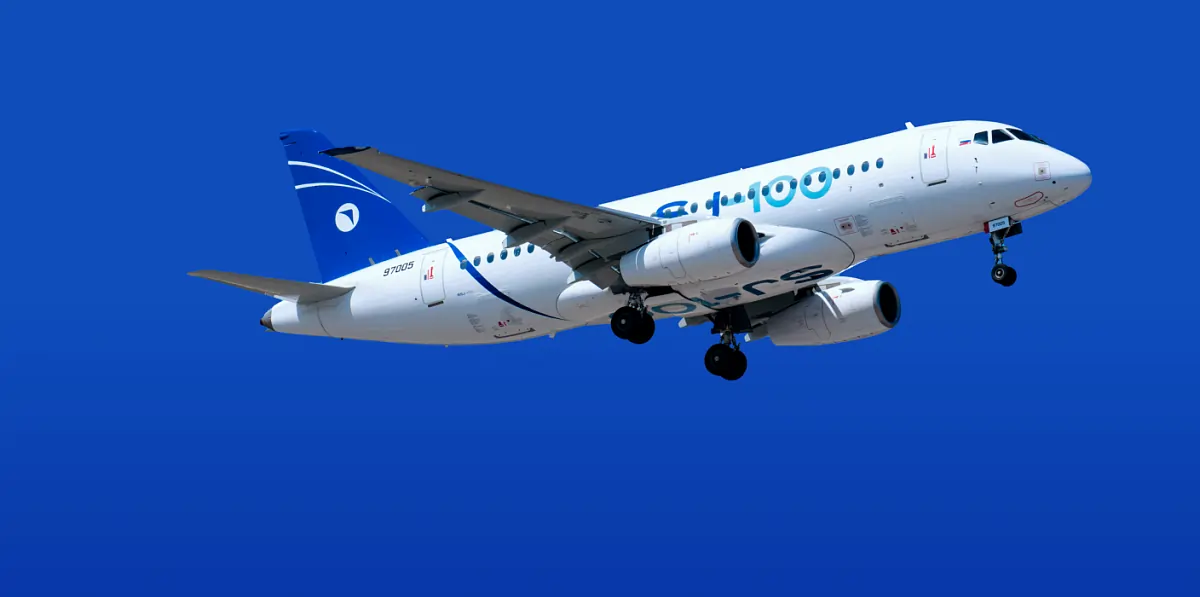
Hindustan Aeronautics Limited (HAL) has forged a significant partnership with Russia’s United Aircraft Corporation (UAC) to introduce the Superjet 100 (SJ-100) regional aircraft into the Indian market. This collaboration marks a strategic move for HAL, expanding its operations beyond its traditional military focus into the burgeoning civilian aviation sector.
The SJ-100 regional jet, which features twin engines and can accommodate up to 100 passengers, boasts a range of approximately 3,000 kilometers. It is equipped with advanced technologies, including fly-by-wire controls and a glass cockpit, facilitating operations from short or semi-prepared runways. HAL foresees a domestic demand for about 150-200 such aircraft, a projection aligned with national initiatives like the UDEAN scheme to bolster regional air connectivity among India’s tier-2 and tier-3 cities.
The formal licensing agreement was established during the Wings India 2026 event in Hyderabad, wherein HAL will take on responsibilities for the manufacturing, sale, and maintenance of the SJ-100, along with its components and spare parts. The initial phase of the strategy involves leasing 10-20 fully assembled SJ-100 jets from Russia for evaluation by Indian airlines, with first deliveries expected within 18 months. To accelerate this process, HAL is engaged in discussions with leasing entities in Gujarat’s GIFT City. Subsequently, assembly operations will commence at HAL’s facilities in Nashik and Kanpur, with the first semi-knock-down aircraft anticipated within three years. The full-scale production of this ‘Make in India’ civilian aircraft is aimed for 2029, signaling the first indigenous passenger plane project since the Avro HS-748 models manufactured under license in the 1960s and 1970s.
The partnership is viewed as a revitalization of the aviation relationship between India and Russia, especially given India’s emergence as the world’s third-largest domestic aviation market. HAL’s Chairman, DK Sunil, emphasized the importance of enhancing regional connectivity as a crucial growth factor, predicting that civilian platforms like the SJ-100 will become a significant revenue source in the next three to four years. Currently, civil aviation represents only 4-5% of HAL’s revenue, but the firm aims to elevate this proportion to 25% within the next decade.
This collaboration not only integrates Russia’s established aerospace technology with India’s manufacturing capabilities but also fosters self-reliance in aircraft production. By decreasing reliance on imports, the venture supports India’s ambition to become a global aviation hub. Additionally, this initiative strengthens the economic ties between India and Russia and contributes to the strategic diversification of HAL’s operations in a fast-evolving sector.


