




In Current Affairs for 29 January 2026, we will see the latest national and international current affairs news. These important current affairs will be beneficial for your upcoming NDA, CDS, CDS OTA, AFCAT, TA, Agniveer Army, Agniveer Navy, Agniveer Air Force, Women Military Police, INET, MNS, ACC exams, SCO, PCSL, CAPF, and SSB interviews, and direct entries for Army, Navy, and Air Force like SSC Tech, TGC, JAG, NCC, TES, 10+2 Cadet. Download a PDF file about current events at the end of this article. Let us now see the Current Affairs.
Current Affairs 29 January 2026
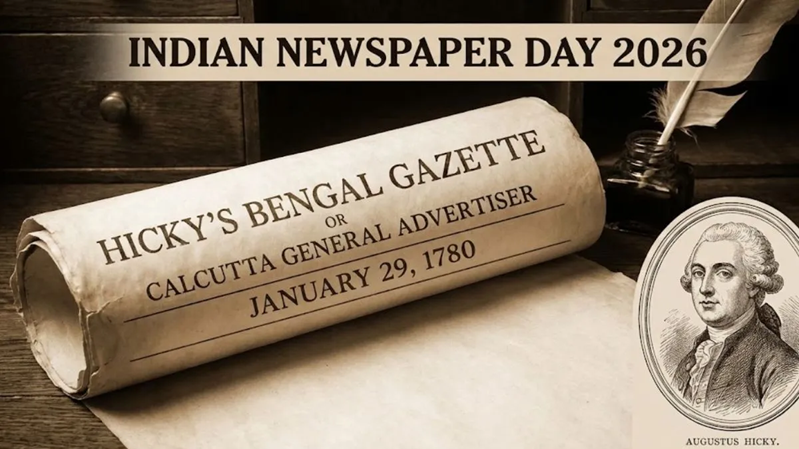
Indian Newspaper Day: History and Significance
Indian Newspaper Day is observed every year on 29 January to commemorate the beginning of newspaper publication in India and to recognise the vital role of the press in shaping public opinion and democracy. The day serves as a reminder of the contribution of newspapers in spreading awareness, promoting free expression, and strengthening informed citizenship.
The journey of Indian journalism began in 1780 with the publication of Hicky’s Bengal Gazette, also known as The Calcutta General Advertiser. It was started in Calcutta (now Kolkata) by James Augustus Hicky and marked the birth of print journalism in the country. Although the newspaper was short-lived due to its critical stance against British authorities, it laid the foundation for a vibrant press culture.
After its closure, several other newspapers emerged during the colonial period, including The Bengal Journal, Calcutta Chronicle, Madras Courier, and Bombay Herald, which expanded the reach of print media across India.
Press freedom during British rule faced major restrictions, most notably through the Vernacular Press Act of 1878, introduced by Lord Lytton. The Act empowered the colonial government to censor vernacular newspapers and suppress criticism. It was widely condemned for curbing freedom of expression and silencing nationalist voices.
Following Independence in 1947, India undertook reforms to align press laws with constitutional guarantees of free speech. A Press Enquiry Committee was set up to review existing laws. Later, the Press Council of India (PCI) was established in 1966 under the Indian Press Council Act, 1965, to safeguard press freedom and maintain ethical standards. Though abolished during the Emergency in 1975, the PCI was reconstituted under the Press Council Act, 1978, and continues to function as an autonomous watchdog for Indian journalism.
Highlights of the Economic Survey 2025-26
The Economic Survey 2025-26, tabled in Parliament on 29 January 2026 by Union Finance Minister Nirmala Sitharaman, provides an overview of India’s economic performance and future outlook. The Survey projects India’s GDP growth for 2026-27 between 6.8% and 7.2%, slightly lower than the estimated 7.4% growth in the current fiscal year.
India’s potential growth rate is assessed at around 7%, reflecting resilience despite global uncertainties. Government finances showed improvement, with Centre’s revenue receipts rising to 9.2% of GDP in FY25. The banking sector strengthened further as gross non-performing assets (GNPAs) declined to a multi-decadal low of 2.2% by September 2025.
Financial inclusion expanded significantly, with over 55 crore bank accounts opened under the Pradhan Mantri Jan Dhan Yojana, largely benefiting rural and semi-urban areas. Investor participation crossed 12 crore, with women accounting for nearly one-fourth of investors.
India’s global economic footprint continued to grow. The country’s share in global merchandise exports increased to 1.8%, while services exports reached a record $387.6 billion. India also retained its position as the world’s largest recipient of remittances, receiving $135.4 billion in FY25.
Foreign exchange reserves rose to $701.4 billion, providing strong external sector stability. Inflation remained moderate, averaging 1.7%, while agricultural output touched a record 3577.3 lakh metric tonnes. Social indicators also improved, with a sharp decline in multidimensional poverty and rising employment opportunities through digital platforms.
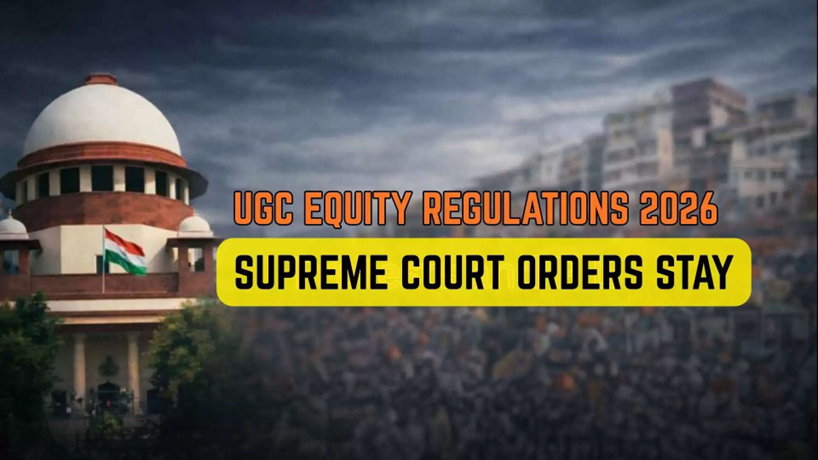
Supreme Court Stays UGC Equity Regulations 2026
The Supreme Court of India has stayed the implementation of the University Grants Commission (Promotion of Equity in Higher Education Institutions) Regulations, 2026, keeping them in abeyance until further orders. The decision came amid concerns that the regulations may be discriminatory, particularly towards students belonging to the general category.
A bench headed by Chief Justice Surya Kant, along with Justice Joymalya Bagchi, heard petitions filed by Mritunjay Tiwari, Advocate Vineet Jindal, and Rahul Dewan, challenging the constitutional validity of the regulations. The Court issued notices to the Union Government and the UGC, with the matter scheduled for hearing on 19 March.
Until then, the UGC Regulations of 2012 will continue to apply. During the proceedings, the Court highlighted several concerns, including vague provisions, potential misuse, duplication in defining discrimination, and the absence of explicit mention of ragging within the framework. The stay underscores the judiciary’s role in ensuring fairness and constitutional balance in education policy.
India’s Solid Waste Management Rules 2026
India has strengthened its environmental governance framework with the notification of the Solid Waste Management (SWM) Rules 2026 by the Ministry of Environment, Forest and Climate Change. The updated rules aim to reduce landfill dependency, enhance recycling efficiency, and promote sustainable urban living.
A key feature of the new rules is the integration of circular economy principles and Extended Producer Responsibility (EPR), ensuring that waste is managed as a recoverable resource. The focus is on waste reduction at source, efficient recycling systems, and strict enforcement mechanisms.
One of the most significant reforms introduced is mandatory four-stream segregation of waste at the point of generation. Households, institutions, and bulk waste generators must now separate waste into biodegradable, recyclable, domestic hazardous, and sanitary/inert categories. This measure is expected to reduce contamination, improve processing efficiency, and ease pressure on landfills.
The SWM Rules 2026 mark a decisive step towards cleaner cities, responsible consumption, and environmentally sustainable development in India.
Review Questions
1. Indian Newspaper Day is observed every year on:
A. 26 January
B. 28 January
C. 29 January
D. 30 January
✅ Answer: C. 29 January
2. The first newspaper published in India was:
A. The Bengal Journal
B. Madras Courier
C. Bombay Herald
D. Hicky’s Bengal Gazette
✅ Answer: D. Hicky’s Bengal Gazette
3. Who founded Hicky’s Bengal Gazette in 1780?
A. Lord Curzon
B. James Augustus Hicky
C. Warren Hastings
D. Lord Lytton
✅ Answer: B. James Augustus Hicky
4. The Vernacular Press Act, 1878 was introduced during the tenure of:
A. Lord Ripon
B. Lord Curzon
C. Lord Lytton
D. Lord Dalhousie
✅ Answer: C. Lord Lytton
5. The Press Council of India was first established in:
A. 1950
B. 1962
C. 1966
D. 1978
✅ Answer: C. 1966
6. According to the Economic Survey 2025-26, India’s GDP growth for FY 2026-27 is projected at:
A. 5.5–6.0%
B. 6.0–6.5%
C. 6.8–7.2%
D. 7.5–8.0%
✅ Answer: C. 6.8–7.2%
7. India’s Gross Non-Performing Assets (GNPAs) declined to a multi-decadal low of:
A. 3.5%
B. 2.8%
C. 2.2%
D. 1.9%
✅ Answer: C. 2.2%
8. The Supreme Court stayed which UGC Regulations in 2026?
A. Teacher Recruitment Regulations
B. University Accreditation Regulations
C. Promotion of Equity in Higher Education Institutions Regulations
D. Foreign University Entry Regulations
✅ Answer: C. Promotion of Equity in Higher Education Institutions Regulations
9. Until further orders, which UGC Regulations will remain in force?
A. UGC Regulations, 2008
B. UGC Regulations, 2010
C. UGC Regulations, 2012
D. UGC Regulations, 2018
✅ Answer: C. UGC Regulations, 2012
10. Under the Solid Waste Management Rules 2026, waste segregation at source must be done into how many streams?
A. Two
B. Three
C. Four
D. Five
✅ Answer: C. Four


