




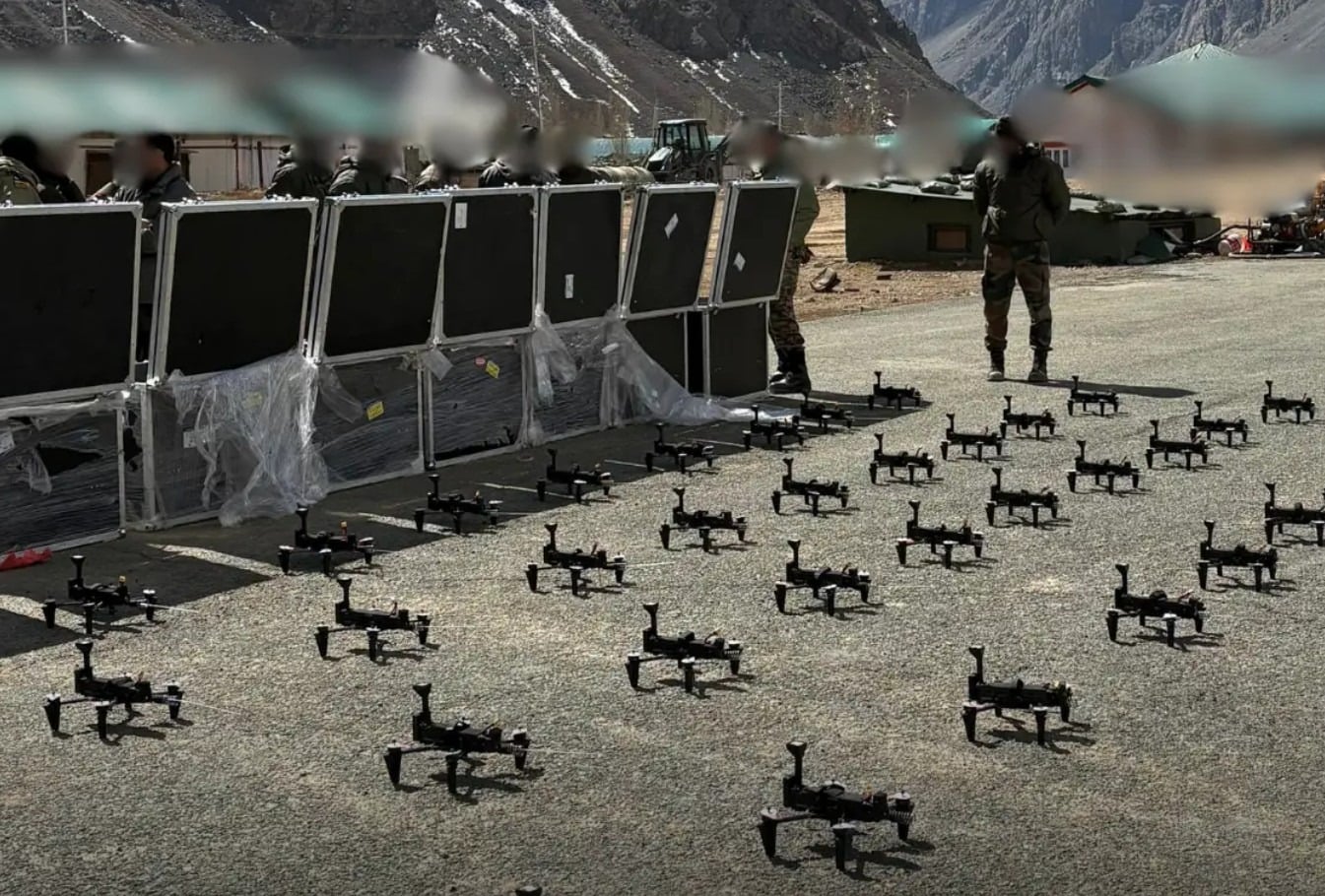
An Indian company, InsideFPV, has successfully fulfilled a substantial contract valued at 100 million rupees (approximately $1.2 million) with the country’s defense ministry. This endeavor involved the timely delivery of hundreds of kamikaze drone systems, achieved within a strict 60-day timeframe.
The procurement was executed through the Emergency Procurement Route, a strategic initiative designed to expedite acquisitions for urgent military needs. These drones are crafted to function efficiently in diverse environments, including high altitudes, arid deserts, and various mixed terrains.
InsideFPV’s CEO, Arth Chowdhary, emphasized that the kamikaze drones and first-person view systems have been meticulously engineered to withstand India’s most challenging deployment conditions. Specifications suggest that these drones can operate within a temperature spectrum of approximately -35 to 50 degrees Celsius (-31 to 122 degrees Fahrenheit) and maintain functionality even in GPS-denied scenarios.
The recent contract signifies a growing trend observed in modern conflicts, where loitering munitions are increasingly utilized for short-range precision strikes and immediate battlefield reconnaissance. This evolution reflects a shift in tactical approaches, highlighting the importance of such advanced technologies.
In light of these developments, New Delhi is intensifying its focus on domestic defense manufacturing, particularly concerning unmanned systems that can be rapidly produced and deployed. InsideFPV is responding to this demand by enhancing its production capacity. The company has announced plans to relocate to a new facility spanning approximately 20,000 square feet (1,860 square meters), aiming to boost output and minimize turnaround times for future orders.
Furthermore, InsideFPV is expanding its technological capabilities. The company is actively developing additional systems, including interceptor drones, swarm-enabled technologies, and innovative navigation solutions tailored for contested or signal-denied environments. These advancements are in line with the Indian Army’s recent release of a technology roadmap that outlines future requirements for unmanned aerial systems and loitering munitions.
This roadmap is designed to create a cohesive strategy aligning operational necessities with technological advancements while inviting greater engagement from domestic industries, startups, and academic institutions. Such initiatives are poised to strengthen India’s defense capabilities, ensuring that the country remains at the forefront of modern military technology.


