




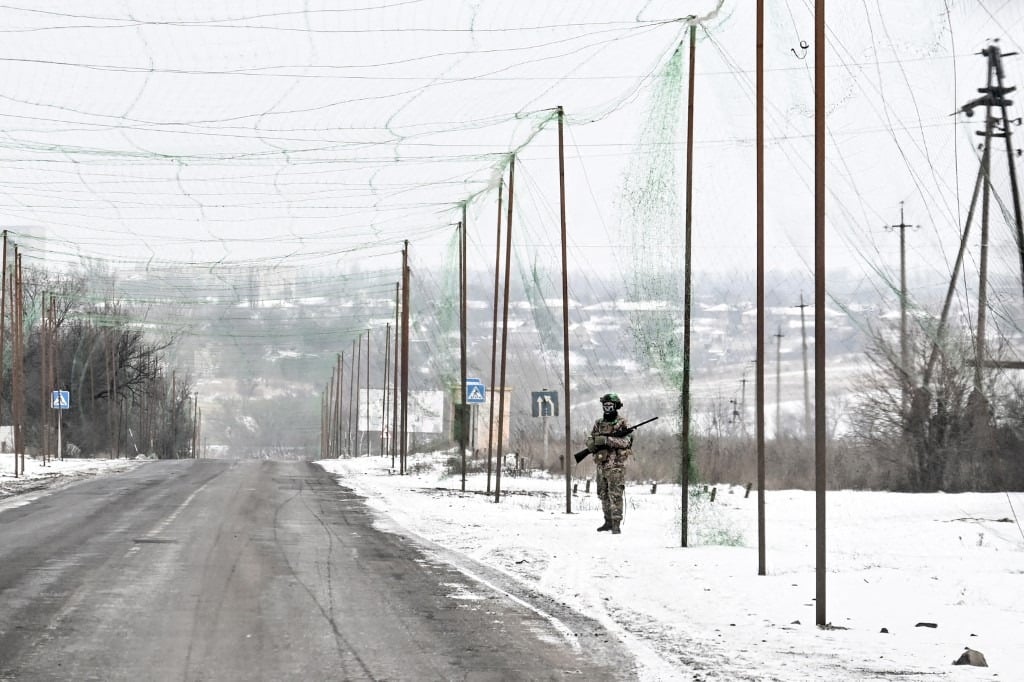
Ukraine and Russia exchanged accusations on Sunday of thousands of violations of a temporary truce established for Orthodox Easter, as the conflict enters its fifth year. This ceasefire was initiated following a call by Ukrainian President Volodymyr Zelensky, while Russian President Vladimir Putin implemented the truce just days later.
Despite the agreement, which covered a significant length of the front line stretching 1,200 kilometers (745 miles), both nations reported widespread hostilities. The Ukrainian military stated that, by 7:00 a.m. on April 12, it had documented 2,299 violations of the ceasefire, detailing various forms of aggression, including 28 enemy assaults and nearly 1,000 drone strikes.
On the other hand, Russia’s defense ministry countered with its own figures, claiming 1,971 violations committed by Ukrainian forces within the same period. This report included allegations of artillery and tank fire, as well as drone usage for strikes against Russian positions.
In terms of military actions, the Ukrainian army highlighted a notable absence of long-range drone attacks and missile strikes during the truce, attributing this to the ceasefire’s effectiveness to some extent. In northeastern Ukraine’s Kharkiv region, local military authorities noted a relatively calm atmosphere, allowing troops to participate in Easter celebrations in the outdoors.
The truce was set to last 32 hours, commencing at 4:00 p.m. on Saturday and concluding at the end of Sunday. However, reports of violations continued to surface, including a drone attack in Russia’s Kursk region that reportedly injured three people.
In response to the ongoing conflict, President Zelensky called for an extended ceasefire, emphasizing that any movement towards peace lies with Russia. The past year saw a similar Easter truce, marred by mutual accusations of violations, further complicating hopes for a lasting peace.
Efforts for negotiation between the two countries, which have been supported by the U.S., have stalled recently, particularly with the evolving geopolitical dynamics surrounding conflicts in the Middle East. The conditions for a peaceful resolution remain challenging, as both sides exhibit profound disagreements over territorial claims.
The war has led to immense human suffering, claiming countless lives and displacing millions. While the conflict has seen some territorial advances by Russian forces, progress has slowed significantly, with Ukraine pushing back in various regions. Currently, Russia maintains control over more than 19% of Ukrainian territory, most of which was acquired in the early days of the conflict.


