




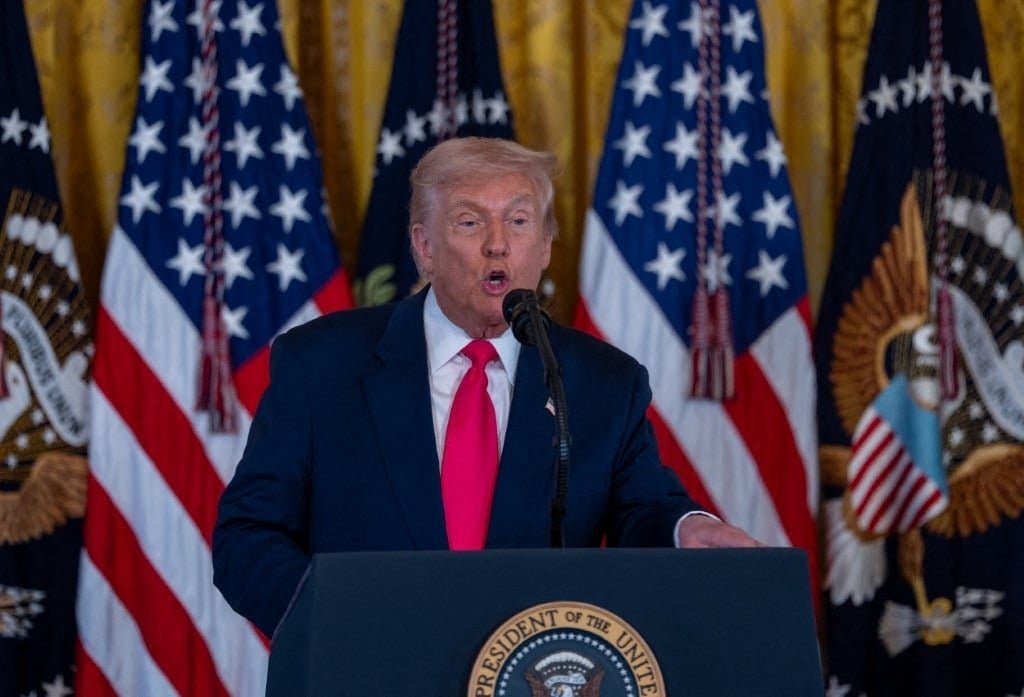
In a significant development regarding U.S.-Iran relations, President Donald Trump has instructed national security officials to devise plans for a prolonged blockade of Iranian ports. This strategy aims to pressure Tehran into abandoning its nuclear program. According to a report by the Wall Street Journal, Trump’s skepticism about Iran’s commitment to negotiations drives this assertion, as he seeks a suspension of uranium enrichment for a minimum of 20 years, coupled with stringent restrictions thereafter.
During a recent meeting in the White House situation room, Trump expressed his concerns about Iran’s negotiating stance, deeming it insincere. He underscored his frustration in a statement on his social media platform, urging Iran to change its approach, saying, “They better get smart soon!”
The report notes that Trump’s decision takes into account the potential repercussions of other military options, such as resuming bombing or completely disengaging from the conflict—both of which he viewed as overly risky. Instead, the administration is focused on exerting financial and economic pressure by leveraging the U.S. Navy to restrict Iran’s critical oil exports. This strategy reflects a commitment to continue applying pressure until Tehran complies with the demands laid out by Washington.
This escalation in rhetoric and planned military posture highlights a critical juncture in U.S.-Iran relations, raising concerns among international observers and analysts about the potential for increased tensions in the region. The implications of such a blockade could significantly affect global oil markets and regional stability, as well as the broader diplomatic efforts surrounding Iran’s nuclear ambitions.


