




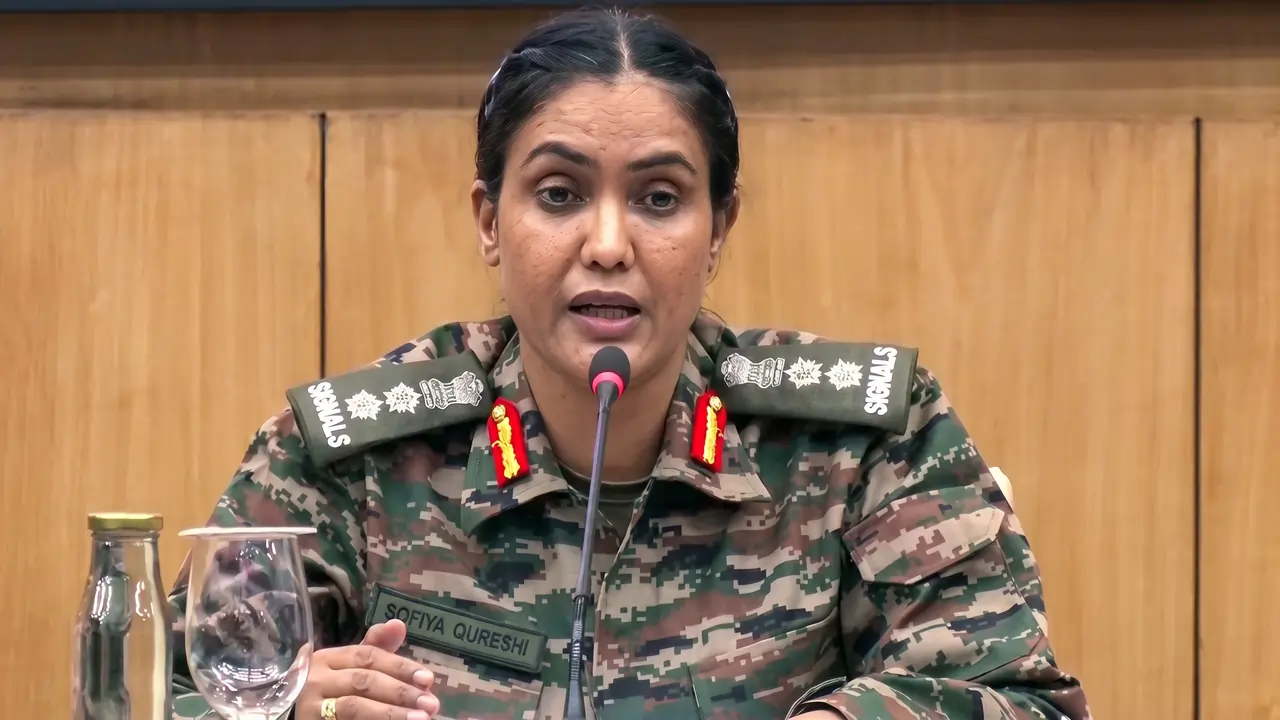
The Supreme Court of India has expressed strong disapproval of the Madhya Pradesh government’s significant delay in determining the grant of sanction to prosecute state minister Kunwar Vijay Shah. This follows his controversial remarks concerning Colonel Sofiya Qureshi, an esteemed Army officer known for her media briefings during Operation Sindoor.
During a recent hearing, a bench consisting of Chief Justice of India Surya Kant and Justice Joymalya Bagchi emphasized the state’s failure to follow through on a prior directive from January 19, 2026. The court firmly stated, “Enough is enough,” and mandated that the Madhya Pradesh government reach a final decision regarding the sanction within four weeks, with a follow-up scheduled after the summer break.
The turmoil originated from remarks made by Minister Shah on May 12, 2025, at a public event in Mau, where he purportedly suggested that India retaliated against those responsible for the Pahalgam terror attack by employing “their own sister.” Although he did not mention anyone specifically, his comments were perceived as derogatory toward Colonel Qureshi, who then became a prominent figure in the media for her involvement in Operation Sindoor, which responded to the attack.
The backlash from the public was swift and intense, with many criticizing the comments for their perceived misogynistic and communal overtones targeting a serving female officer of the Indian Army. In response to the public outcry, the Madhya Pradesh High Court took notice of the remarks, labeling them “scurrilous” and “language of the gutters.” It ordered the registration of a First Information Report (FIR) against Shah for promoting enmity and hatred between groups.
Earlier, the Supreme Court intervened in the case, granting the minister interim protection from arrest and establishing a three-member Special Investigation Team (SIT) to delve into the matter. This SIT completed its investigation and submitted a sealed report to the court, requesting sanction to prosecute Shah under Section 196 of the Bharatiya Nyaya Sanhita, which addresses offenses that foment communal discord. The SIT uncovered a pattern in Shah’s behavior, stating he had a propensity for making similar remarks.
Despite the Supreme Court’s January order directing the Madhya Pradesh government to decide on the sanction within two weeks, no action had been taken, leading to the latest hearing.
During the recent session, Solicitor General Tushar Mehta claimed that Shah had issued an on-air apology and speculated that his remarks might have intended to commend Colonel Qureshi. The bench was unimpressed. Chief Justice Surya Kant remarked that the minister’s comments were “most unfortunate” and that he exhibited “no sense of repentance.” The Chief Justice noted that public figures should articulate their thoughts clearly, and any authentic slip of the tongue would necessitate an immediate, unambiguous apology.
The court further asserted that Shah’s apology seemed to be a defensive maneuver prompted by the court’s involvement. “Writing a letter is not an apology. It is only creating a fake defence… He should have plainly said, ‘I have committed a mistake. I tender an unconditional apology for it,’” the Chief Justice stated, emphasizing the expectation that public officials adhere to the law.
Justice Bagchi added that the state must consider the overall context before making a decision on the sanction. The bench refused to entertain further arguments from the minister or the state government, insisting on strict compliance with its directive within the designated four-week timeframe.
This firm stance from the Supreme Court highlights the essential nature of timely governmental action regarding allegations that threaten the dignity of military personnel and communal harmony. The directive also reflects growing national scrutiny on the respect owed to women in uniform and the accountability of public servants.
As the case evolves, it continues to raise significant concerns surrounding political rhetoric, institutional accountability, and adherence to the rule of law. The Madhya Pradesh government is now mandated to evaluate the SIT’s request for prosecution sanction and inform the Supreme Court of its decision within the specified timeframe. The matter remains under consideration by the apex court.


