




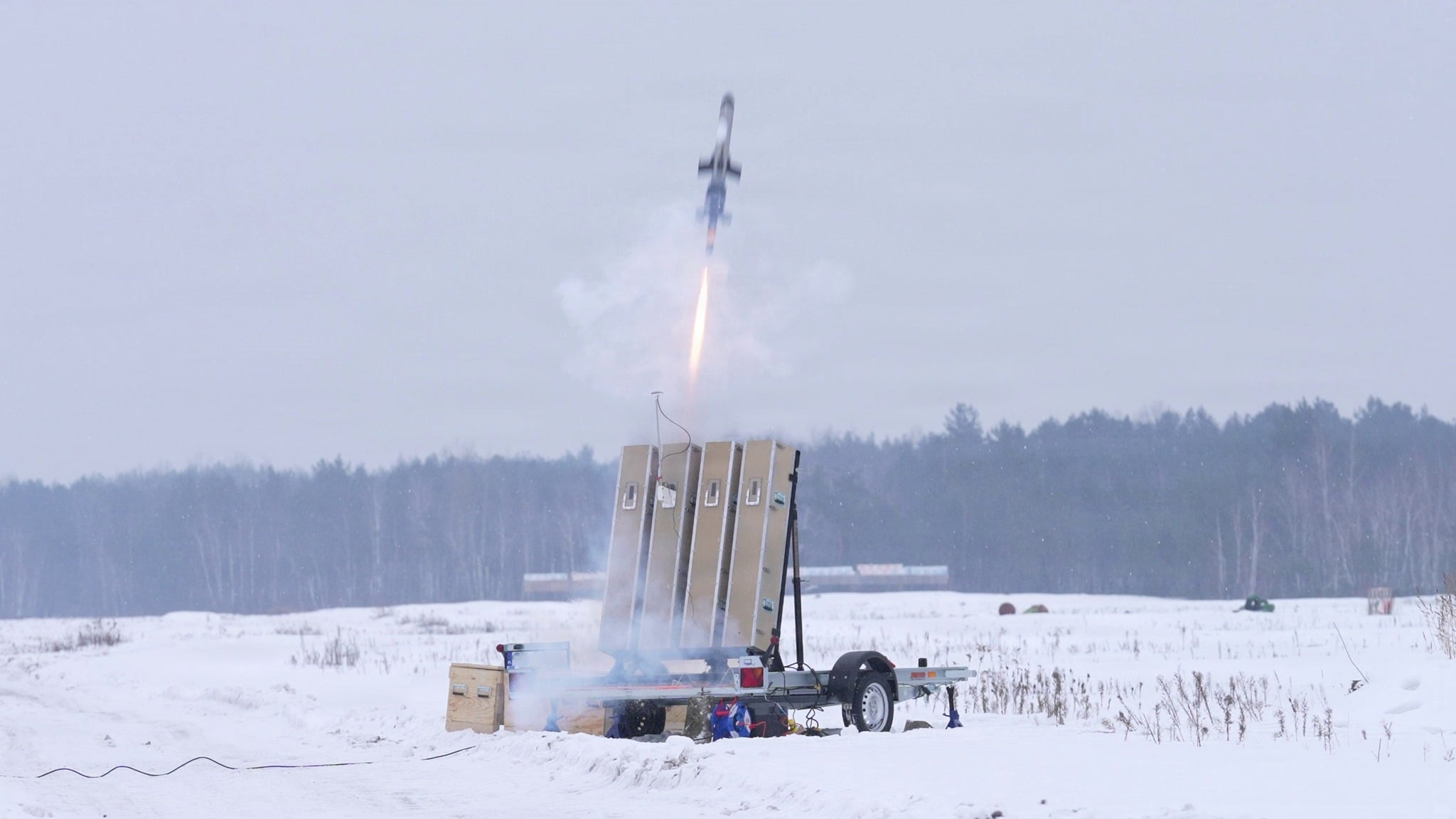
The U.S. Army is currently assessing a novel drone interceptor known as IonStrike, developed by DZYNE Technologies, as part of a broader NATO initiative aimed at fortifying Europe’s eastern defenses against potential threats from Russia. This low-cost, radar-agnostic system is designed to complement existing command-and-control (C2) networks, enhancing the military’s ability to respond to drone incursions.
IonStrike is being evaluated under the Eastern Flank Deterrence Initiative, a NATO-supported effort focused on utilizing unmanned systems and integrated battlefield data to accelerate decision-making processes and counterbalance adversarial advantages in the mass deployment of forces. The system is engineered to provide a mid-range interception capability, effectively allowing military personnel to identify, track, and neutralize one-way attack drones using established communication systems.
One of the significant advantages of IonStrike is its compatibility with current military infrastructure, which means soldiers do not need to undergo additional training to operate the system. Major Cody Davis, Operations Officer of the 52d Air Defense Artillery Brigade, emphasized this aspect, stating, “It integrates with approved C2 systems, cues on existing radar feeds, and provides commanders another kinetic option within the air defense architecture.”
The IonStrike system can be launched from a multi-interceptor pallet and draws information from radars integrated into existing networks. The ongoing tests currently utilize a four-interceptor launcher, but DZYNE Technologies is in the process of developing a more robust 12-interceptor variant to enhance its capabilities against larger drone swarms. Unlike conventional fire-and-forget interceptors, IonStrike offers operators the flexibility to abort or redirect engagements, thereby enabling earlier responses to swarm threats without the automatic expending of interceptors.
Designed as a more economical option compared to its targets, IonStrike aims to conserve high-end air defense missiles for more complex threats. It incorporates a terminal infrared seeker and a proximity-fuzed warhead, which allow it to engage one-way attack drones effectively in various conditions, including both day and night operations.
Major Benjamin Bowman, Forward Operations Officer for the 52d Air Defense Artillery Brigade, shared insights about the system’s performance during the summer assessment, noting, “The questions are straightforward: can it integrate, can it be fired through existing C2, can it extend the defended area, can it be reallocated in flight, and can soldiers sustain it in the field?”
This assessment will ultimately determine the operational viability of IonStrike as a critical component of air defense strategies in the context of current and anticipated threats.


