




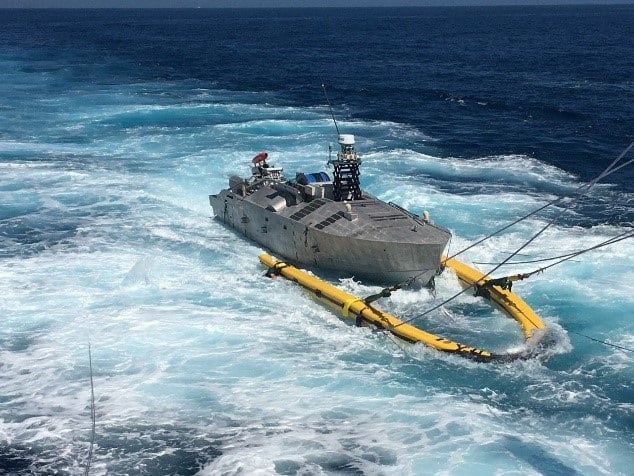
The US Navy, in collaboration with the Defense Innovation Unit (DIU), is actively exploring next-generation commercial autonomous mine countermeasure solutions. These advancements are designed to safely neutralize naval mines from standoff distances, reflecting an urgent need to enhance maritime security capabilities beyond traditional manned assets.
As part of the $10-million Mine Countermeasures (MCM) Modernization prize challenge, the Navy and DIU are searching for mature technologies that can be rapidly deployed, ideally within a six-month timeframe. This initiative emphasizes the necessity of diversifying existing mine countermeasure strategies, particularly in light of rising tensions in critical waterways like the Strait of Hormuz.
Participants in the challenge will focus on three main categories: near-surface and moored mine threats, bottom mine detection, and bottom mine engagement. The goal is to identify solutions that meet specific operational criteria. DIU Maritime Principal Director Jarred Conley noted that the agency is looking for “mature, rapidly fieldable commercial solutions” that can effectively execute the detect-to-engage kill chain while keeping military personnel out of harm’s way.
To be considered for the challenge, proposed solutions must meet a Technology Readiness Level of 7 or higher and demonstrate the ability to operate effectively in GPS-denied environments. Precision in target engagement, low positional drift during area searches, and the necessity of human authorization for mine neutralization are also paramount. If a launcher is required, the vehicle’s weight must not exceed 250 pounds, with a maximum power consumption of 1,000 watts.
Successful applicants can expect monetary rewards of up to $200,000, along with invitations to participate in on-water testing events. Top contenders may also qualify for additional prizes worth up to $3 million. The challenge is open to international participants from qualifying nations, and successful completion may lead to further contract opportunities for prototype development or experimental procurement.
The urgency of this challenge is underscored by ongoing threats to maritime trade routes, particularly in the context of geopolitical tensions with Iran. The need for effective clearance of strategic waterways, like the Strait of Hormuz, is complicated by potential hostilities and the meticulous processes required to ensure safe navigation. As highlighted by Verineia Codrean, Chief of Strategy & Partnerships at EUROATLAS, the reopening of such chokepoints is not only a technical issue but also one of building confidence for controlled traffic in potentially hazardous waters.
To expedite the verification of navigable corridors, Codrean proposed the use of fleets of autonomous underwater vehicles (AUVs), which can assess large areas quickly while minimizing risk to crews and valuable assets. Recent advancements in battery technology and AI are overcoming limitations faced by earlier unmanned systems, significantly enhancing their operational endurance and range.
These improvements allow AUVs to conduct preprogrammed missions, map seabeds, detect anomalies, and provide detailed environmental data back to command centers from a safe distance. Ultimately, the initiative seeks to bolster the US Navy’s mine countermeasure capabilities, thereby enhancing maritime security and safeguarding vital shipping lanes in a precarious geopolitical landscape.


