




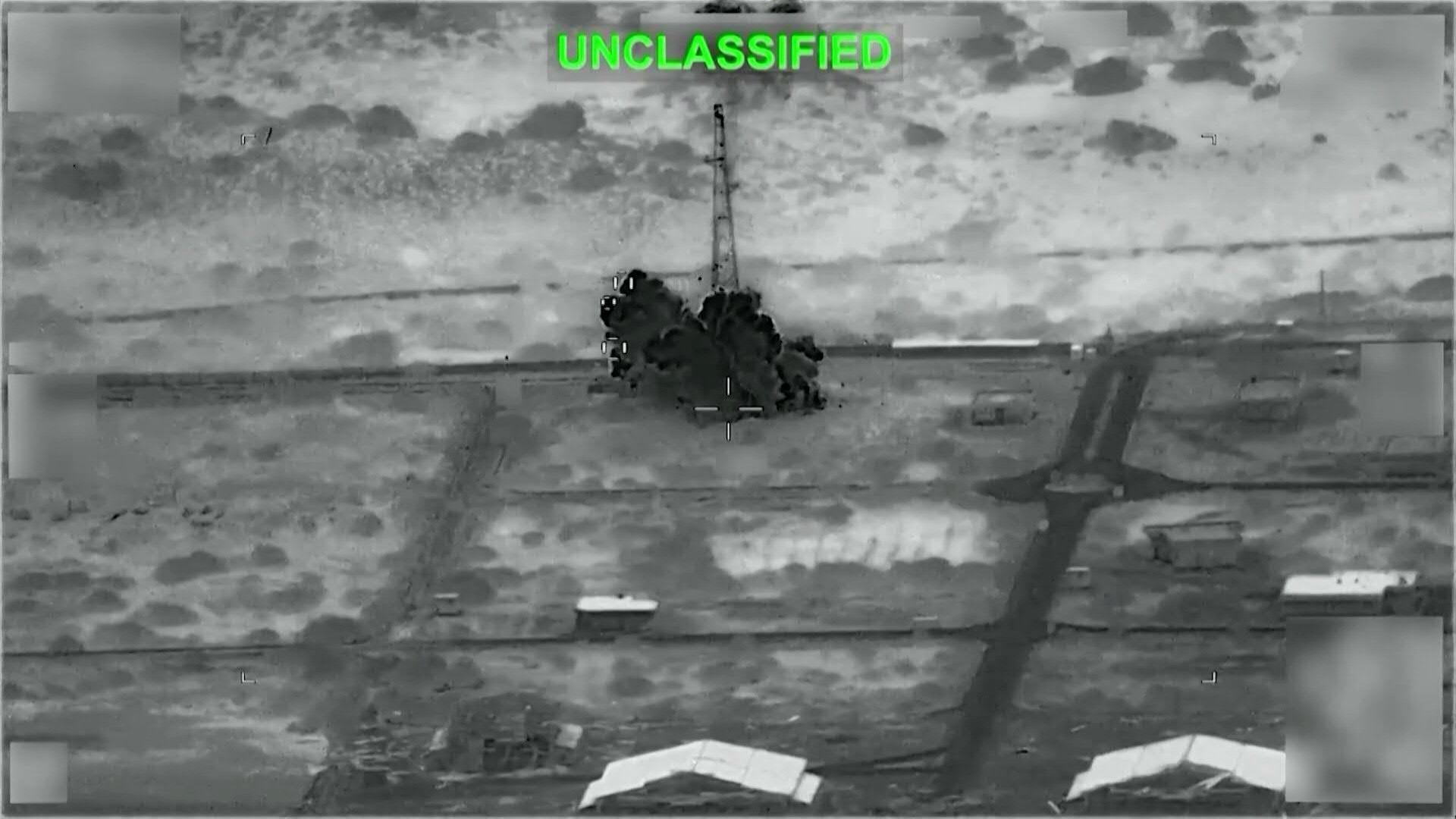
Iran intensified its military actions on Saturday by firing multiple missiles toward US allies in Bahrain and Kuwait, further complicating an already precarious truce in the region. This escalation followed recent US strikes that targeted Iranian drone positions, deepening the conflict’s intensity amidst ongoing indirect negotiations.
According to the US Central Command (CENTCOM), Iranian forces launched seven ballistic missiles at Bahrain and Kuwait, of which six were intercepted, while one missile fell short of its target. In response, Iran’s Revolutionary Guards claimed to have retaliated by aiming missiles at “enemy bases in the area.” The tensions culminated in chaotic scenes in both nations, with explosions reported in Bahrain’s capital, Manama, and around Kuwait’s international airport, where a recent strike reportedly killed one individual.
Bahrain denounced the missile attacks as a “blatant aggression,” asserting its commitment to counter any threat to regional security. Kuwait characterized the attacks as a significant escalation, with local residents expressing fear and confusion. A mother from Kuwait described the terrifying experience of waking up to a massive explosion that left her children frightened.
The persistent conflict in the region, now entering its hundredth day, began after intense US and Israeli airstrikes. A ceasefire established on April 8 has held, albeit with intermittent hostilities. Iran condemned the US strikes as “flagrant” violations of its sovereignty and reiterated its stance against America’s aggressive posture in the region.
Amidst these developments, Iranian officials called for diplomatic solutions, with Mohsen Rezaei, a military advisor to Iran’s supreme leader, urging for the release of $24 billion in frozen Iranian assets to help stabilize ongoing negotiations. The US government, however, appears inclined to allocate these resources to support Gulf allies recovering from damages inflicted by Iranian operations.
In Lebanon, the conflict has taken another turn, with an Iranian-backed group, Hezbollah, launching attacks against Israel. Recent Israeli strikes in southern Lebanon resulted in casualties, including three Lebanese soldiers, which Israel claims were targeted for their association with Hezbollah. Lebanon’s Army Chief was en route to Pakistan for discussions aimed at mediating escalating tensions, emphasizing the interconnectedness of conflicts in Lebanon and the Gulf.
Compounding the tensions further was a diplomatic dispute regarding visas for members of Iran’s World Cup football team. While players and technical staff received proper visa approvals, numerous administrative members were denied entry to the US. Iranian officials condemned this rejection as blatant political interference, demanding FIFA hold the US accountable for its actions.
As the Iranian football team prepares to travel to Mexico for the tournament, conditions of their visas stipulate they must enter and exit US territory within the same day of their matches, adding another layer of complexity to the current diplomatic situation. This series of incidents underscores the volatile atmosphere in the region, as military actions, diplomatic hostilities, and sports-related grievances intertwine, further complicating efforts toward a lasting peace agreement.


