




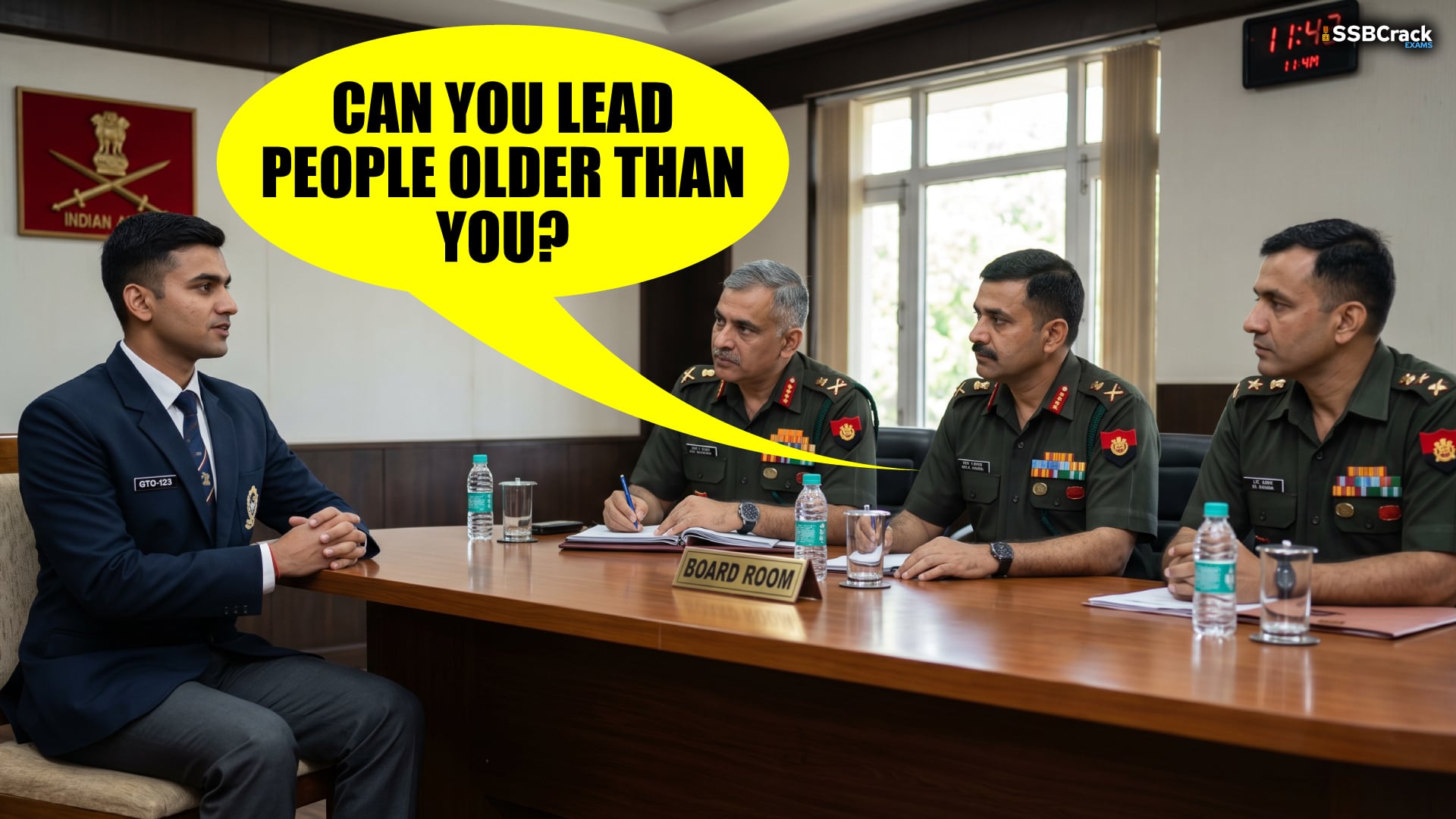
The Combined Defence Services Examination is one of the most prestigious pathways to become an officer in the Indian Armed Forces. Every year, thousands of graduates clear the written examination, but only a limited number successfully clear the SSB Interview and earn a recommendation.
Unlike NDA candidates, CDS aspirants are graduates or final-year students who are expected to demonstrate greater maturity, responsibility, awareness, and leadership potential. During the Personal Interview, the Interviewing Officer assesses your personality, life experiences, decision-making ability, social adaptability, and Officer Like Qualities.
In this article, we will discuss 20 important interview questions frequently asked to CDS candidates, understand why these questions are asked, learn how to answer them effectively, and examine sample responses that reflect the mindset of a future military officer.
1. Tell me about yourself.
Why it is asked
To assess communication skills, confidence, self-awareness, and personality.
How to answer
Cover:
- Family background
- Education
- Achievements
- Hobbies
- Responsibilities
Sample Answer
“I am a B.Com final-year student from West Bengal. I come from a family that values education and discipline. Along with academics, I actively participate in sports, public speaking activities, and event management. These experiences have helped me develop teamwork, responsibility, and leadership skills.”
2. Why do you want to join the Armed Forces through CDS?
Why it is asked
To assess motivation and seriousness about a military career.
How to answer
Focus on service, leadership, responsibility, and personal suitability.
Sample Answer
“The Armed Forces provide a unique opportunity to serve the nation while leading people in challenging situations. I am attracted to the values of discipline, courage, teamwork, and responsibility that military service represents.”
3. Why did you not appear for NDA?
Why it is asked
Frequently asked to male candidates.
How to answer
Provide factual reasons.
Sample Answer
“At that stage, I was more focused on completing my schooling and exploring career options. As I matured and gained a deeper understanding of military life, my interest in joining the Armed Forces strengthened significantly.”
4. Why should we select you?
Why it is asked
To assess self-confidence and suitability.
How to answer
Connect your qualities with officer requirements.
Sample Answer
“I possess qualities such as responsibility, adaptability, teamwork, and perseverance. I enjoy taking initiative, handling responsibilities, and continuously improving myself through learning and practical experiences.”
5. What are your strengths?
Why it is asked
To assess self-awareness.
How to answer
Support strengths with examples.
Sample Answer
“My strengths are discipline, reliability, and teamwork. During college projects and events, I consistently completed assigned responsibilities and ensured effective coordination within the team.”
6. What are your weaknesses?
Why it is asked
To assess honesty and self-improvement.
How to answer
Mention a manageable weakness and corrective action.
Sample Answer
“I sometimes spend extra time evaluating multiple alternatives before making decisions. To improve, I consciously practice making timely decisions in daily situations.”
7. Tell me about your family.
Why it is asked
To understand your background and family environment.
How to answer
Describe family members briefly.
Sample Answer
“My family consists of my mother and myself. My family has always encouraged education, discipline, and self-reliance, which have significantly influenced my personality.”
8. What responsibilities do you handle at home?
Why it is asked
To assess responsibility and maturity.
How to answer
Mention actual responsibilities.
Sample Answer
“I assist in financial planning, household management, important documentation work, and other family responsibilities whenever required.”
9. What is your biggest achievement?
Why it is asked
To assess goal orientation and effort.
How to answer
Choose an achievement requiring commitment.
Sample Answer
“My biggest achievement was successfully organizing a large college event involving multiple committees, where I coordinated resources, schedules, and team efforts to ensure smooth execution.”
10. Tell me about a failure and what you learned from it.
Why it is asked
To assess resilience and learning ability.
How to answer
Focus on lessons learned.
Sample Answer
“I once failed to secure a leadership position in a student organization. The experience taught me the importance of better communication, relationship building, and understanding team expectations.”
11. How do your friends describe you?
Why it is asked
To assess social adaptability and interpersonal skills.
How to answer
Mention realistic qualities.
Sample Answer
“My friends describe me as dependable, cooperative, and calm under pressure because I actively support group efforts and remain composed during challenging situations.”
12. Describe a situation where you demonstrated leadership.
Why it is asked
To assess leadership potential.
How to answer
Use a real example.
Sample Answer
“During a college project, our team faced scheduling conflicts. I coordinated discussions, redistributed responsibilities, and ensured timely completion of the project without affecting quality.”
13. What are your hobbies?
Why it is asked
To assess personality and interests.
How to answer
Mention genuine hobbies and explain them.
Sample Answer
“I enjoy reading newspapers, playing badminton, participating in discussions on current affairs, and reading biographies of military leaders.”
14. What qualities make a good officer?
Why it is asked
To assess understanding of military leadership.
How to answer
Mention practical OLQs.
Sample Answer
“A good officer should possess integrity, courage, responsibility, emotional stability, effective intelligence, teamwork, initiative, and the ability to inspire confidence among subordinates.”
15. What current national issue interests you?
Why it is asked
To assess awareness and analytical ability.
How to answer
Choose a topic you genuinely follow.
Sample Answer
“I am interested in India’s defence modernization and indigenous defence production initiatives because they enhance national security and reduce dependence on imports.”
16. What would you do if your superior gave an order you disagreed with?
Why it is asked
To assess discipline and judgment.
How to answer
Show respect for hierarchy and professional conduct.
Sample Answer
“I would respectfully seek clarification if appropriate. If the order is lawful and within regulations, I would execute it professionally while maintaining military discipline.”
17. What are your short-term and long-term goals?
Why it is asked
To assess planning ability and ambition.
How to answer
Keep goals realistic and aligned with service.
Sample Answer
“My short-term goal is to successfully complete military training and develop professionally as an officer. My long-term goal is to contribute effectively to operational and leadership responsibilities within the Armed Forces.”
18. How do you handle stress and pressure?
Why it is asked
To assess emotional stability.
How to answer
Mention practical coping methods.
Sample Answer
“I handle stress by prioritizing tasks, maintaining physical fitness, focusing on solutions, and discussing challenges with trusted mentors when necessary.”
19. If not selected this time, what will you do?
Why it is asked
To assess resilience and determination.
How to answer
Remain positive and practical.
Sample Answer
“I will continue improving myself, pursue my professional and academic goals, identify areas requiring improvement, and prepare sincerely for future opportunities.”
20. What does becoming an officer mean to you?
Why it is asked
To assess understanding of military responsibility.
How to answer
Focus on service and leadership.
Sample Answer
“Becoming an officer means accepting responsibility for people, making decisions under pressure, leading by example, and serving the nation with integrity, courage, and dedication.”
What Assessors Look for in CDS Candidates
Maturity
CDS candidates are expected to demonstrate greater maturity than school-level candidates.
Leadership Potential
Evidence of leadership through actual experiences.
Responsibility
Ability to handle personal, academic, and social responsibilities.
Social Adaptability
Capability to work effectively with diverse groups.
Awareness
Knowledge of national, international, and defence-related issues.
Emotional Stability
Ability to remain calm under pressure.
Officer Like Qualities
- Effective Intelligence
- Reasoning Ability
- Initiative
- Cooperation
- Self-Confidence
- Organizing Ability
- Determination
- Responsibility
- Courage
- Stamina
Common Mistakes CDS Aspirants Make
❌ Giving memorized answers.
❌ Exaggerating achievements.
❌ Speaking negatively about previous failures.
❌ Criticizing teachers, employers, or family members.
❌ Claiming qualities without examples.
❌ Focusing only on defence knowledge and ignoring personality development.
❌ Trying to sound like an officer instead of being natural.
Interview Answer Formula for CDS Candidates
For experience-based questions, use:
Situation → Action → Result → Learning
Example:
“Our project team faced delays due to coordination issues. I organized a meeting, redistributed responsibilities, and created a revised schedule. The project was completed successfully, and I learned the importance of communication and planning.”
Final Advice for CDS Aspirants
Remember that the Interviewing Officer is not looking for perfect answers. The objective is to understand your personality, assess your Officer Like Qualities, and determine whether you possess the potential to be trained into a military leader.
Your responses should reflect real-life experiences, responsibility, initiative, teamwork, and a positive attitude toward challenges.
Conclusion
Success in the CDS SSB Interview is not determined by how many model answers you memorize. It is determined by the personality you have built through your education, responsibilities, relationships, achievements, and life experiences.
The best candidates are those who demonstrate honesty, self-awareness, leadership potential, emotional stability, and a genuine desire to serve the nation. Focus on becoming a better version of yourself every day, and your personality will naturally reflect the qualities expected of an officer.


