




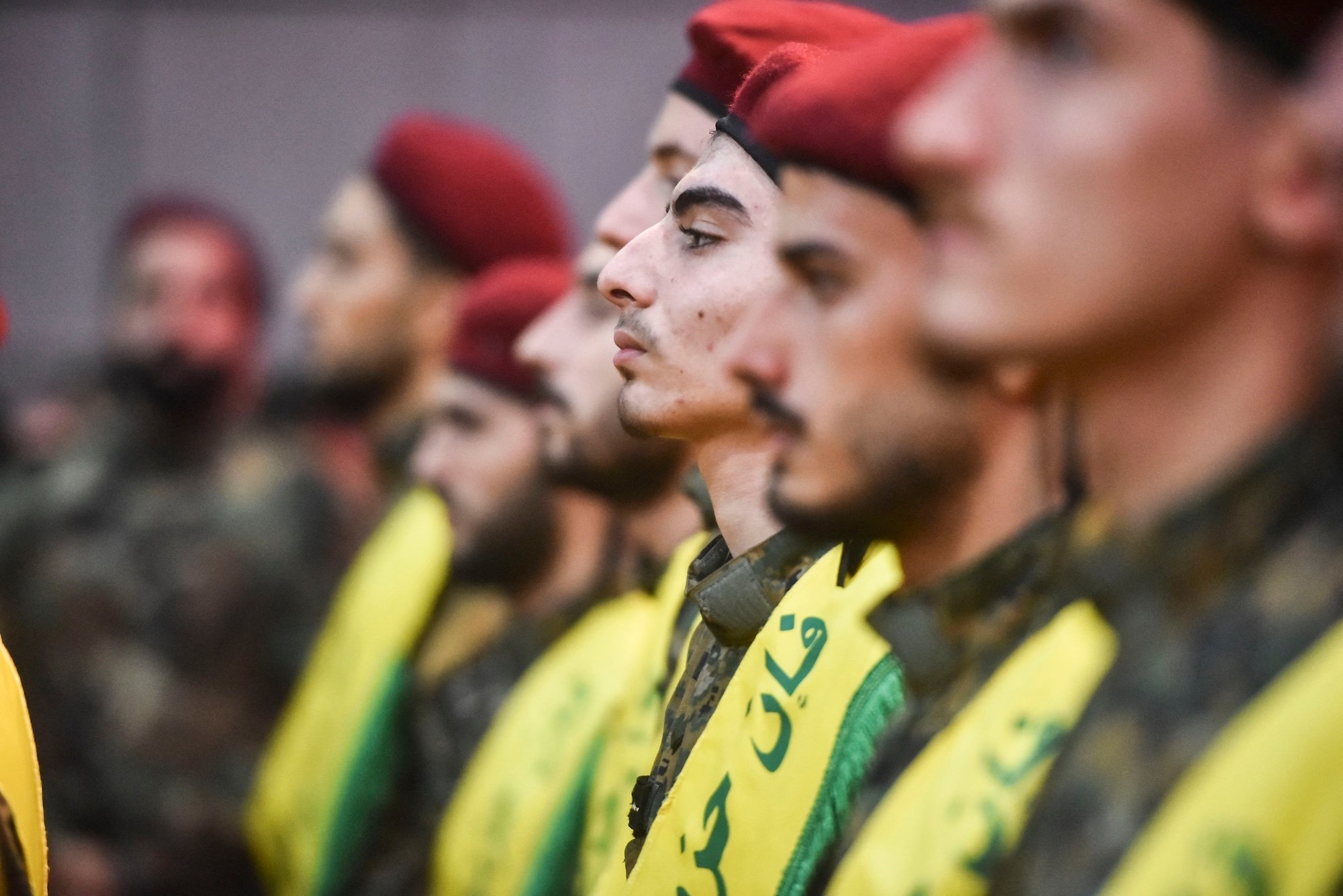
In a significant development amid ongoing hostilities, a ceasefire agreement between Israel and Hezbollah was announced on Friday, according to a US official. This followed intense exchanges in Lebanon that threatened the integrity of a recently established ceasefire deal meant to address escalating tensions in the region.
The violence had escalated sharply, with Lebanese authorities reporting 47 fatalities due to Israeli airstrikes, while Israel confirmed the deaths of four of its soldiers. This marked the highest combined casualty count since the recent US-Iran agreement aimed at mitigating regional conflicts.
As the situation unfolded, crucial talks scheduled between US and Iranian officials in Switzerland to build on the agreement were postponed, with no alternative dates provided. In a notable communication, US Secretary of State Marco Rubio and Lebanese President Joseph Aoun discussed the state of affairs. Aoun expressed gratitude for US support but emphasized the urgency of achieving a comprehensive ceasefire to halt Israeli attacks on Lebanese soil.
Rubio stressed the necessity for Lebanon to continue efforts to disarm Hezbollah, the militant group engaged in conflict with Israel in southern Lebanon. Both officials outlined potential next steps for future negotiations, slated for June 23 to 25 in Washington, aimed at advancing peace efforts. Rubio reiterated the US position on disarming Hezbollah and re-establishing sovereign control over Lebanese territory.
Israel’s ambassador to the US, Yechiel Leiter, took to social media to assert that Israel would commit to an immediate ceasefire, contingent upon Hezbollah’s adherence to the agreement and cessation of hostilities. A recent deal brokered by President Donald Trump and Iran’s Mosoud Pezeshkian sought to end the recent conflict that erupted on February 28 following US-Israeli military actions that resulted in the death of Iranian supreme leader Ayatollah Ali Khamenei.
The agreement, which was also intended to curb hostilities in Lebanon, turned Israel’s operational campaigns there into a point of contention with US officials. In a statement regarding military actions, Israel confirmed that it had targeted over 80 Hezbollah positions and resulted in significant losses for the Iran-backed militia.
Despite the announcement of a ceasefire, reports emerged of continued Israeli airstrikes in the south of Lebanon, particularly the Jezzine region. Leiter refuted these claims, asserting that Israel had ceased all offensive actions as of the morning the truce was declared.
Earlier in the day, Israeli Prime Minister Benjamin Netanyahu threatened retaliation against Hezbollah, stating that the Israeli military would ensure the group pays a heavy toll for its actions. Far-right officials in the Israeli government escalated rhetoric further, with National Security Minister Itamar Ben Gvir advocating for severe consequences for all of Lebanon.
Iran’s Foreign Minister, Abbas Araghchi, criticized Israel’s approach, accusing it of seeking a state of perpetual conflict. Amid these tensions, plans for upcoming negotiations in Switzerland, aimed at addressing broader issues such as Iran’s nuclear program, faced delays. Although Swiss authorities expressed readiness to facilitate discussions, Iranian officials noted a lack of urgency, indicating that talks would still be held in the near future.
An important element of the recent US-Iran agreement was the immediate reopening of the Strait of Hormuz, a critical maritime route. Following this, a notable uptick in commercial shipping was observed, with 25 vessels reported to have crossed the strait on Thursday, the highest number since mid-April. Meanwhile, American military operations indicated a lifting of their naval blockade of Iranian ports, though US warships would continue to maintain a presence in the region.
Iranian authorities specified that any ships wishing to navigate the Strait of Hormuz must provide a transit request 48 hours in advance, reflecting ongoing complexities despite the newly re-established passage.


