




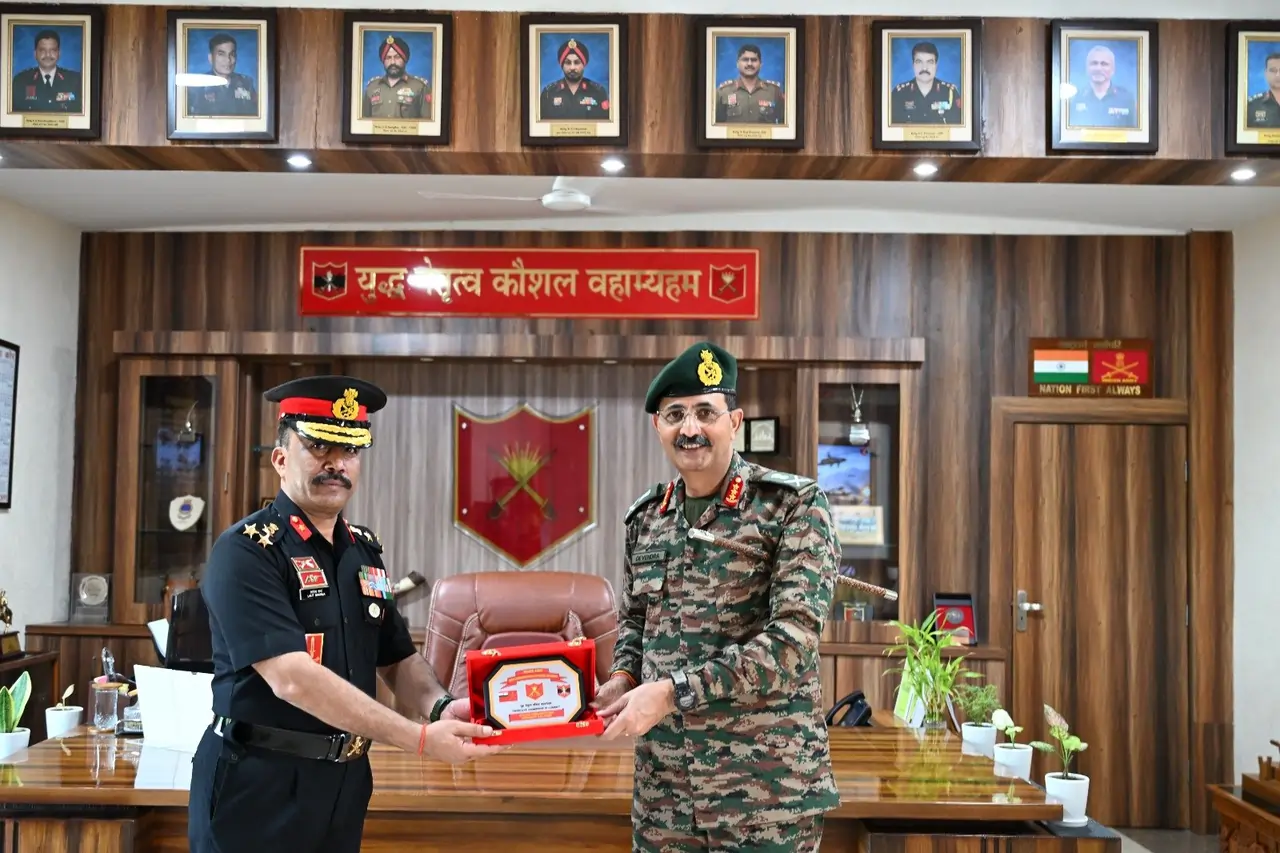
Lieutenant General Devendra Sharma, General Officer Commanding-in-Chief of the Army Training Command, undertook a significant visit to the Non-Commissioned Officers Academy at Dhana to assess its training initiatives and transformation efforts designed to prepare the Indian Army for contemporary combat challenges. This visit underscored the Army’s commitment to modernizing military training institutions in light of the evolving demands of 21st-century warfare.
During his visit, Lt Gen Sharma engaged with Brigadier Lalit Sharma, Commandant of the NCO Academy, who provided a detailed briefing on various operational aspects of the institution. This included insights into the innovative training methodologies being employed, the Vision 2030 roadmap, and the institution’s mechanisms for result analysis and perception assessment. The briefing presented a thorough overview of the Academy’s endeavors to integrate technology into its training models, thereby enhancing leadership development programs for non-commissioned officers.
The NCO Academy serves a key function in the development of junior leaders from both the Combat and Combat Support Arms of the Indian Army. Its training framework is meticulously designed to equip soldiers with essential professional competencies, tactical knowledge, and leadership skills necessary for effective operation in complex operational settings. The emphasis is on preparing soldiers for increased responsibilities, fostering adaptability, initiative, and operational excellence.
Lt Gen Sharma lauded the Academy for its successful implementation of a technology-driven transformation strategy and acknowledged its significant role in shaping a future-ready military force. He commended the commitment to adopting innovative training methodologies that align with the Indian Army’s overarching modernization goals and the demands of contemporary warfare.
A focal point of the Army Commander’s remarks was the importance of effective military leadership at the junior level. He stressed the critical need for team building, adaptive leadership, and the incorporation of automated systems within military training. Modern battlefields, he noted, require leaders to demonstrate not only tactical prowess but also the capacity to make swift decisions, adapt to changing conditions, and utilize advanced technologies effectively.
Lt Gen Sharma emphasized that the development of future-oriented training infrastructure is essential to reflect the changing nature of warfare. This includes recognizing the significance of technology, network-centric operations, and integrated battlefield systems. He encouraged the Academy to persist in enhancing its capabilities to ensure that non-commissioned officers are well-prepared to lead across the full spectrum of military operations.
Recognizing excellence within military instruction, he presented GOC-in-C ARTRAC Commendation Cards to two instructors who were honored for their exceptional contributions to training and their unwavering dedication to maintaining high standards in professional military education. Their efforts have considerably enhanced the effectiveness of leadership training at the Academy.
Additionally, the Army Commander honored two veterans with the GOC-in-C ARTRAC Veteran Achievers Medal and Certificates of Appreciation for their exemplary contributions to veterans’ welfare, reflecting ARTRAC’s ongoing dedication to acknowledging the invaluable service rendered by veterans beyond their active duty.
The visit reinforced the Indian Army’s focus on transforming its training institutions into centers of excellence that produce technologically proficient, operationally capable, and ethically grounded military leaders. Aligned with Vision 2030, the NCO Academy at Dhana plays a vital role in cultivating the next generation of combat leaders equipped to face the challenges of future battlefields.
Through a focus on innovation, leadership development, and continual modernization, the Academy remains central to the Indian Army’s commitment to building a combat-ready and future-oriented force prepared to safeguard national interests in an increasingly dynamic security landscape.


