





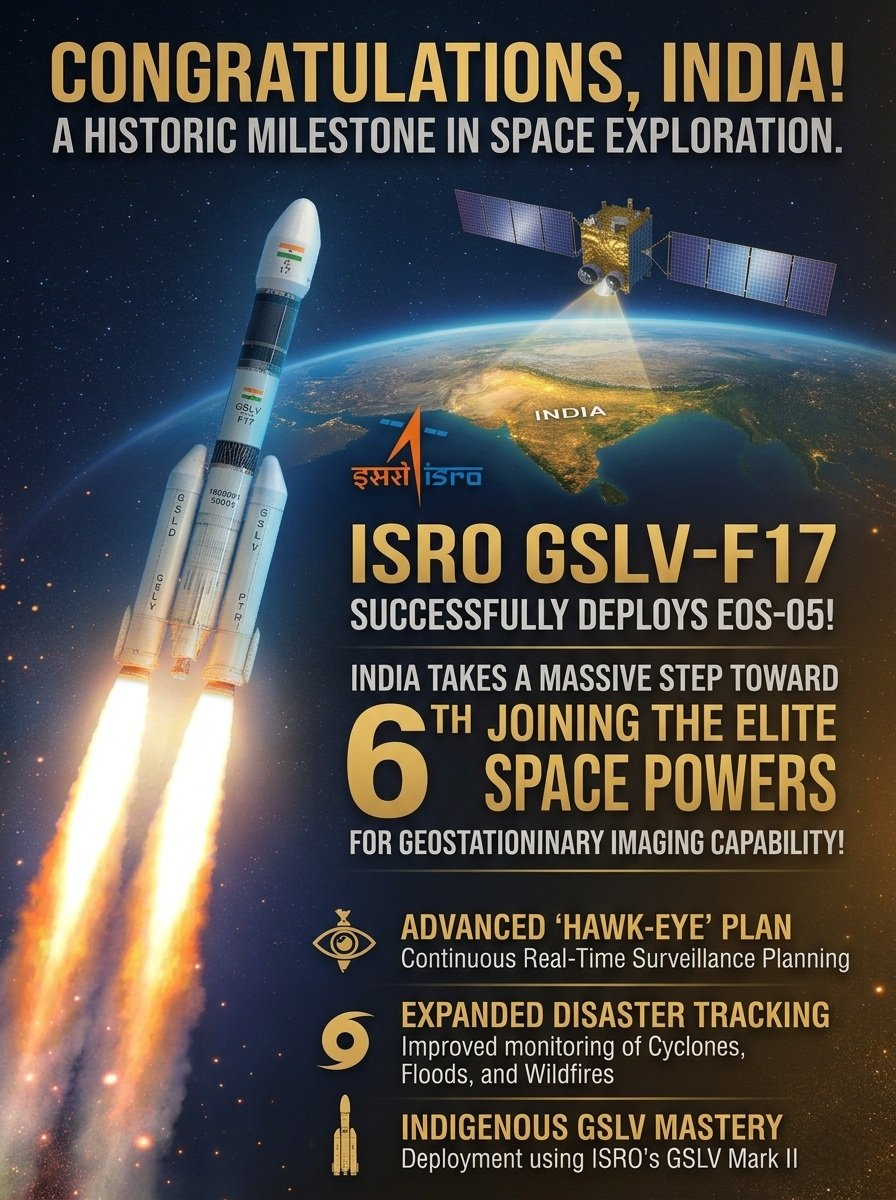
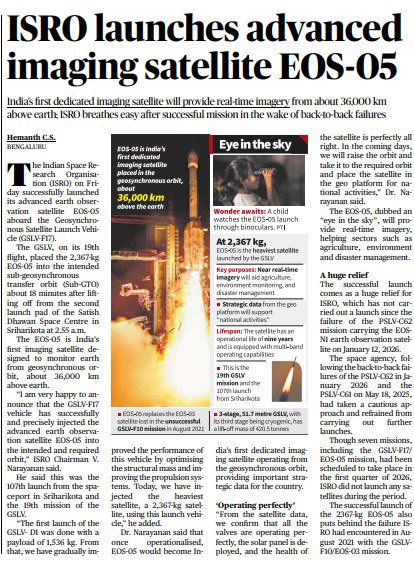
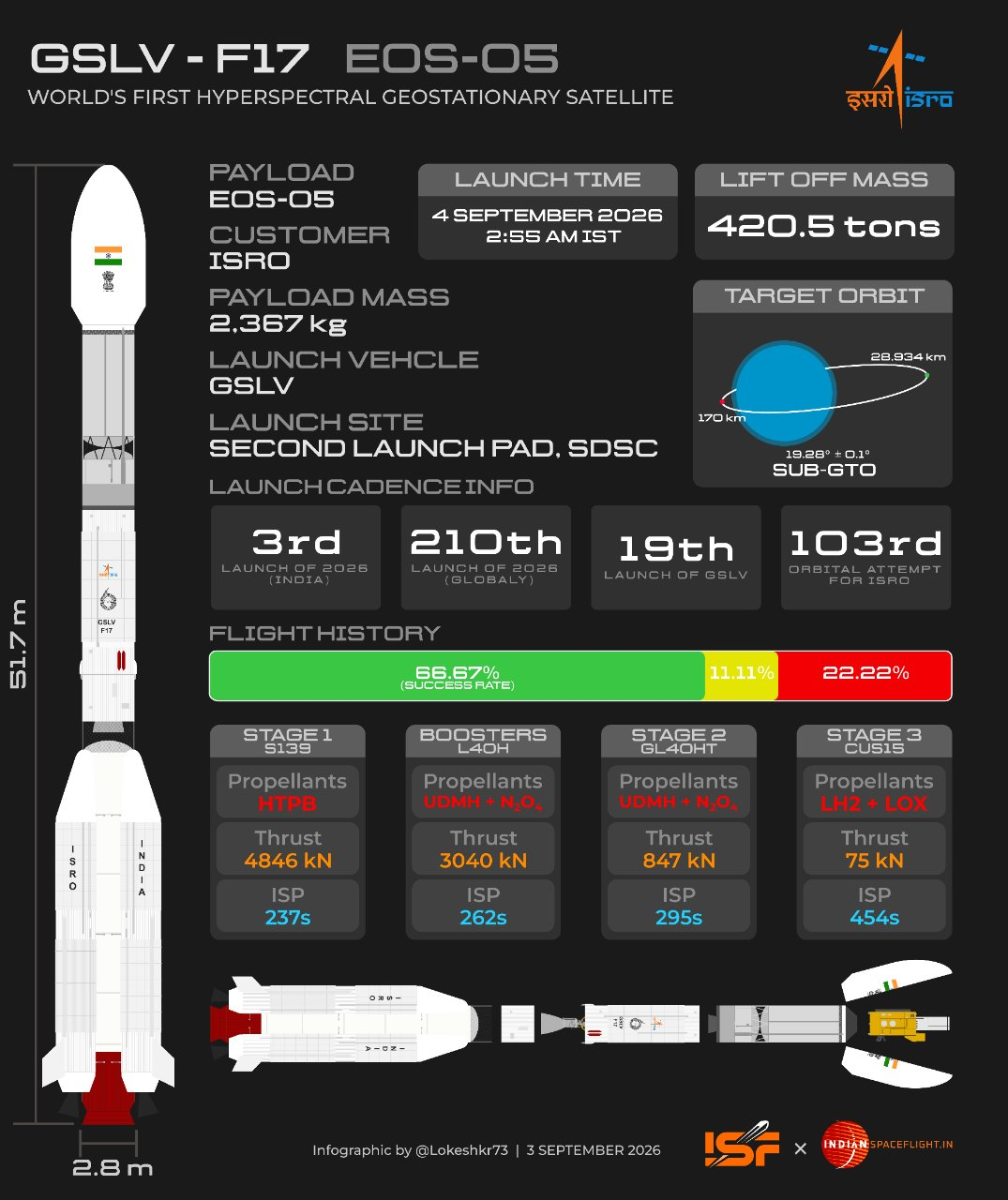
India’s space programme achieved another significant milestone on September 4, 2026, when the Indian Space Research Organisation (ISRO) successfully launched the GSLV-F17 rocket carrying the EOS-05 Earth Observation Satellite. The mission was launched from the Second Launch Pad of the Satish Dhawan Space Centre (SDSC), Sriharikota, Andhra Pradesh, at 2:55 AM IST.
ISRO Successfully Launches GSLV-F17 Carrying EOS-05
The mission is particularly important because EOS-05 is India’s first imaging satellite designed to operate from a geosynchronous orbit. According to ISRO, GSLV-F17 successfully placed EOS-05 into its intended Sub-Geosynchronous Transfer Orbit (Sub-GTO).
Key Highlights of the Mission
- Mission: GSLV-F17 / EOS-05
- Launch Date: September 4, 2026
- Launch Time: 2:55 AM IST
- Launch Site: Satish Dhawan Space Centre, Sriharikota
- Launch Pad: Second Launch Pad
- Launch Vehicle: GSLV-F17
- Payload: EOS-05
- Satellite Type: Earth Observation / Imaging Satellite
- Orbit: Sub-Geosynchronous Transfer Orbit (Sub-GTO)
- GSLV Flight Number: 19th GSLV flight
- Organisation: ISRO
ISRO’s official mission records list GSLV-F17/EOS-05 as the 19th GSLV mission and confirm that the launch was successfully accomplished on September 4, 2026.
What is EOS-05?
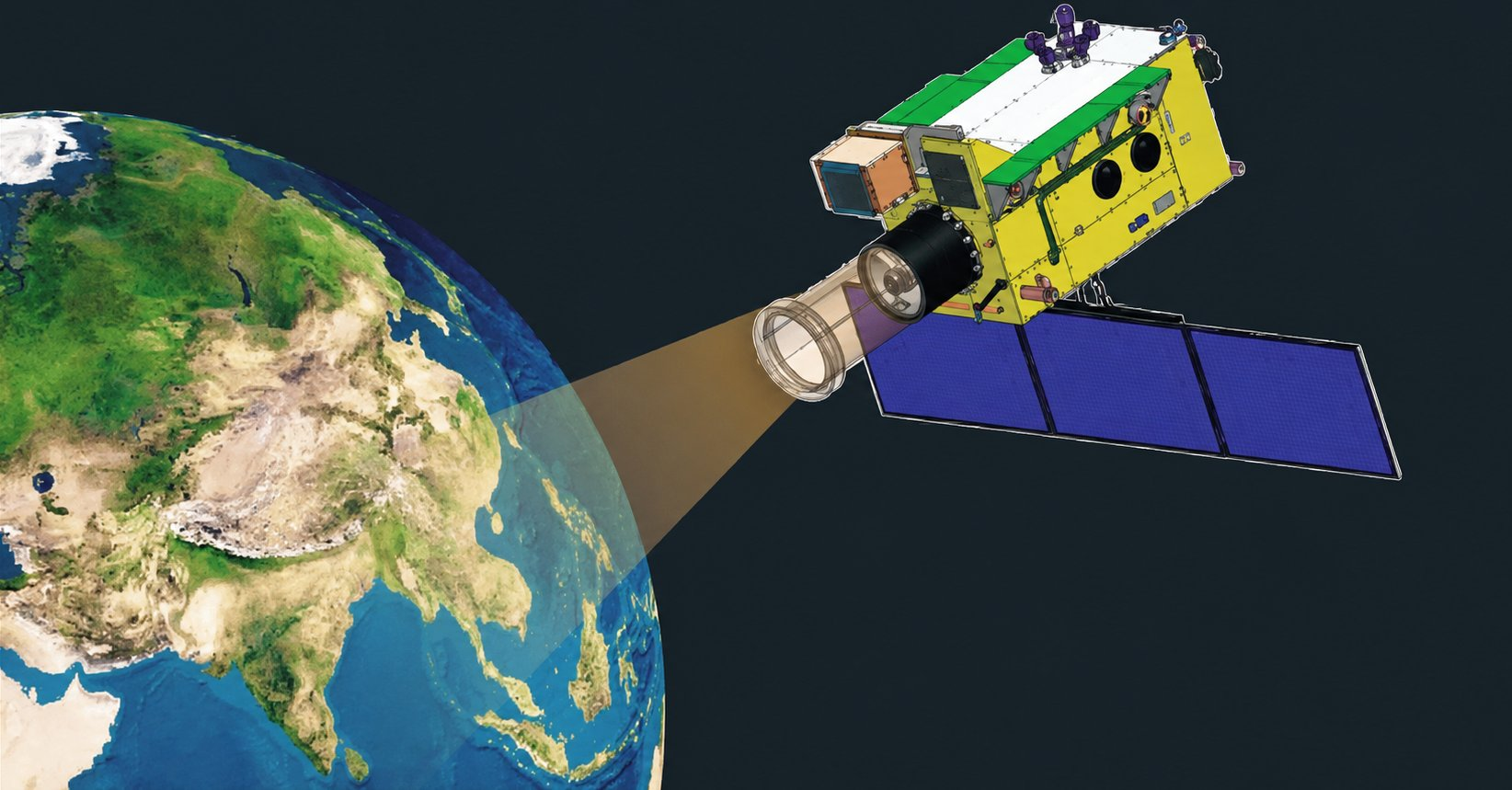
EOS-05 is an advanced Earth Observation spacecraft developed by ISRO. Its most notable feature is that it is India’s first-ever imaging satellite intended for operation from a geosynchronous orbit.
Earth observation satellites collect information about the Earth’s surface and atmosphere. Such data can be useful for applications including:
- Monitoring large geographical areas
- Disaster management
- Agriculture and land-use monitoring
- Weather and environmental observation
- Infrastructure and urban planning
- Strategic and national applications
The major advantage of placing an imaging satellite in a geosynchronous orbit is the ability to repeatedly observe a broad region from a high-altitude orbital position.
Why is the GSLV-F17 Mission Important?
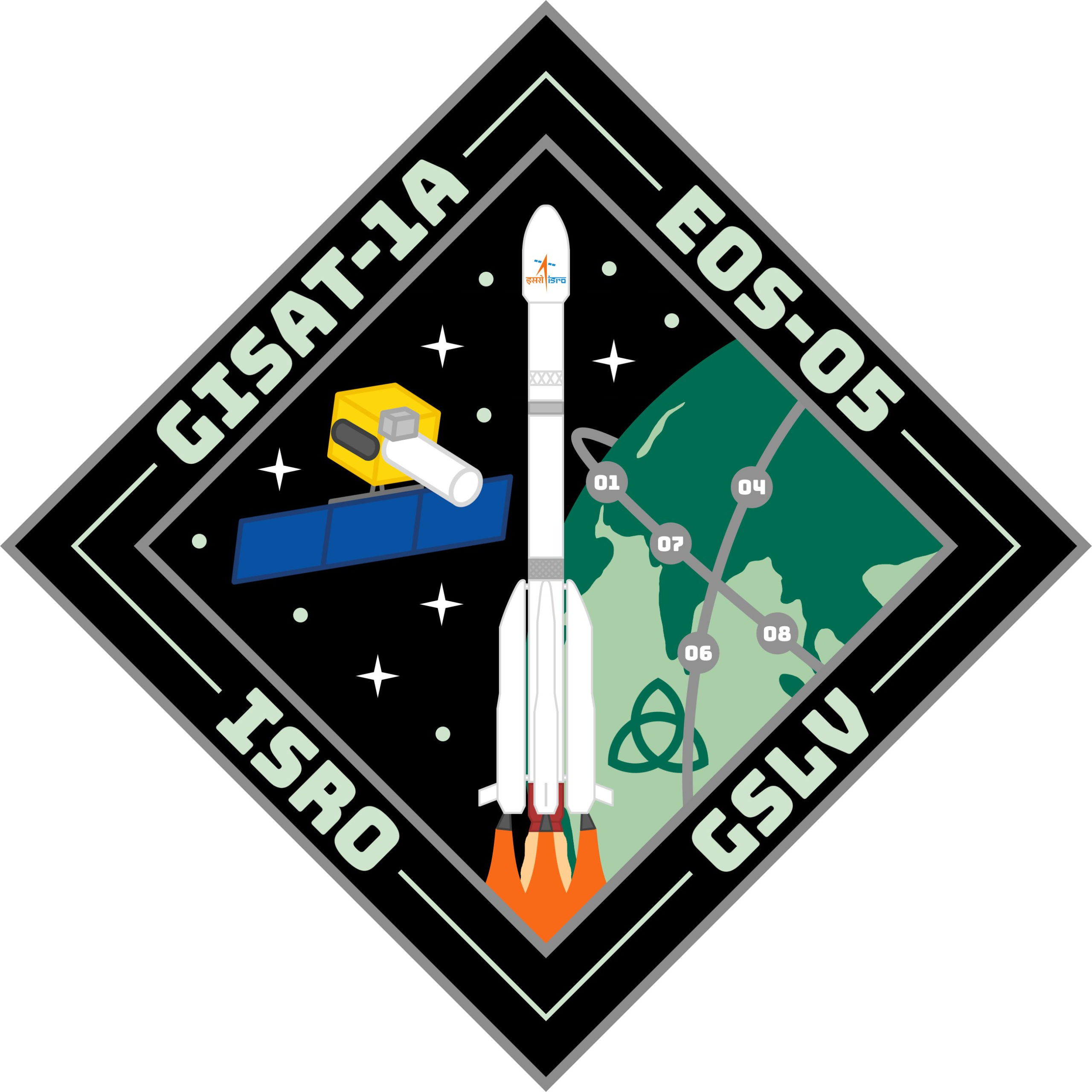
The GSLV is India’s Geosynchronous Satellite Launch Vehicle, developed to carry heavier spacecraft into high Earth orbits.
GSLV-F17 represents the 19th flight of the GSLV, making the mission another important demonstration of India’s capability to launch sophisticated spacecraft into higher orbits.
The rocket uses a combination of solid, liquid and cryogenic propulsion technologies, enabling it to deliver satellites to geosynchronous transfer trajectories.
India’s Growing Earth Observation Capability
India has developed a large family of Earth observation satellites under the EOS series. These satellites provide data for a wide range of civilian and strategic applications.
The successful EOS-05 mission adds a new capability because of its planned operation from a geosynchronous orbit. This can complement the observations provided by satellites operating in lower orbits.
ISRO’s spacecraft mission records also list EOS-05 among India’s latest Earth observation missions, following satellites such as EOS-04, EOS-06 and NISAR.
GSLV: India’s High-Orbit Launch Vehicle
The Geosynchronous Satellite Launch Vehicle (GSLV) is one of India’s major launch vehicles.
Its three-stage architecture incorporates:
- Solid-propellant stage
- Liquid-propellant stage
- Cryogenic upper stage
The cryogenic upper stage is especially important for missions requiring delivery of payloads into high-energy orbits.
GSLV-F17 is the latest entry in ISRO’s GSLV launch record and follows missions such as GSLV-F16/NISAR, GSLV-F15/NVS-02 and GSLV-F14/INSAT-3DS.
Strategic and Developmental Significance
The EOS-05 mission demonstrates how India’s space programme is increasingly focused not only on launching satellites but also on developing specialised observation capabilities.
High-quality Earth observation data can support:
Agriculture: Monitoring crops, land conditions and agricultural resources.
Disaster Management: Providing valuable information before and after floods, cyclones, landslides and other disasters.
Urban Planning: Helping authorities monitor changes in cities and infrastructure.
Environmental Monitoring: Supporting observation of forests, water bodies and other natural resources.
National Applications: Earth observation technology can also contribute to strategic planning and monitoring.
A Boost for India’s Space Ambitions
The successful launch of GSLV-F17/EOS-05 comes at a time when India is expanding its capabilities across satellite technology, launch vehicles, human spaceflight and commercial space activities.
ISRO’s official records show that the organisation continues to conduct missions using different launch vehicles, including PSLV, GSLV, SSLV and LVM3, demonstrating the increasing diversity of India’s space-launch capabilities.
The EOS-05 mission therefore represents more than another successful launch—it highlights India’s progress in developing advanced Earth observation and high-orbit satellite technologies.
Conclusion
The successful launch of GSLV-F17 carrying EOS-05 on September 4, 2026 is an important achievement for India’s space programme. The mission combines India’s GSLV launch capability with a new generation of Earth observation technology.
With EOS-05 becoming India’s first imaging satellite designed for geosynchronous orbit, the mission marks another step forward in India’s ability to observe and understand the Earth from space.
Quick Revision for Competitive Exams
Q. Which organisation launched EOS-05?
Ans: Indian Space Research Organisation (ISRO)
Q. Which rocket launched EOS-05?
Ans: GSLV-F17
Q. When was EOS-05 launched?
Ans: September 4, 2026
Q. From where was it launched?
Ans: Satish Dhawan Space Centre, Sriharikota
Q. What type of satellite is EOS-05?
Ans: Earth Observation / Imaging Satellite
Q. What is special about EOS-05?
Ans: It is India’s first imaging satellite designed to operate from a geosynchronous orbit.
Q. Which flight number is GSLV-F17 in the GSLV series?
Ans: 19th GSLV flight.
Q. What orbit did GSLV-F17 place EOS-05 into initially?
Ans: Sub-Geosynchronous Transfer Orbit (Sub-GTO).


