


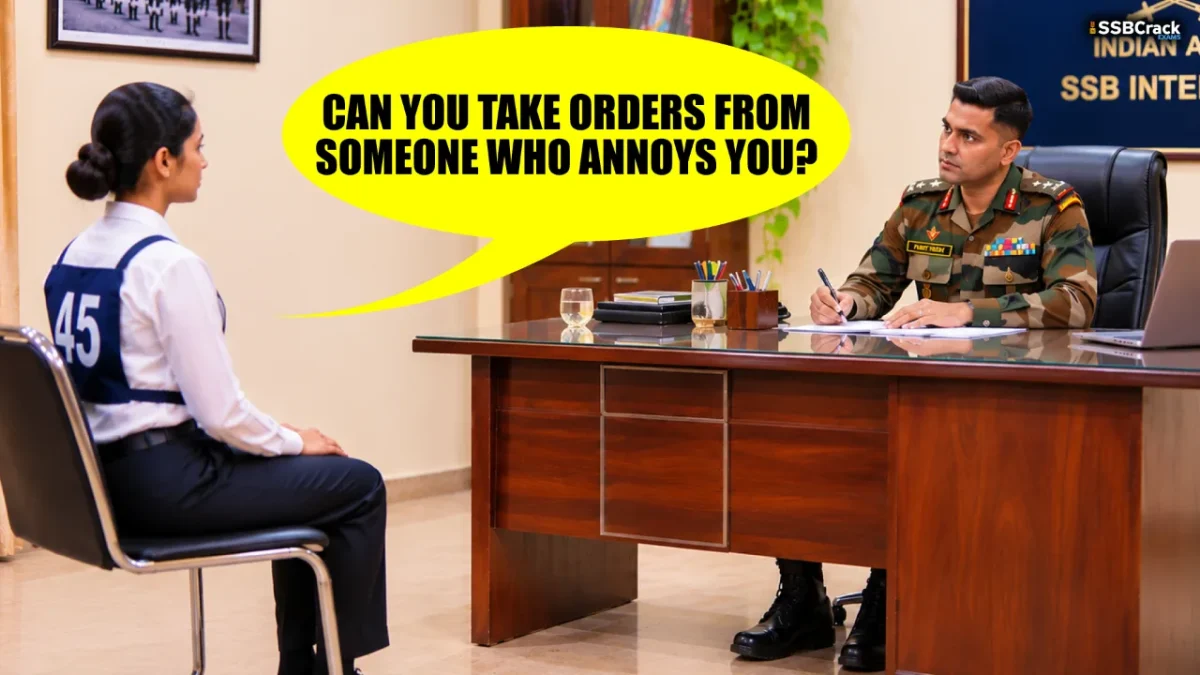
Do you get angry easily? Do you lose your temper when someone disagrees with you? Do you find it difficult to control your reactions when things don’t go according to your expectations?
If your answer is yes, then today’s article is especially important for you.
Anger is a natural human emotion. Everyone experiences it at some point. However, the way we manage and express our anger makes a significant difference.
In the Armed Forces, an officer may face stressful situations, disagreements, unexpected challenges and situations where decisions must be taken calmly. Losing your temper, behaving aggressively or reacting impulsively can affect teamwork, discipline and decision-making.
Therefore, during the SSB Interview, the Interviewing Officer may ask questions to understand your temperament, emotional control, behaviour during disagreements and ability to handle stressful situations.
In today’s article, we will discuss 20 important SSB Interview questions for candidates who have anger issues, along with why each question is asked, how you should answer it and a sample answer.
Remember, the objective is not to pretend that you never get angry. The objective is to demonstrate that you understand your behaviour and are making genuine efforts to manage your emotions.
1. Do you get angry easily?
Why is this question asked?
The officer wants to understand your temperament and whether you can recognise situations that trigger your anger.
How should you answer?
Be honest about your temperament. Avoid saying that you never get angry if that is not true. Explain how you generally respond when something irritates you.
Sample Answer
“Sir/Ma’am, I do get irritated sometimes, particularly when things don’t go according to my expectations. However, I am trying to become more patient and avoid reacting immediately. I prefer to understand the situation first and then respond.”
2. What are the common reasons that make you angry?
Why is this question asked?
The officer wants to assess your self-awareness and understand what situations trigger your anger.
How should you answer?
Mention genuine situations, such as dishonesty, repeated carelessness, unnecessary arguments or misunderstandings. Avoid blaming other people for all your reactions.
Sample Answer
“Sir/Ma’am, I sometimes get irritated when someone repeatedly ignores an important responsibility or does not take a commitment seriously. However, I understand that everyone has different ways of working. I am learning to communicate my concerns calmly instead of reacting emotionally.”
3. How do you behave when you are extremely angry?
Why is this question asked?
The officer wants to understand how you express anger and whether you become aggressive, silent, argumentative or impulsive.
How should you answer?
Describe your actual behaviour and explain how you try to manage it.
Sample Answer
“Sir/Ma’am, when I am very angry, I sometimes become quiet because I prefer not to say something that I may regret later. I try to take some time to understand the situation and discuss the issue once I am calmer. I am also working on expressing my disagreement more constructively.”
4. Have you ever lost your temper in front of your parents?
Why is this question asked?
The officer may be exploring your behaviour within your family and how you interact with people close to you.
How should you answer?
Give an honest example if one exists. Don’t portray yourself as perfect or blame your parents for your reactions.
Sample Answer
“Yes, Sir/Ma’am. There have been occasions when I became irritated during a disagreement with my parents. However, after calming down, I realised that reacting emotionally was unnecessary. I now try to listen to their perspective and explain my point of view respectfully.”
5. What happens when someone disagrees with your opinion?
Why is this question asked?
The officer wants to assess your tolerance for different opinions, flexibility and ability to work in a team.
How should you answer?
Show that disagreement does not automatically make you angry. Explain how you consider the other person’s viewpoint.
Sample Answer
“Sir/Ma’am, I try to understand why the other person has a different opinion. If their argument is logical, I am willing to change my view. If I still disagree, I explain my reasons without turning the discussion into an argument.”
6. Have you ever shouted at someone because you were angry?
Why is this question asked?
The officer wants to understand whether you express anger through aggressive communication and whether you recognise its consequences.
How should you answer?
If it has happened, admit it and explain what you learned from the incident.
Sample Answer
“Yes, Sir/Ma’am. I remember an occasion when I raised my voice during an argument with a friend. Later, I realised that shouting had not helped resolve the issue. I apologised for my behaviour and understood that I could have communicated the same point more calmly.”
7. How do you react when someone criticises you?
Why is this question asked?
The officer wants to assess your ability to accept feedback without becoming defensive or losing your temper.
How should you answer?
Explain that you distinguish between constructive criticism and personal attacks. Show your willingness to improve.
Sample Answer
“Sir/Ma’am, I try to understand the reason behind the criticism. If someone points out a genuine mistake, I accept it and work on improving myself. Even if I initially feel uncomfortable, I try not to react immediately because criticism can sometimes help me identify my weaknesses.”
8. What would you do if a junior repeatedly made the same mistake?
Why is this question asked?
The officer wants to assess your patience, leadership approach and ability to correct others without becoming aggressive.
How should you answer?
Emphasise identifying the reason for the mistake, explaining the correct procedure and ensuring accountability.
Sample Answer
“Sir/Ma’am, I would first try to understand why the junior is repeating the mistake. I would explain the correct procedure and make sure that the instructions are understood. If the mistake continues, I would take appropriate corrective action according to the situation, but I would not allow anger to affect my judgement.”
9. Do your friends consider you short-tempered?
Why is this question asked?
The officer wants to understand how other people perceive your behaviour and whether you are aware of its impact on relationships.
How should you answer?
Give an honest response and, if relevant, explain whether your friends have helped you recognise this behaviour.
Sample Answer
“Sir/Ma’am, some of my friends have told me that I become irritated quickly when I am frustrated. I have taken their feedback seriously. I am trying to become more patient and listen before reacting, especially during disagreements.”
10. What would you do if someone deliberately provoked you?
Why is this question asked?
The officer wants to assess your emotional control and ability to respond sensibly to provocation.
How should you answer?
Explain that you would avoid reacting impulsively, assess the situation and respond appropriately.
Sample Answer
“Sir/Ma’am, I would try not to react immediately. I would assess whether the person is deliberately trying to provoke me and whether the situation requires a response. If necessary, I would address the issue firmly but respectfully. I don’t think losing my temper would solve the problem.”
11. Have you ever damaged a relationship because of your anger?
Why is this question asked?
The officer wants to understand whether your anger has affected your personal relationships and whether you take responsibility for your actions.
How should you answer?
If you have experienced such a situation, explain what happened and what you learned. Avoid blaming the other person entirely.
Sample Answer
“Sir/Ma’am, I have had disagreements with a close friend where my reaction affected our relationship temporarily. After thinking about it, I realised that my tone was unnecessarily harsh. I spoke to my friend, clarified the misunderstanding and apologised. It taught me the importance of controlling my reactions.”
12. What would you do if your team member did not follow your instructions?
Why is this question asked?
The officer wants to assess your leadership qualities, communication and ability to handle non-cooperation.
How should you answer?
Show that you would first understand the reason rather than immediately becoming angry or using authority.
Sample Answer
“Sir/Ma’am, I would first ask the team member why the instructions were not followed. There may be a misunderstanding or a practical difficulty. I would clarify the instructions and explain their importance. If the person continues to disregard a legitimate responsibility, I would take appropriate action while maintaining discipline.”
13. Do you think anger is necessary for a good leader?
Why is this question asked?
The officer wants to understand your idea of leadership and whether you confuse aggression with authority.
How should you answer?
Explain that a leader needs firmness and decisiveness, but unnecessary anger can damage teamwork and judgement.
Sample Answer
“Sir/Ma’am, I don’t think anger is necessary for good leadership. A leader should be firm, disciplined and capable of taking difficult decisions. There may be situations that require strict action, but that does not mean behaving aggressively. I believe people should respect a leader because of their conduct and decisions, not because they are afraid of the leader’s temper.”
14. How do you control your anger during stressful situations?
Why is this question asked?
The officer wants to understand your emotional regulation and ability to remain composed under pressure.
How should you answer?
Mention practical techniques you genuinely use, such as pausing, breathing, assessing priorities or seeking clarification.
Sample Answer
“Sir/Ma’am, I try to pause before responding and focus on the actual problem rather than my frustration. I take a few deep breaths, organise my thoughts and identify what needs to be done. This helps me avoid making decisions based purely on emotions.”
15. What would you do if someone insulted you in front of a group?
Why is this question asked?
The officer wants to assess your ability to maintain dignity and self-control when your ego or self-respect is challenged.
How should you answer?
Show that you would not react aggressively or turn the situation into a public confrontation. Explain how you would address the matter appropriately.
Sample Answer
“Sir/Ma’am, I would try to remain calm and understand the context. If the comment requires an immediate response, I would respond firmly but respectfully. Otherwise, I would prefer to discuss the matter privately. I believe reacting aggressively in front of everyone may make the situation worse.”
16. Have you ever regretted something you said in anger?
Why is this question asked?
The officer wants to assess whether you reflect on your mistakes and take responsibility for the consequences of your words.
How should you answer?
Share a genuine incident and explain what you learned from it.
Sample Answer
“Yes, Sir/Ma’am. Once, during an argument, I made a comment to a friend that I did not really mean. Later, I realised that my words had hurt the person. I apologised and understood that words spoken in anger can affect relationships. Since then, I try to pause before responding when I am upset.”
17. What is the difference between being angry and being aggressive?
Why is this question asked?
The officer wants to assess your understanding of emotional behaviour and whether you can distinguish an emotion from an action.
How should you answer?
Explain that anger is an emotion, whereas aggression is a way of expressing or acting on it that may involve hostility or intimidation.
Sample Answer
“Sir/Ma’am, anger is an emotion that a person may experience when something goes wrong or feels unfair. Aggression is a behaviour through which a person may express that anger, sometimes by shouting, threatening or hurting others. I believe experiencing anger is natural, but we are responsible for how we express it.”
18. What steps are you taking to improve your temper?
Why is this question asked?
The officer wants to assess your initiative, self-discipline and willingness to work on personal weaknesses.
How should you answer?
Mention specific actions you are actually taking rather than making general promises.
Sample Answer
“Sir/Ma’am, I am trying to identify the situations that trigger my anger. I practise pausing before responding, listen more carefully during disagreements and avoid continuing arguments when I am emotionally disturbed. I also try to reflect on situations where I could have reacted better. These efforts are helping me become more patient.”
19. What would you do if your senior scolded you for a mistake you did not make?
Why is this question asked?
The officer wants to assess your response to authority, your ability to handle unfair criticism and whether you can remain disciplined under pressure.
How should you answer?
Show that you would maintain composure, understand the reason for the criticism and respectfully clarify the facts.
Sample Answer
“Sir/Ma’am, I would listen carefully and try to understand the reason for the senior’s reaction. If I genuinely believe that I have not made the mistake, I would respectfully explain the facts at an appropriate time. I would avoid arguing emotionally or showing disrespect.”
20. Why should the Armed Forces select a candidate who has anger issues?
Why is this question asked?
The officer wants to assess your self-awareness, emotional maturity and understanding of the importance of discipline and teamwork in military life.
How should you answer?
Don’t dismiss anger as an insignificant weakness. Acknowledge the importance of emotional control and explain how you are working to improve.
Sample Answer
“Sir/Ma’am, I understand that emotional control is important in the Armed Forces because an officer must make decisions under pressure and work effectively with people. I have recognised that I sometimes become irritated in certain situations, and I am making conscious efforts to improve my patience and reactions. I am willing to learn, accept feedback and develop the emotional maturity required for the responsibilities of an officer.”
Important Tips for Candidates with Anger Issues
- Understand your triggers. Identify the situations, people or circumstances that commonly make you angry.
- Pause before reacting. Give yourself a few moments before responding to an irritating situation.
- Don’t confuse anger with strength. Being loud or aggressive does not make you a strong leader.
- Practise active listening. Sometimes anger develops because we react before understanding the other person’s point of view.
- Accept constructive criticism. Avoid treating every disagreement as a personal attack.
- Control your tone. Even when you have a valid point, an unnecessarily harsh tone can weaken your message.
- Avoid unnecessary arguments. Not every disagreement needs to become a debate.
- Take responsibility for your reactions. Don’t blame other people for every instance of losing your temper.
- Learn to apologise. If your behaviour hurts someone, acknowledge it and make an effort to correct it.
- Practise patience in everyday situations. Use ordinary situations, such as waiting in a queue or dealing with delays, to practise self-control.
- Don’t make decisions when extremely angry. Give yourself time to think clearly before taking important decisions.
- Use physical activity positively. Exercise, sports and outdoor activities can support general emotional well-being.
- Develop healthy communication habits. Express disagreement clearly without insulting or intimidating others.
- Don’t suppress every emotion. Learn to express frustration constructively instead of allowing it to build up.
- Avoid unnecessary comparisons. Focus on your responsibilities and personal improvement rather than competing with everyone.
- Respect people regardless of their position. Your behaviour towards juniors, peers and seniors should reflect discipline.
- Practise teamwork. Work with people who have different opinions and learn to adjust when necessary.
- Reflect on your behaviour. At the end of the day, think about situations where you handled your emotions well and where you could have done better.
- Seek support if anger feels difficult to control. If your anger is frequent, intense or affecting your relationships, consider speaking with a qualified mental health professional.
- Demonstrate improvement through actions. Don’t simply tell the Interviewing Officer that you have changed. Let your everyday behaviour reflect your efforts.
Closing Lines
So, these were 20 important SSB Interview questions for candidates with anger issues, along with the reasons behind each question, answering strategies and sample answers.
Before we end, remember something very important:
An officer does not need to be a person who never gets angry. An officer needs to be someone who does not allow anger to control their decisions and behaviour.
Being firm is important, but being aggressive is not.
Being disciplined is important, but humiliating others is not.
Being confident is important, but losing your temper whenever someone disagrees with you is not.
The Armed Forces require individuals who can remain composed, think clearly, work with different personalities and take responsibility during challenging situations.
So, if you have a short temper, don’t simply try to hide it during your SSB Interview. Work on it in your everyday life. Practise patience, listen carefully, accept feedback and learn to respond rather than react.
And one more important thing: Don’t memorise the sample answers given in this video. Understand the purpose behind each question and frame your responses according to your own experiences and personality.
Keep improving yourself, stay disciplined and remember:
True strength is not about controlling everyone around you. It is about having control over yourself.
All the best for your SSB journey!




