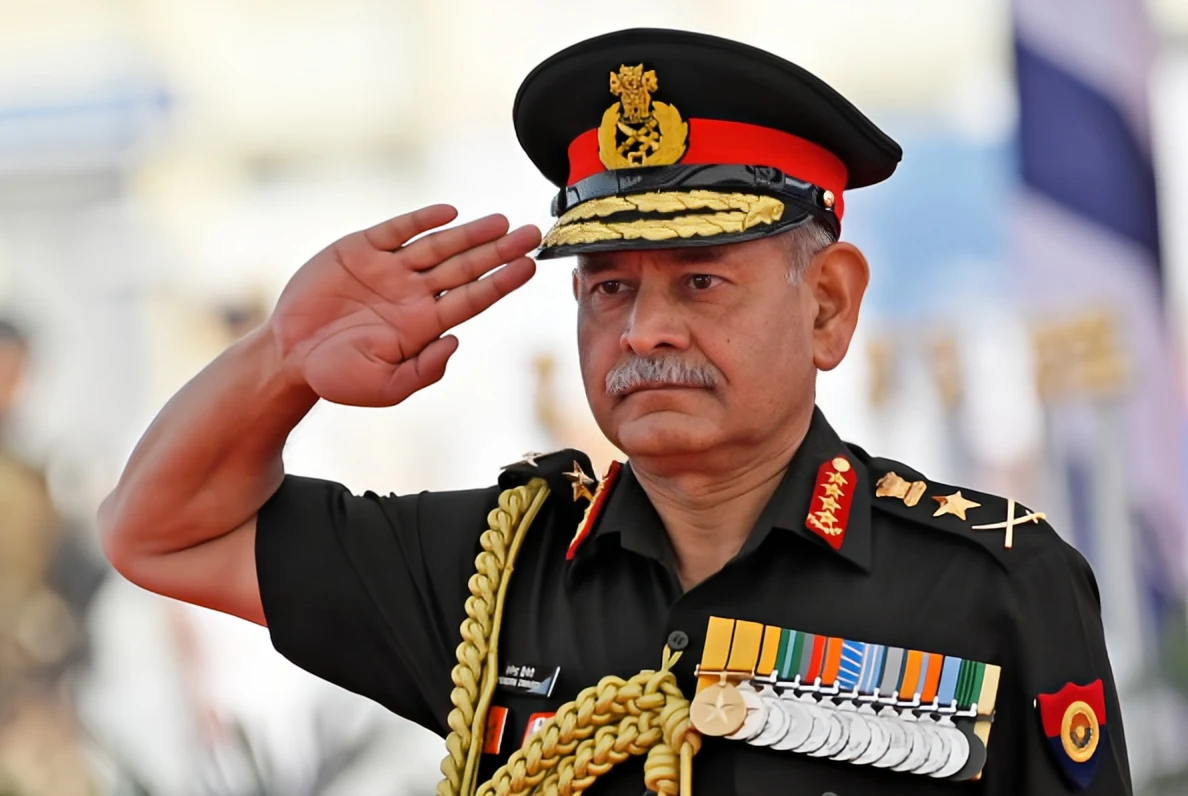
Retirement from the Indian Army marks the beginning of a new chapter in the life of a military officer. After dedicating years to serving the nation, Indian Army officers are entitled to retirement benefits, including a monthly pension, subject to their service conditions and eligibility.
One of the most frequently asked questions among NDA, CDS and other defence aspirants is: How much pension does an Indian Army officer receive after retirement?
The answer depends on several factors, including the officer’s last reckonable emoluments, rank, qualifying service, type of commission, applicable pension rules and retirement circumstances.
Under the pension framework associated with the 7th Central Pay Commission, the standard retiring pension for an eligible commissioned officer is generally calculated at 50% of reckonable emoluments, subject to applicable rules and minimum pension provisions. However, the actual amount credited to a retired officer’s bank account may be higher because of Dearness Relief and other applicable benefits.
In this article, we explain how Indian Army officers’ pensions are calculated, provide illustrative rank-wise figures, discuss retirement eligibility, and examine the benefits available to retired officers and their families.
How Is the Pension of an Indian Army Officer Calculated?
The Indian Army’s pension system is governed by Ministry of Defence regulations and applicable government orders. Pension is not simply calculated as half of an officer’s total monthly salary credited to their bank account.
Instead, the calculation uses reckonable emoluments, which include specified components of pay admissible for pension purposes.
For eligible regular commissioned officers, retiring pension is generally calculated at 50% of the last reckonable emoluments or the average reckonable emoluments during the final 10 months of service, whichever is more beneficial.
The minimum qualifying service for a regular commissioned officer is ordinarily 20 years.
Indian Army Officer Pension Formula
Basic Monthly Pension = 50% × Reckonable Emoluments
For example, if an Army Colonel retires with pensionable emoluments of ₹1,50,000 per month, the basic retiring pension would be ₹75,000 per month under the standard 50% calculation.
This is the basic pension before Dearness Relief, commutation adjustments, income tax implications and any other applicable provisions.
Indian Army Officer Pension Rank-Wise
There is no single fixed pension amount for every officer of the same rank. Two Colonels, for instance, may receive different pensions depending on their pay at retirement, length of service, retirement date and applicable pension revisions.
The following table provides illustrative figures using hypothetical reckonable emoluments and the standard 50% formula.
| Indian Army Rank | Example Reckonable Emoluments | Illustrative Basic Pension |
|---|---|---|
| Lieutenant | ₹60,000 | ₹30,000 |
| Captain | ₹75,000 | ₹37,500 |
| Major | ₹1,00,000 | ₹50,000 |
| Lieutenant Colonel | ₹1,30,000 | ₹65,000 |
| Colonel | ₹1,50,000 | ₹75,000 |
| Brigadier | ₹1,70,000 | ₹85,000 |
| Major General | ₹1,90,000 | ₹95,000 |
| Lieutenant General | ₹2,10,000 | ₹1,05,000 |
| General (COAS) | ₹2,50,000 | ₹1,25,000 |
These are calculation examples, not official rank-wise pension rates or OROP amounts. Lieutenant, Captain and Major examples do not imply that an officer ordinarily qualifies for a regular retiring pension at those ranks. Eligibility depends on qualifying service and applicable rules.
For officers already retired, pension may be governed by revised pension tables, including One Rank One Pension (OROP), rather than simply applying the above examples.
What Is the Minimum Pension of an Indian Army Officer?
Under the 7th Central Pay Commission pension framework, the generally prescribed minimum basic pension for eligible defence pensioners is ₹9,000 per month, subject to the applicable category and rules.
However, this should not be confused with the pension typically received by a career Army officer retiring after 20 years or more of qualifying service.
A regularly commissioned officer who retires after a full military career will ordinarily have substantially higher reckonable emoluments and, consequently, a higher basic pension.
The minimum pension is a floor, not a standard pension payable to all officers.
How Much Pension Does an Indian Army Colonel Get?
A Colonel is one of the senior ranks in the Indian Army, and officers retiring at this rank may receive a substantial monthly pension.
Consider an illustrative example in which a Colonel retires with reckonable emoluments of ₹1,60,000 per month.
The pension calculation would be:
₹1,60,000 × 50% = ₹80,000 per month.
This would be the officer’s basic pension before Dearness Relief and other adjustments.
If the officer’s basic pension is ₹80,000 and the applicable Dearness Relief rate is hypothetically 60%, the calculation would be:
- Basic pension: ₹80,000
- Dearness Relief at an assumed 60%: ₹48,000
- Total before commutation and other deductions: ₹1,28,000 per month
The 60% rate is used solely to demonstrate the calculation. The actual Dearness Relief rate must be taken from the government order applicable to the payment period.
How Much Pension Does an Indian Army Major Get?
A Major in the Indian Army is a commissioned officer holding a rank above Captain and below Lieutenant Colonel.
However, it is important to understand that attaining the rank of Major does not automatically entitle an officer to a regular lifelong service pension.
A permanent commissioned officer ordinarily needs 20 years of qualifying service to become eligible for a retiring pension.
If an officer’s service ends before meeting the required qualifying service, the officer may not qualify for the standard retiring pension, although other benefits may be admissible depending on the circumstances and governing rules.
For example, if an eligible officer’s reckonable emoluments were ₹1,00,000, the standard 50% calculation would produce a basic pension of ₹50,000.
This example explains the formula, not an automatic pension entitlement for every Major.
Indian Army Officer Salary and Its Impact on Pension
An officer’s pay level is an important factor in determining pensionable emoluments. The 7th CPC pay matrix establishes different basic pay levels for different commissioned ranks.
The following are the notified basic pay ranges, which should not be confused with pension amounts.
| Rank | Pay Level | Basic Pay Range |
|---|---|---|
| Lieutenant | Level 10 | ₹56,100–₹1,77,500 |
| Captain | Level 10B | ₹61,300–₹1,93,900 |
| Major | Level 11 | ₹69,400–₹2,07,200 |
| Lieutenant Colonel | Level 12A | ₹1,21,200–₹2,12,400 |
| Colonel | Level 13 | ₹1,30,600–₹2,15,900 |
| Brigadier | Level 13A | ₹1,39,600–₹2,17,600 |
| Major General | Level 14 | ₹1,44,200–₹2,18,200 |
| Lieutenant General (HAG) | Level 15 | ₹1,82,200–₹2,24,100 |
| Lieutenant General (HAG+) | Level 16 | ₹2,05,400–₹2,24,400 |
| Army Commander/VCOAS | Level 17 | ₹2,25,000 fixed |
| Chief of Army Staff | Level 18 | ₹2,50,000 fixed |
Is Military Service Pay Included in Pension?
Military Service Pay (MSP) is an additional component of pay granted to eligible Armed Forces personnel in recognition of the special conditions of military service.
Under the 7th CPC framework, officers from Lieutenant to Brigadier receive fixed MSP of ₹15,500 per month.
For pension calculation, admissible MSP forms part of reckonable emoluments. However, MSP is not applicable to every senior rank, and other allowances such as transport, field area and hardship allowances should not automatically be included in pensionable pay.
Consider a Colonel whose basic pay is ₹1,70,000 and whose admissible MSP is ₹15,500.
The illustrative reckonable emoluments would be ₹1,85,500, assuming no other pensionable adjustments.
At 50%, the resulting basic pension would be ₹92,750 per month.
This example demonstrates why pension calculations based on basic pay alone can understate an eligible officer’s pension.
What Is One Rank One Pension (OROP)?
One Rank One Pension, commonly known as OROP, is a major pension policy for retired Indian Armed Forces personnel.
The principle of OROP is to provide uniform pension to eligible personnel retiring in the same rank with the same length of service, irrespective of their retirement date, with periodic revisions.
The policy addresses pension disparities that can arise when officers of the same rank and comparable service retire under different pay commission structures.
For example, a Colonel who retired many years ago may have originally received a lower pension than another Colonel retiring much later. OROP seeks to reduce such disparities by revising pension rates according to the notified framework.
Latest OROP Revision
The Ministry of Defence notified a revision of defence pensions under OROP with effect from 1 July 2024. Detailed pension tables were issued on 4 September 2024, covering various ranks, qualifying service lengths and pension categories.
A further official clarification concerning the revision was issued on 13 October 2025.
The applicable OROP pension cannot be determined from rank alone. The correct pension table, qualifying service, category and retirement details must be considered.
How Many Years Must an Indian Army Officer Serve to Get a Pension?
The minimum qualifying service is one of the most important factors affecting an Army officer’s pension entitlement.
For an ordinarily commissioned regular officer, the standard minimum qualifying service for retiring pension is 20 years.
There are special provisions for certain categories, including eligible late entrants and officers commissioned from the ranks, which may involve different qualifying service requirements.
| Type of Officer | General Pension Position |
|---|---|
| Permanent Commission officer | Ordinarily 20 years of qualifying service |
| Short Service Commission officer | No automatic regular pension merely for completing the SSC tenure |
| SSC officer granted Permanent Commission | Pension eligibility depends on total qualifying service and applicable rules |
| Eligible late entrant | Special qualifying-service provisions may apply |
| Officer invalided out of service | Separate invalid or disability pension rules may apply |
Do Short Service Commission Officers Get a Pension?
Short Service Commission (SSC) officers generally serve for a limited tenure rather than pursuing an entire career under Permanent Commission.
An SSC officer who completes the standard short-service tenure and leaves the Army does not automatically become eligible for the regular lifelong retiring pension.
However, an SSC officer subsequently granted Permanent Commission may become eligible after satisfying the applicable qualifying-service requirements.
Other benefits, including gratuity or specific disability-related benefits, may be available depending on the officer’s service and circumstances.
Therefore, defence aspirants should understand the distinction between Permanent Commission and Short Service Commission before choosing their preferred entry.
What Is Dearness Relief on Army Pension?
Dearness Relief (DR) is an additional payment provided to eligible pensioners to help offset increases in the cost of living.
It is calculated as a percentage of basic pension, and the applicable rate is revised through government orders.
Unlike the basic pension, Dearness Relief can change over time.
For example, consider a retired officer receiving a basic pension of ₹80,000 per month.
If Dearness Relief is assumed to be 60%, the calculation would be:
Basic Pension: ₹80,000
Dearness Relief: ₹48,000
Total Monthly Pension: ₹1,28,000
This is an illustrative calculation rather than a statement of the current Dearness Relief rate. Actual payments may differ because of commutation, deductions and other applicable provisions.
What Happens to an Army Officer’s Pension After Death?
The Indian Army pension system also provides financial protection to eligible family members of deceased military personnel.
The type and amount of family pension depend on the circumstances of death, the deceased officer’s reckonable emoluments and applicable entitlement rules.
Ordinary Family Pension
Ordinary family pension is generally calculated at 30% of the deceased officer’s reckonable emoluments, subject to prescribed minimum and other conditions.
For example, if the applicable reckonable emoluments were ₹1,50,000, the illustrative ordinary family pension would be ₹45,000 per month.
Enhanced family pension may be admissible for a specified period under the applicable rules.
Special Family Pension
Special Family Pension is generally applicable where death is accepted as attributable to or aggravated by military service, subject to the entitlement rules.
The prescribed rate is ordinarily 60% of the deceased officer’s reckonable emoluments.
For example, 60% of ₹1,50,000 would amount to ₹90,000 per month.
Liberalised Family Pension
Liberalised Family Pension is intended for eligible families of personnel who die in specified warlike, operational or other qualifying circumstances.
Under the applicable framework, it may be equal to 100% of the deceased individual’s reckonable emoluments.
These benefits are not interchangeable, and entitlement depends on official classification of the casualty and the governing rules.
Disability Pension for Indian Army Officers
Indian Army officers who suffer qualifying disabilities related to military service may be entitled to disability pension or related benefits.
Disability pension is distinct from ordinary retiring pension and depends on the nature of disability, its assessment, its connection with military service and the circumstances of retirement or invalidment.
Under the framework described by the Department of Ex-Servicemen Welfare, disability pension can comprise a service element and a disability element.
The disability element for 100% assessed disability is generally calculated at 30% of reckonable emoluments under the relevant provisions, with proportionate or otherwise prescribed treatment for lower disability percentages.
The precise entitlement must be assessed under the applicable casualty pension rules, including the Entitlement Rules for Casualty Pensionary Awards to Armed Forces Personnel, 2023, and subsequent orders.
Other Retirement Benefits Available to Indian Army Officers
Pension is only one component of the retirement benefits available to eligible Army officers.
Depending on their service conditions and entitlement, retired officers may also receive retirement gratuity, commutation benefits, leave encashment and access to applicable ex-servicemen welfare schemes.
Retirement Gratuity
Retirement gratuity is a lump-sum benefit calculated under the prescribed rules and ceilings. It provides additional financial support to eligible officers when they retire.
Leave Encashment
Leave encashment allows eligible officers to receive payment for accumulated leave within the limits prescribed by government regulations.
Pension Commutation
Pension commutation allows an eligible pensioner to receive a lump sum in exchange for a specified portion of monthly pension, subject to the applicable commutation factor and restoration provisions.
Commutation affects the monthly pension actually paid and should not be confused with a permanent reduction in the original sanctioned basic pension.
Ex-Servicemen Contributory Health Scheme
Eligible retired officers and their dependants may receive medical support through the Ex-Servicemen Contributory Health Scheme (ECHS), subject to membership and scheme rules.
CSD Canteen and Resettlement Benefits
Other facilities, including CSD canteen privileges and resettlement support, depend on individual eligibility and prevailing policies.
These benefits contribute to the overall financial and social security available to eligible retired Army personnel.
How Can Retired Army Officers Check Their Pension?
The Government of India operates the System for Pension Administration Raksha, commonly called SPARSH, for defence pension administration.
Through the system, eligible pensioners can access pension-related services, including pension information, payment records, pension slips, life certification and grievance registration.
Pensioners should check their Pension Payment Order (PPO), any corrigendum PPO, the applicable OROP revision and their latest pension slip to determine the actual sanctioned and payable amount.
Annual life certification is also important for uninterrupted pension disbursement.
Will Indian Army Officers Get Higher Pensions Under the 8th Pay Commission?
The 8th Central Pay Commission is expected to play an important role in future revisions of pay and pension for Central Government employees and eligible Armed Forces personnel.
The Government constituted the 8th Central Pay Commission through a resolution dated 3 November 2025. Its terms of reference cover defence personnel and pension-related matters.
In a Lok Sabha reply dated 10 August 2026, the Government confirmed that the Commission had been constituted but had not yet submitted its recommendations. The Government had also not finalised the implementation date or a revised fitment factor.
Consequently, claims about a particular percentage increase in Army officers’ pensions under the 8th Pay Commission should be treated as speculative until official recommendations are accepted and implementing orders are issued.
Frequently Asked Questions About Indian Army Officer Pension
1. How much pension does an Indian Army officer get per month?
An eligible regularly commissioned Army officer generally receives a basic retiring pension calculated at 50% of applicable reckonable emoluments. The actual amount depends on pay, qualifying service, retirement date and applicable pension revisions. Dearness Relief is payable separately where admissible.
2. Does an Army officer get a pension after 20 years?
Yes. An ordinarily commissioned Permanent Commission officer generally qualifies for retiring pension after completing 20 years of qualifying service, subject to applicable rules.
3. How much pension does a retired Colonel receive?
There is no universal fixed pension for all retired Colonels. For illustration, reckonable emoluments of ₹1,60,000 would produce a basic pension of ₹80,000 under the standard 50% calculation. Actual pension must be verified from the officer’s PPO and applicable pension tables.
4. Do Indian Army officers receive a pension for life?
Eligible retired officers generally receive their sanctioned pension throughout their lifetime, subject to pension regulations. Following their death, eligible family members may qualify for family pension.
5. Is an Army officer’s pension tax-free?
Ordinary service or retiring pension is generally taxable under the applicable income tax provisions. Certain disability-related pensions, family pensions and other awards may receive specific exemptions or different tax treatment, depending on the law and the individual’s circumstances.
6. Does an SSC officer receive a lifelong pension after 10 or 14 years?
Completing a standard Short Service Commission tenure does not automatically confer eligibility for regular lifelong retiring pension. Eligibility may differ if the officer subsequently receives Permanent Commission or qualifies under another specific pension provision.
7. Is Army pension calculated on basic salary or total salary?
It is calculated using prescribed reckonable emoluments, which generally include pensionable basic pay and admissible Military Service Pay. Not every salary allowance is included.
8. What is the difference between basic pension and total monthly pension?
Basic pension is the sanctioned pension amount before applicable relief and adjustments. Total monthly payment may include Dearness Relief and other admissible amounts, while deductions or pension commutation may affect the actual amount credited.
Conclusion
The pension of an Indian Army officer is an important part of the financial security provided to military personnel after retirement. Under the established pension framework, an eligible regular commissioned officer generally receives a basic retiring pension equivalent to 50% of reckonable emoluments, with Dearness Relief and other applicable benefits determined separately.
However, an officer’s rank alone cannot establish the exact pension amount. Qualifying service, last pensionable pay, retirement date, commission type, OROP revisions and individual pension orders all influence the final entitlement.
For NDA, CDS and other defence aspirants, understanding the pension system is useful when evaluating a long-term career in the Armed Forces. Along with the opportunity to lead soldiers and serve the nation, a career as a Permanent Commission officer can provide substantial post-retirement financial security for eligible personnel and their families.
Note: Pension rules and amounts are subject to government revisions. All numerical examples in this article are illustrative and should not be treated as individual pension quotations.