Commanding a Special Forces battalion is one of the most demanding jobs an Indian Army officer can hold. The Commanding Officer, usually a Colonel, answers for the training, readiness, discipline and welfare of several hundred highly skilled soldiers, and for the outcome of every task the unit is given. Colonel Punit Aswal holds that responsibility at the 7th Battalion, The Parachute Regiment (Special Forces), better known as 7 Para (SF) or SE7EN.
Much of a Special Forces officer’s career is, by design, kept out of public view, and very little has been published about Colonel Aswal’s early life, commissioning or operational record. This article does not guess at those details. Instead, it looks at what is on record about his command, the proud history of the battalion he leads, and what his appointment tells young aspirants about the road to commanding an elite unit.
Colonel Punit Aswal at a Glance
| Detail | Information |
|---|---|
| Rank and name | Colonel Punit Aswal |
| Appointment | Commanding Officer, 7th Battalion, The Parachute Regiment (Special Forces) |
| Battalion nickname | SE7EN |
| Notable event | Led the battalion’s Diamond Jubilee tribute at the National War Memorial, New Delhi, in September 2025 |
| Battalion raised | 1964 at Agra, as per regimental histories (some accounts give 1963) |
| Battalion roles | Counter-terrorism, counter-insurgency, direct action and special reconnaissance |
| Early life and awards | Not publicly documented |
Taking Command of SE7EN
An officer does not reach the command of a Para SF battalion by chance. Every member of these units, officers included, volunteers and then goes through a punishing probation that tests endurance, navigation, weapon handling and the ability to make sound decisions while exhausted. Those who succeed earn the maroon beret and the Balidan badge. Years of operational service, courses and staff appointments follow before an officer is considered for command, and selection as Commanding Officer of a Special Forces unit is one of the clearest signs of the Army’s trust in an officer’s judgement.
As Commanding Officer, Colonel Aswal is responsible for keeping 7 Para (SF) ready for the full range of Special Forces tasks. Published accounts describe the battalion’s primary roles as counter-terrorism, counter-insurgency and direct action, supported by continuous training in advanced weapons, explosives and demolition, special reconnaissance and unconventional warfare. Like other Para SF units, it also works closely with sister battalions and security agencies, so the Commanding Officer must be as comfortable coordinating with other organisations as he is leading his own men.
A CO’s influence goes well beyond operations. He sets the tone for how officers treat soldiers, how hard the unit trains, how it looks after families and how it remembers its fallen. In a Special Forces battalion, where small teams operate far from senior commanders, that culture of trust is often the difference between success and failure.
The Diamond Jubilee Tribute at the National War Memorial
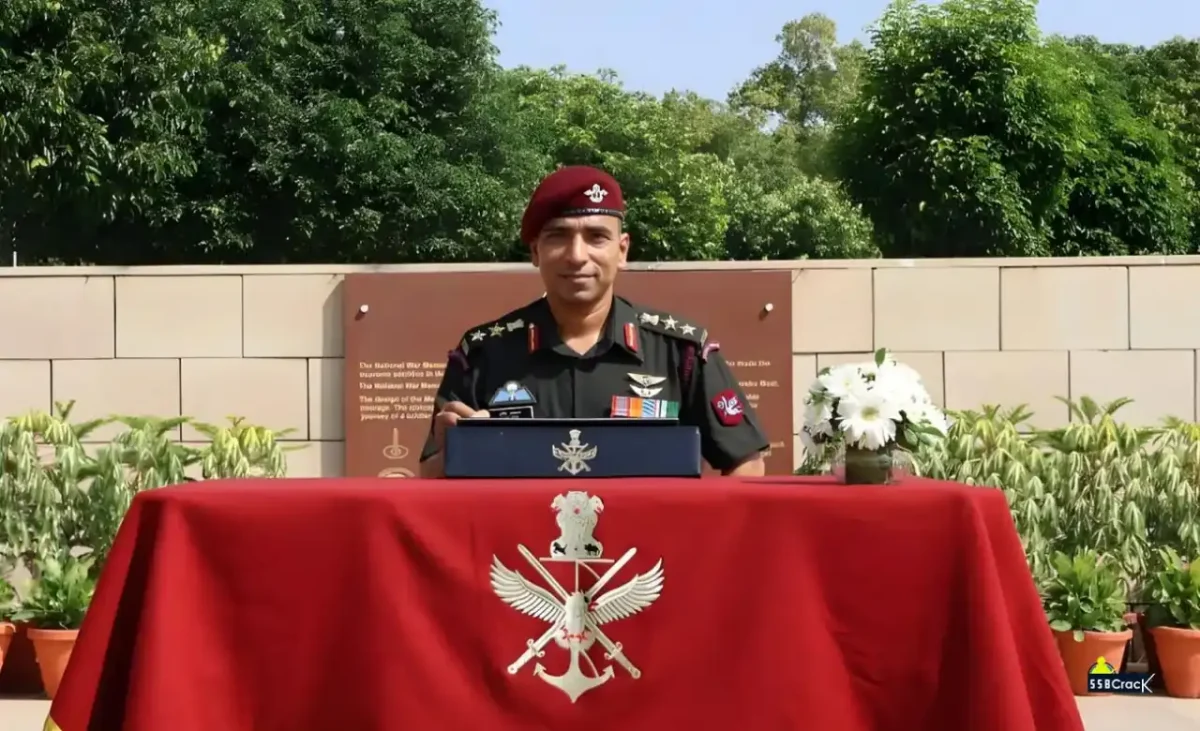
The most visible moment of Colonel Aswal’s command so far came in September 2025, when 7 Para (SF) marked its Diamond Jubilee. As reported on 23 September 2025, the battalion paid tribute to its fallen soldiers at the National War Memorial in New Delhi. Colonel Aswal led the ceremony and laid a floral tribute at the Tyag Chakra, the memorial circle that carries the names of soldiers who made the supreme sacrifice.
In his message on the occasion, as carried in published reports, he spoke of the courage, resilience and devotion shown by the battalion’s soldiers over six decades and reaffirmed the unit’s pledge to uphold its traditions. Reports described the battalion’s ethos as being “Never Out of the Fight”. For a unit that has lost comrades in combat across generations, such ceremonies are not formalities. They connect today’s soldiers to the men who came before them and remind every new volunteer what the maroon beret stands for.
The Legacy Colonel Aswal Inherited
Colonel Aswal leads a battalion with a long and distinguished history. According to histories of the Parachute Regiment, 7 Para was raised on 1 October 1964 at Agra by Lieutenant Colonel PS Nair, during the expansion of the regiment that followed the 1962 war. Some accounts give the raising year as 1963. The battalion served for decades as an airborne infantry unit before converting to the Special Forces role.
First Indian on Everest
One of the battalion’s proudest links is with Mount Everest. On 20 May 1965, Captain Avtar Singh Cheema, then serving with 7 Para, became the first Indian to stand on the summit of the world’s highest mountain, as part of the Indian Everest Expedition led by Captain MS Kohli. He was later awarded the Padma Shri and the Arjuna Award, and went on to command his battalion as a Colonel.
Operation Cactus and Kargil
When India launched Operation Cactus in November 1988 to restore the legitimate government of the Maldives, the 50th Parachute Brigade spearheaded the mission, with 7 Para in the second wave. In 1999, during Operation Vijay in Kargil, 6 Para and 7 Para, along with 1 Para (SF), cleared the intrusions in the Mushkoh Valley.
Courage in Counter-Terrorism
The battalion’s record in Jammu and Kashmir includes one of the Army’s most remarkable stories of courage. In 1994, Lieutenant Colonel Sunil Kumar Razdan of 7 Para led an operation against Lashkar-e-Toiba terrorists who were holding young women hostage. He killed two terrorists and ensured the hostages were rescued, but was hit in the abdomen and left paralysed below the waist. He was awarded the Kirti Chakra and, refusing to leave the Army, rose to become its first wheelchair-borne General. Major General Razdan passed away in August 2026 at the age of 70.
This is the inheritance that every Commanding Officer of SE7EN carries: a mountaineering first, airborne operations abroad, high-altitude war and decades of counter-terrorist operations. Leading such a unit means honouring that history while preparing soldiers for very different threats.
Leadership Lessons for Defence Aspirants
Even with the limited public record, Colonel Aswal’s appointment and the battalion he leads offer clear lessons for anyone preparing for the SSB and a career as an officer.
- Command is earned over years. The path to leading an elite battalion runs through consistent performance as a young officer, not one moment of glory.
- Quiet professionalism matters. Special Forces officers rarely seek publicity. Doing the job well, without needing recognition, is part of the culture you will join.
- Remembrance builds teams. By leading his men to the National War Memorial, Colonel Aswal showed that honouring the fallen strengthens the bond among the living.
- Fitness and resilience are non-negotiable. Para SF selection tests body and mind together, so prepare both steadily, long before any test.
- Responsibility is the real reward. A Commanding Officer’s first duty is to his soldiers and their families. The SSB looks for exactly this sense of responsibility in candidates.
Frequently Asked Questions
Who is Colonel Punit Aswal?
He is an Indian Army officer serving as the Commanding Officer of 7 Para (Special Forces), the 7th Battalion of The Parachute Regiment (Special Forces), as reported in September 2025.
What is the nickname of 7 Para (SF)?
The battalion is popularly known as SE7EN.
What did Colonel Aswal do on the battalion’s Diamond Jubilee?
He led 7 Para (SF) in paying tribute to its fallen soldiers at the National War Memorial in New Delhi and laid a floral tribute at the Tyag Chakra.
When was 7 Para raised?
Regimental histories record that 7 Para was raised on 1 October 1964 at Agra, though some accounts give 1963.
Which famous mountaineer served in 7 Para?
Captain Avtar Singh Cheema of 7 Para became the first Indian to climb Mount Everest on 20 May 1965.
How can I join the Para Special Forces?
Officers first join the Army through entries such as the NDA, CDS, OTA or technical and graduate schemes, clearing the SSB on the way. Officers and soldiers can then volunteer for the Para SF and must complete its probation to be accepted.
Conclusion
Colonel Punit Aswal leads one of the Indian Army’s storied battalions at a time when Special Forces are central to the nation’s security. The public record of his own career is modest, as it is for most Special Forces officers, but his command of SE7EN and his tribute to its fallen soldiers in the battalion’s Diamond Jubilee year speak for themselves. For aspirants, the message is clear: build the character, fitness and sense of responsibility that the SSB looks for, and the road can one day lead to the command of an elite unit like 7 Para (SF).