


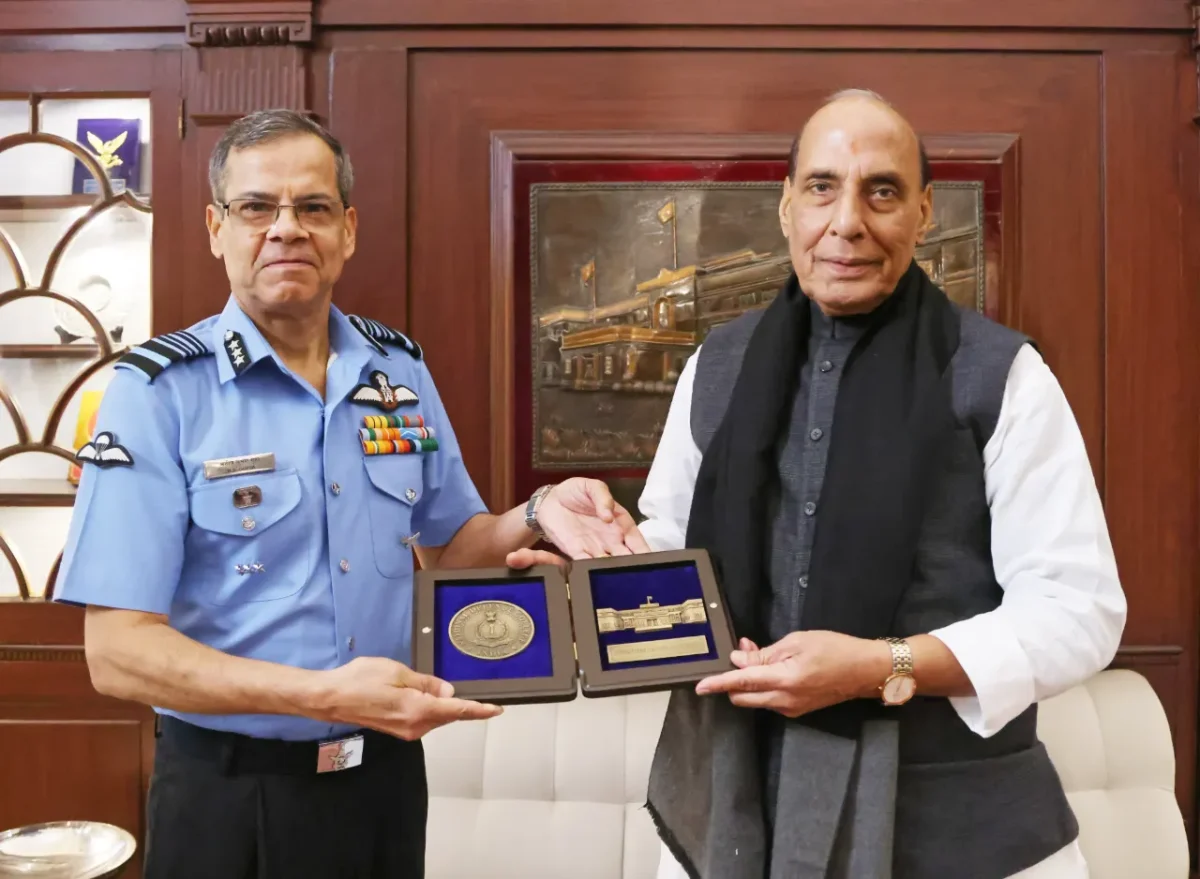
India’s national security planning must prepare for emerging risks without losing the capacity to meet immediate threats, Defence Minister Rajnath Singh said at the 66th National Defence College (NDC) Course convocation in New Delhi on November 26, 2026.
He described a global environment marked by shifting power balances, new centres of strategic influence, changing traditional alliances and evolving forms of conflict. Conventional military threats now exist alongside cyber-attacks, disinformation, economic coercion and supply-chain disruptions, he said, making the lines between internal and external security—and between peace and conflict—less clear.
Singh said India’s geographical position, extensive land borders, maritime interests and growing international responsibilities call for a comprehensive, forward-looking security approach.
Connecting NDC studies with national security policy
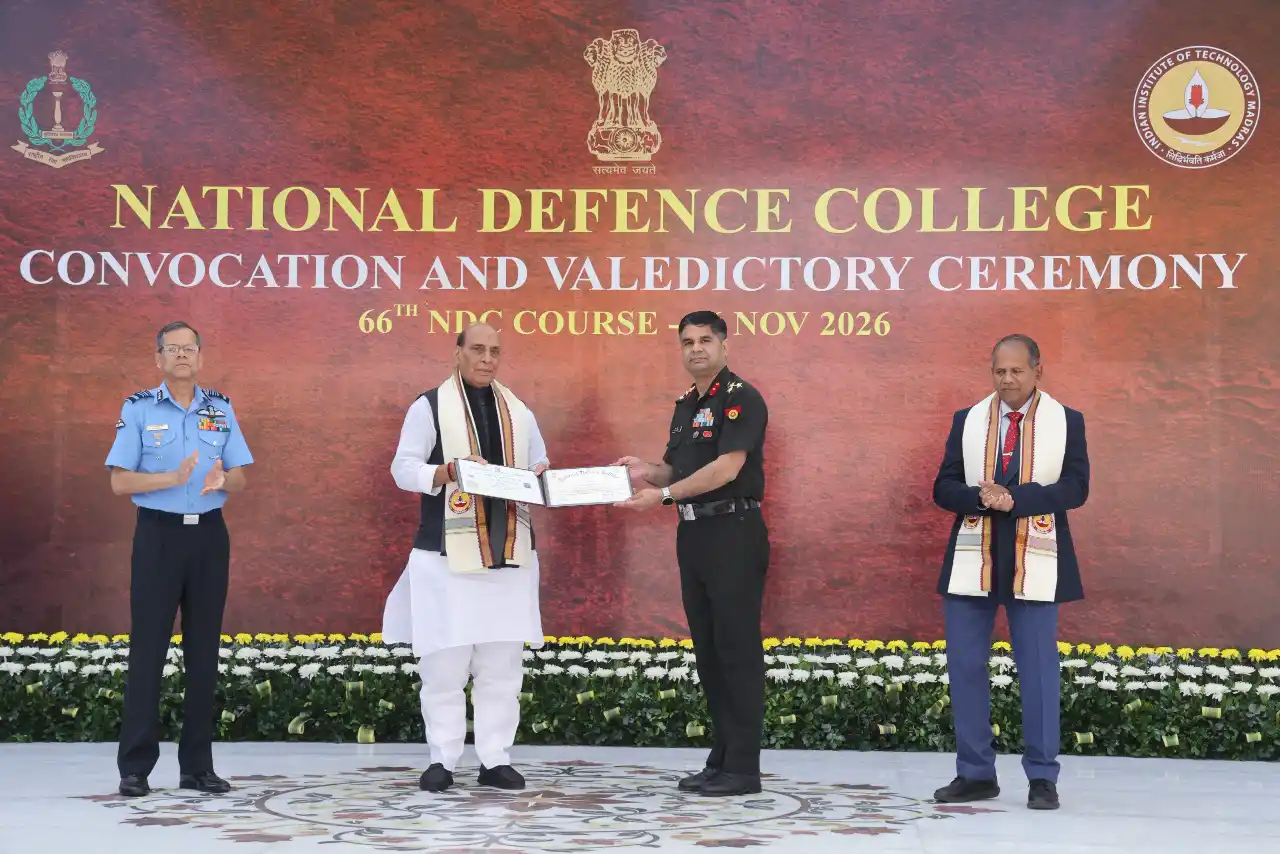
Singh called for the NDC to make greater use of the experience and knowledge of senior officers from the Defence Forces, Civil Services and friendly foreign countries, and to channel that expertise into national security policymaking.
He suggested that the NDC work with the Ministry of Defence to establish a process for selecting contemporary security challenges for detailed study in each course. Possible areas include India’s strategic neighbourhood, border management, maritime security, critical technologies, economic security, critical infrastructure protection, and emerging internal and external threats.
He also proposed inviting serving senior military officers, civil servants and other relevant authorities to present operational, strategic, administrative and policy challenges for course participants to examine. Bringing such concerns into the academic programme, he said, would help participants consider national security issues from multiple perspectives and understand the challenges faced by different ministries and organisations.
Research and strategic decision-making
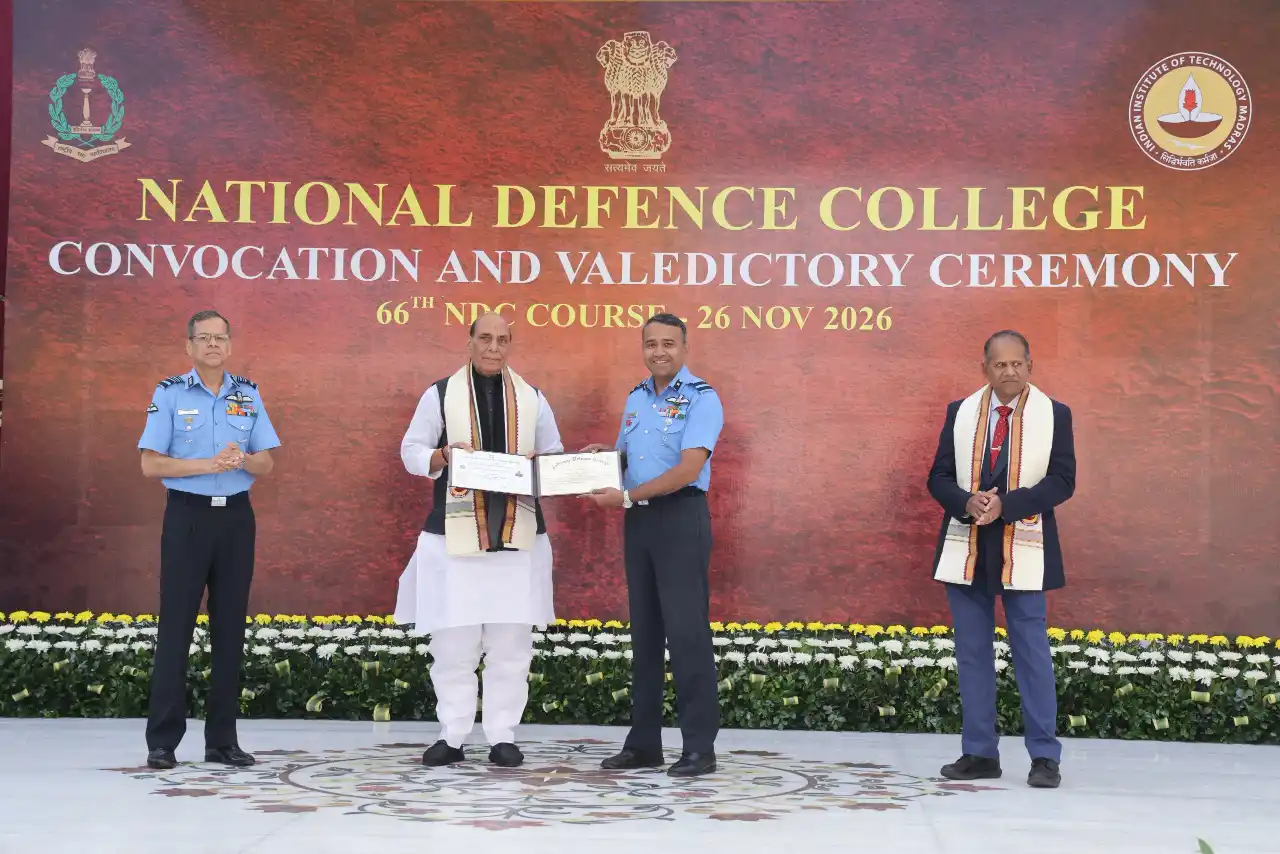
The Defence Minister said NDC research should produce practical policy inputs. He proposed developing selected studies into reports with specific, actionable recommendations, submitting them to the Ministry of Defence and other concerned ministries, and presenting them to appropriate levels of the Government for consideration.
“Every course at NDC should leave behind not merely a graduating batch of trained strategic leaders, but also a body of research, analysis and policy recommendations that contributes to the nation’s institutional knowledge and national security preparedness,” he said.
Singh noted that national security leaders often have to decide without complete information or time to examine every alternative. Strategic leadership, he said, involves assessing available options while considering their operational, economic, diplomatic and institutional implications.
He called for the NDC’s Strategic Gaming Exercises to be strengthened through the use of emerging technologies. The exercises should allow participants to work through realistic scenarios, assess alternative courses of action and consider the broader, sometimes unforeseen, consequences of strategic decisions.
Emerging technologies and academic development
Describing the NDC as India’s premier institution for strategic learning, Singh highlighted its role in bringing military officers, civilian officials and international participants together. He welcomed specialised sessions on Artificial Intelligence (AI), Machine Learning, Robotics, Unmanned Autonomous Vehicles, Aerospace Technologies, Semiconductors and other emerging technologies.
He also welcomed a dedicated AI capsule and the incorporation of closed-loop AI concepts into Strategic Gaming Exercises, saying these initiatives would familiarise future strategic leaders with technological developments.
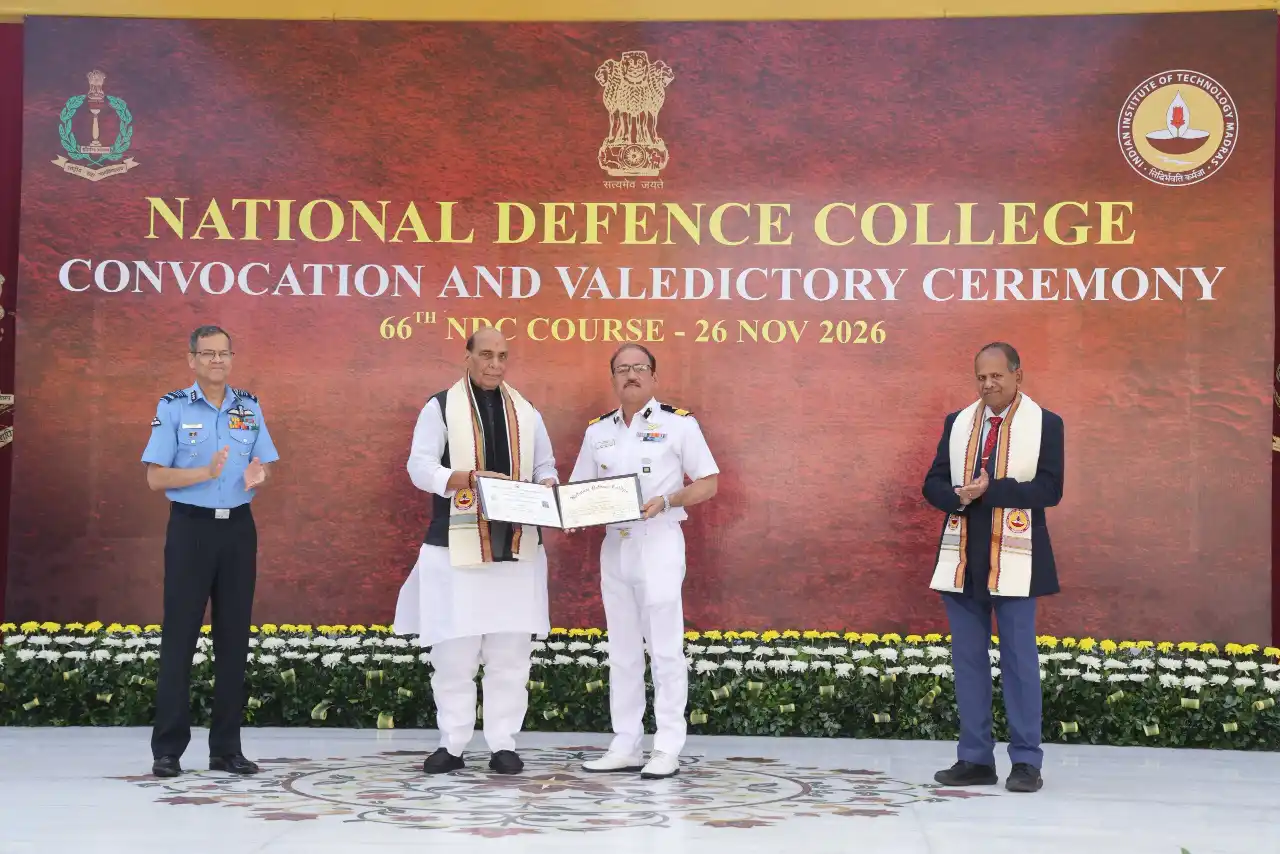
Singh acknowledged the introduction of the Executive MBA in Strategic Leadership and Public Policy under the aegis of IIT Madras. He said the association had brought expertise in management, science and technology into the study of national security.
International participation and engagement
The Defence Minister said international participation at the NDC supports India’s strategic engagement with friendly countries. Officers studying alongside Indian counterparts gain opportunities for sustained professional interaction, exposure to different strategic perspectives and relationships based on mutual trust, he noted.
He referred to the International Strategic Engagement Programme (INSTEP), including its recently concluded fourth edition. The two-week programme brought together 25 international participants from 22 countries of the Global South, 10 senior officers from the Indian Defence Forces and Civil Services, and three officers from defence companies.
Singh said India’s approach to shared challenges rests on respect for sovereignty, mutual trust and shared responsibilities. He described the NDC’s international alumni network as a source of professional experience and strategic understanding that could contribute to stronger bilateral relations and international cooperation.
Course participants and curriculum
The 66th NDC Course runs for 47 weeks, from January to November. It is structured around six studies: Understanding India and Introduction to Strategy; Economic Security; Science and Technology; Global Issues; International Security Environment; India’s Strategic Neighbourhood; and Strategies and Structures for National Security.
A total of 122 officers attended the course, representing the Indian Defence Forces, Indian Civil Services, Indian Police Services and other government organisations, as well as friendly foreign countries.
The international contingent comprised 40 officers from 25 countries, including Afghanistan, Australia, Bangladesh, Bhutan, Brazil, Egypt, Indonesia, Iran, Japan, Kenya, Kazakhstan, Maldives, Myanmar, Nepal, Nigeria, the Philippines, Russia, Saudi Arabia, South Africa, Sri Lanka, the United Kingdom, the United States, Uzbekistan and Vietnam.
NDC Commandant Air Marshal Manish Kumar Gupta, Dean (Faculty) at IIT Madras Professor K Murali, senior Ministry of Defence officials, faculty members and course participants attended the ceremony.




