


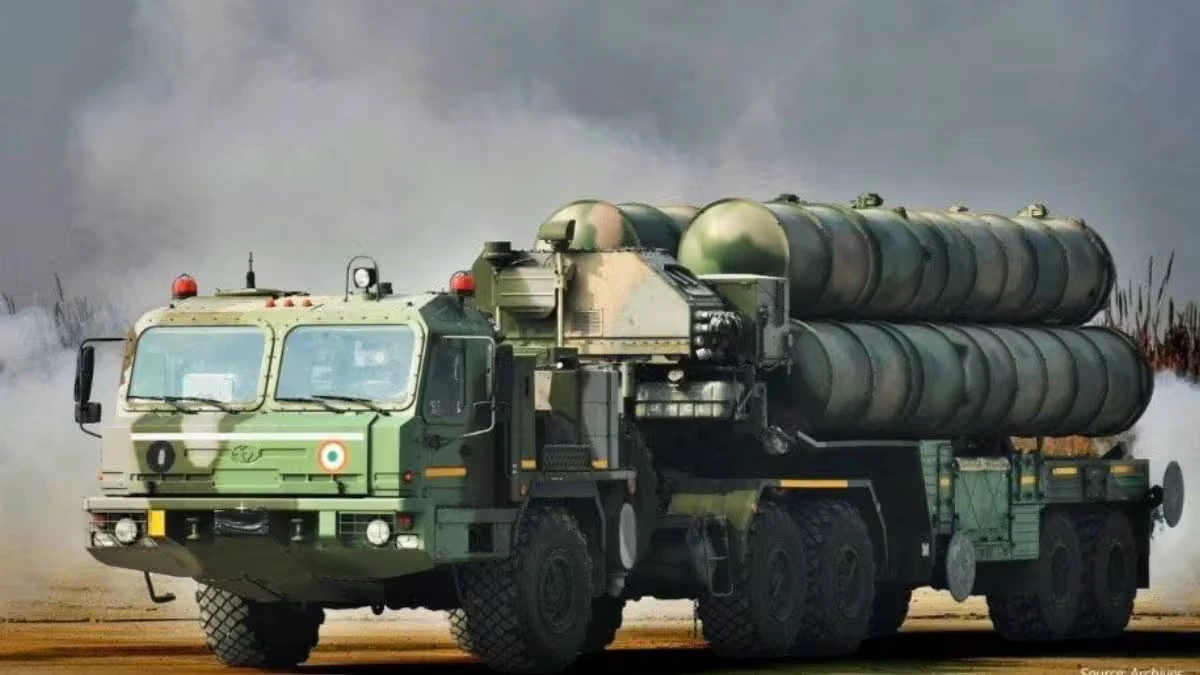
India is expected to place a fifth S-400 air defence system along the Pakistan border by February 2027, according to a Hindustan Times report citing two officials familiar with the plans. The reported deployment would add to India’s existing air defence coverage on its western frontier; the Union government has not officially commented.
The report says the new system is intended to strengthen coverage along the 740-kilometre Line of Control (LoC) in Jammu and Kashmir. India currently has three S-400 systems in Punjab, Rajasthan and Gujarat, while a fourth is stationed in Assam to help protect against aerial threats along the Line of Actual Control (LAC) in Arunachal Pradesh.
An Indian Air Force (IAF) pre-dispatch inspection team is scheduled to travel to Russia next month, the officials told the newspaper. The fifth system is expected to be ready for deployment by February 2027.
S-400 Capabilities and Reported Role
The S-400 Triumf is a long-range air defence system that can engage several types of aerial threats, including ballistic missiles, aircraft, unmanned combat aerial systems, kamikaze drones and loitering munitions. Its reported engagement range is between 40 and 400 kilometres, depending on the interceptor missile used.
India is also reportedly seeking to procure five more S-400 systems from Russia in the coming year. If pursued, the purchase would expand the country’s long-range air defence capabilities.
The report attributed a significant role to the S-400 during Operation Sindoor. It claimed that the system helped stop ballistic missiles and rockets from striking Indian territory and brought down Pakistani fighter aircraft, an airborne early warning and control (AEW&C) aircraft, and electronic intelligence (ELINT) platforms. These accounts are claims cited in the report.
Regional Security and Emerging Aerial Threats
The reported deployment comes as India assesses changing military capabilities in the region, including expanding defence cooperation between Pakistan and China. The report said China plans to supply J-35 fifth-generation fighter aircraft to Pakistan in 2027.
It also referred to Pakistan’s use of Chinese-origin J-10 fighters alongside Swedish airborne early warning aircraft during Operation Sindoor, including the reported use of PL-15E extended-range air-to-air missiles. India is working to strengthen its long-range stand-off weapons and loitering munitions capabilities in response to emerging threats from extended-range air-to-air missiles and advanced air defence systems, including China’s HQ-9BE.
A senior military officer quoted by Hindustan Times said future conflicts would increasingly involve stand-off weapons, and that longer-range missiles and stronger missile-defence capabilities were likely to be important.
The report also cited Chinese military supplies to Pakistan, including Wing Loong II armed drones and the planned acquisition of eight Yuan-class, also known as Hangor-class, air-independent propulsion (AIP) diesel-electric attack submarines. The submarine programme is reportedly valued at more than $5 billion. The report said one submarine had been deployed by the Pakistan Navy in June 2026.
Turkey is also reportedly involved in upgrading Pakistan’s Agosta 90B submarines and supplying long-range kamikaze drones. The report additionally pointed to a proposed US upgrade package for Pakistan’s F-16 fleet and financial support from Saudi Arabia as elements of the broader regional security environment.
Weapons Development and Border Infrastructure
Along with expanding its air defence network, India is preparing to strengthen its long-range offensive and defensive capabilities. The reported plans include developing and acquiring air-to-air, air-to-ground and ground-to-ground stand-off weapons, as well as loitering ammunition.
India is also looking to upgrade infrastructure along the LAC, reflecting security requirements on both its western and northern borders.
The proposed fifth S-400 deployment would add another layer to India’s existing air defence network. Its reported placement along the Pakistan border forms part of wider efforts to detect, track and engage aerial threats at extended ranges.




