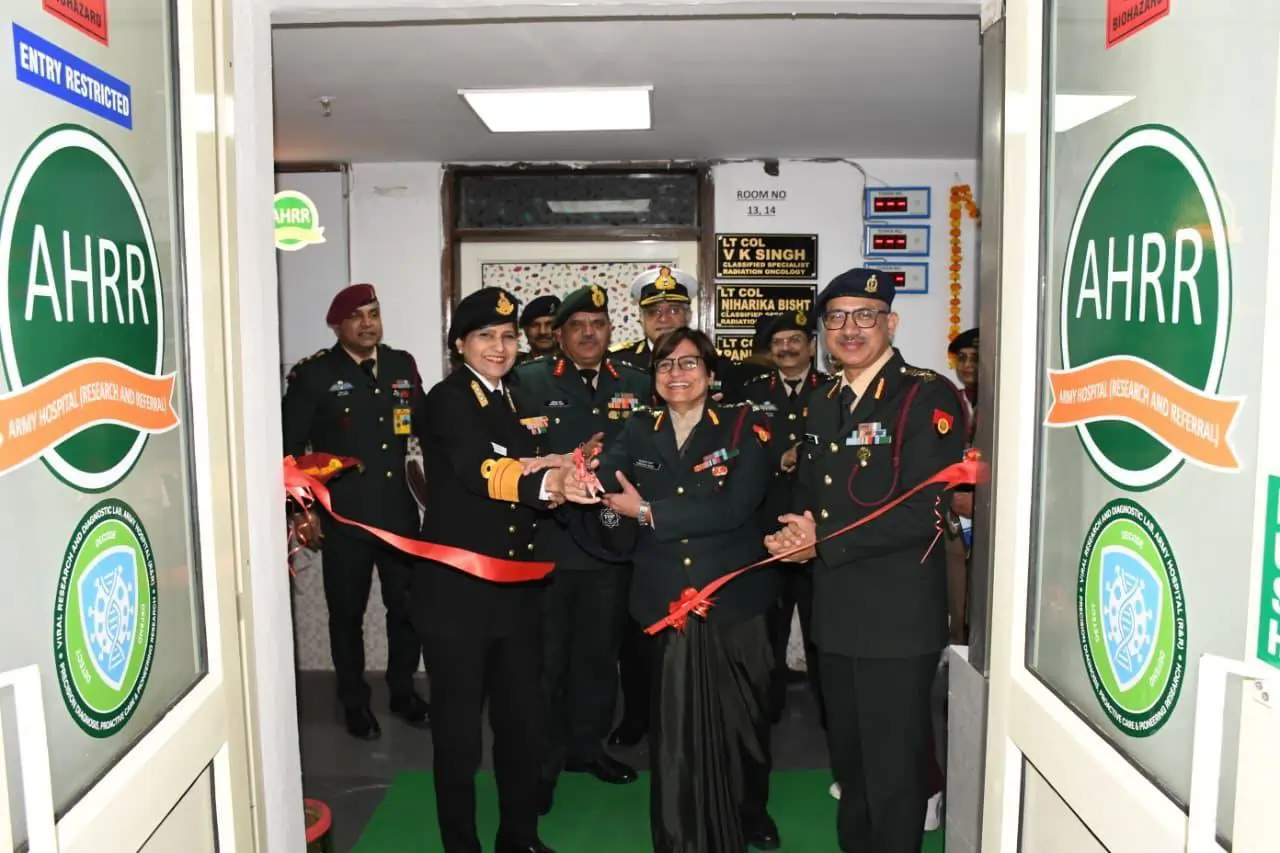
In a significant advancement for the Armed Forces Medical Services (AFMS), a state-of-the-art Viral Research & Diagnostic Laboratory (VRDL) was inaugurated at the Army Hospital (Research & Referral) on December 30, 2025. This facility marks a critical enhancement in the military’s preparedness against both emerging and re-emerging viral diseases.
The inauguration ceremony was led by Surgeon Vice Admiral Arti Sarin, the Director General of Armed Forces Medical Services (DGAFMS). The newly established VRDL is equipped to improve early detection methods, outbreak investigations, and genomic surveillance, forming a comprehensive One Health-based integrated response. This bolstered capability positions the military to swiftly and effectively tackle infectious disease threats.
The VRDL boasts advanced diagnostic and research facilities aimed at supporting cutting-edge virology research, specialized training programs, and real-time disease surveillance. These efforts are crucial in enabling evidence-based decision-making during public health emergencies. Furthermore, the laboratory will monitor viral evolution and transmission dynamics, ensuring that the military’s medical preparedness is in line with both national and global health security initiatives.
During the inauguration, the DGAFMS also launched two important publications: the virology newsletter titled “VIROSCOPE” and the antimicrobial resistance (AMR) surveillance bulletin named “MICROBE HUNTERS.” These publications are intended to share vital insights into viral trends and AMR patterns, fostering increased awareness, collaboration in research, and informed clinical practices throughout the Armed Forces medical community.
The establishment of the VRDL highlights AFMS’s unwavering commitment to clinical excellence, technological enhancement, and innovative healthcare solutions. It further solidifies the role of Army Hospital (R&R) as a national center of excellence in advanced medical diagnostics, research, and training, underscoring its dedication to improving health outcomes in military and civilian populations alike.