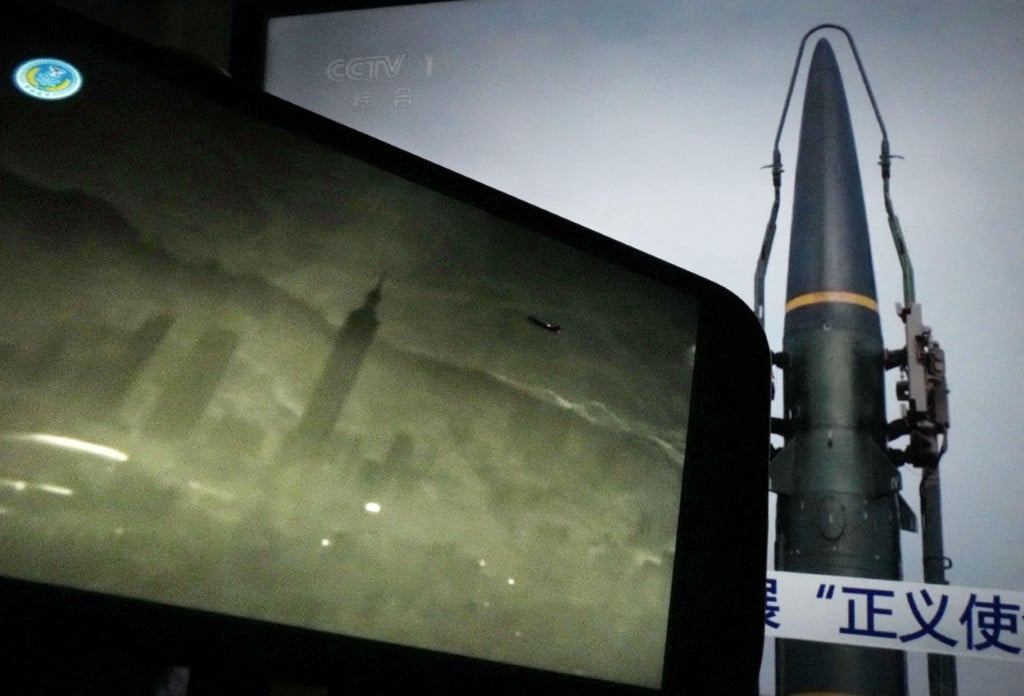
China has intensified military activity around Taiwan, launching missiles and deploying numerous fighter jets and naval vessels in a series of live-fire drills that began on Monday and continued into Tuesday. This military exercise, dubbed “Justice Mission 2025,” aims to simulate a blockade and assault on Taiwan’s key maritime targets, heightening tensions in the region.
Taiwan’s government condemned the drills as “highly provocative and reckless.” The Chinese government maintains that Taiwan is part of its sovereign territory and has not ruled out the use of force to assert this claim.
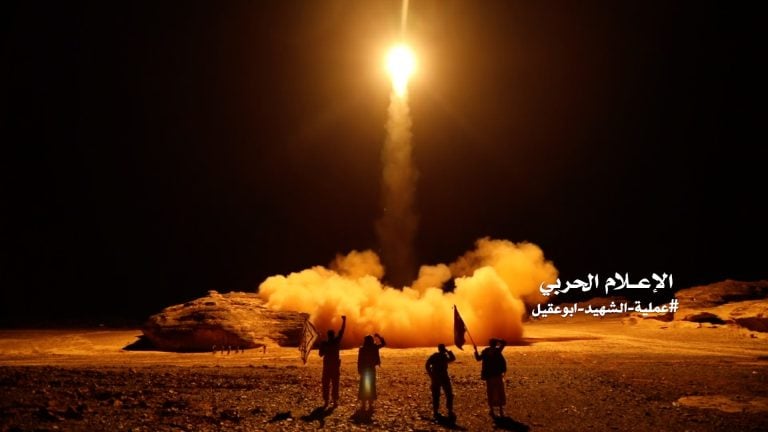
Reports from AFP journalists stationed in Pingtan, a Chinese island just off the coast of Taiwan, detailed the launch of at least ten rockets early Tuesday morning. Witnesses observed the rockets lighting up the sky, capturing the event on their phones as they gathered by the seaside.
In an official statement, the People’s Liberation Army (PLA) confirmed the live-fire drills, announcing that they successfully conducted long-range exercises in waters near Taiwan, achieving their intended operational goals. These activities are seen as a direct response to recent arms sales from the United States to Taiwan, along with comments by Japan’s Prime Minister suggesting military action from Tokyo should the situation escalate.
China’s chief diplomat, Wang Yi, emphasized in a speech on Tuesday that the nation would respond forcefully to what it sees as a threat from U.S. arms sales, pledging to counter any attempts to thwart China’s unification efforts with Taiwan. Amidst these developments, Taiwan’s President Lai Ching-te reassured the public via Facebook that Taiwan would not escalate the conflict or provoke further disputes.
The drills reportedly involved a wide range of military maneuvers, including the utilization of destroyers, frigates, fighter jets, and bombers. The PLA’s Eastern Theater Command outlined that the exercises were focused on honing capabilities in sea-air coordination and integrated blockade tactics. According to state-run media, a central theme was the establishment of a blockade around key Taiwanese ports, such as Keelung and Kaohsiung.
Authorities in China identified five major zones for the military exercises, with some zones intruding upon Taiwan’s designated maritime space, thus affecting international shipping and aviation routes. Taiwan’s Civil Aviation Administration reported the cancellation of numerous flights to offshore islands, impacting approximately 6,000 travelers. Furthermore, over 850 scheduled international flights were also expected to experience delays.
During the exercises, Taiwan’s defense ministry detected substantial military presence, reporting 130 Chinese aircraft and 14 navy ships in the vicinity within a 24-hour span. In response, Taiwan’s coast guard deployed 14 ships to monitor the situation closely, employing a strategy of “one-on-one” shadowing to deter Chinese vessels.
Taipei’s defense ministry characterized the drills as deeply provocative and detrimental to regional stability. However, many residents in Taiwan remained calm in the face of heightened military activity. Local fishmonger Chiang Sheng-ming expressed familiarity with such drills, indicating a sense of resilience among the populace. Likewise, elderly fruitseller Tseng Chang-chih dismissed the possibility of an imminent war, characterizing the maneuvers as mere posturing.
China had previously conducted similar large-scale military drills near Taiwan in April, which were also met with condemnation from Taipei. Following Taiwan’s recent arms deal with the United States, Beijing had warned of “resolute and forceful measures” to protect its interests.
In the face of these geopolitical tensions, U.S. President Donald Trump downplayed the significance of the ongoing drills, stating he did not believe that China’s leadership would take military action against Taiwan.