China has initiated live-fire military drills surrounding Taiwan, asserting that these exercises are designed to simulate a blockade of the island’s crucial ports. This show of strength has been met with condemnation from Taiwan, which labeled the actions as acts of “military intimidation.”
Beijing maintains that Taiwan is a part of its territory and has not dismissed the possibility of employing military force to annex the self-governing democracy. The latest drills are a direct response to a series of arms sales to Taiwan by the United States—the island’s primary security ally.
According to Chinese military sources, the drills involve “live-fire training on maritime targets” in regions to the north and southwest of Taiwan. This extensive operation includes the deployment of destroyers, frigates, fighter jets, bombers, and drones, with troops from the army, navy, air force, and rocket forces participating in the exercises, which have been officially dubbed “Justice Mission 2025.”
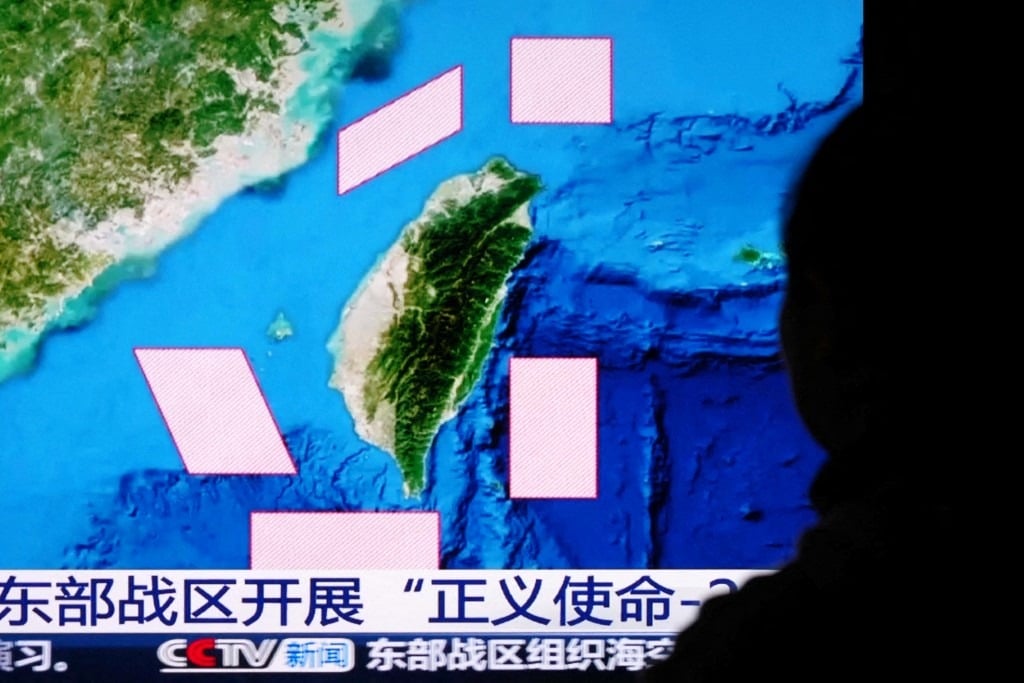
Senior Colonel Shi Yi from the People’s Liberation Army’s Eastern Theater Command described the focus of these exercises: enhancing “sea-air combat readiness patrols,” establishing joint superiority, and implementing a blockade of pivotal ports and locations. A detailed map was released, outlining five large areas around Taiwan where further live-fire activities are set to occur.
In response to this development, Taiwan’s Presidential Office condemned China’s actions, citing a blatant disregard for international norms and the use of military threats against neighboring nations. On the same day, Taiwan’s coast guard reported detecting four Chinese vessels near its northern and eastern coastlines, prompting immediate deployment of large coast guard ships to monitor the situation and enhance readiness.
Taiwan’s military has established a dedicated response center, mobilized “appropriate forces,” and conducted rapid response drills to address the heightened tensions. The defense ministry voiced concerns, declaring that these drills reaffirm China’s aggressive stance, positioning it as a significant threat to regional peace.
Beijing’s military characterized the exercises as both a “stern warning” to “Taiwan Independence” advocates and a legitimate response to safeguarding its sovereignty and national unity. A propaganda campaign accompanying the drills showcased an illustration depicting arrows labeled as “justice” raining down on a graphical representation of Taiwan.
State media in China reported that a central theme of the exercises underscores a blockade aimed at critical Taiwanese ports such as Keelung and Kaohsiung. Prior to this week’s activities, China conducted similar extensive drills around Taiwan in April, which prompted sharp criticism from Taipei.
Following Taiwan’s announcement of a major arms sale approved by the U.S. valued at $11 billion, China stipulated that it would undertake “resolute and forceful measures” to protect its territory. Recently, Beijing imposed new sanctions on 20 American defense firms, although the companies targeted reportedly had minimal or no operations within China.
Adding to the regional complexities, Japan’s Prime Minister Sanae Takaichi recently indicated that military action against Taiwan by China could compel a military response from Japan. This statement was met with swift backlash from Beijing, which subsequently summoned Japan’s ambassador and warned its citizens against traveling to Japan.