
In Current Affairs for 03 November 2026, we will see the latest national and international current affairs news. These important current affairs will be beneficial for your upcoming NDA, CDS, CDS OTA, AFCAT, TA, Agniveer Army, Agniveer Navy, Agniveer Air Force, Women Military Police, INET, MNS, ACC exams, SCO, PCSL, CAPF, and SSB interviews, and direct entries for Army, Navy, and Air Force like SSC Tech, TGC, JAG, NCC, TES, 10+2 Cadet. Download a PDF file about current events at the end of this article. Let us now see the Current Affairs.
Current Affairs 03 November 2026
UN Peacekeeping Mission MINURSO in Western Sahara Comes to an End After 35 Years
The United Nations peacekeeping mission in Western Sahara, known as the United Nations Mission for the Referendum in Western Sahara (MINURSO), has been dissolved after operating for 35 years. The development followed the failure of the UN Security Council to renew the mission’s mandate.
UN Secretary-General Antonio Guterres stated that the mission would enter its liquidation phase on 1 November 2026, after which its assets would be returned to the countries that contributed troops.
Background of MINURSO
MINURSO was established in 1991 following a ceasefire agreement brokered by the United Nations between Morocco and the Polisario Front.
Its principal responsibilities included:
- Monitoring the ceasefire between the two sides.
- Organising a referendum to determine the future status of Western Sahara.
- Supporting the UN-led process concerning the territory’s political future.
However, disagreements over the eligibility of voters prevented the referendum from taking place.
Dispute Over Western Sahara
Western Sahara was formerly under Spanish colonial rule. Spain withdrew from the territory in 1976, after which a dispute emerged over its political status.
- Morocco claims sovereignty over Western Sahara.
- The Polisario Front, which receives support from Algeria, advocates independence for the region.
The end of MINURSO marks a significant development in the long-running dispute over Western Sahara and the UN’s involvement in the region.

Bhutan Dedicates Sacred Buddhist Stupa No. 76 to Prime Minister Narendra Modi
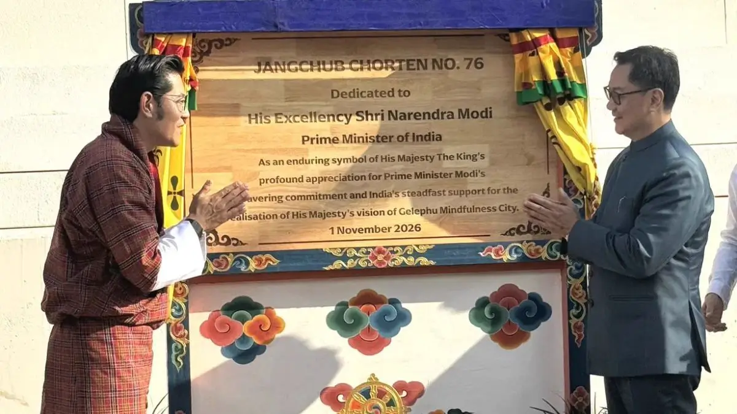
Bhutan has dedicated one of its newly constructed Buddhist stupas to Indian Prime Minister Narendra Modi, recognising his contribution to the Gelephu Mindfulness City project and the growing partnership between India and Bhutan.
On 1 November 2026, Bhutan’s King Jigme Khesar Namgyel Wangchuck led the consecration ceremony of 108 Buddhist stupas in Gelephu Mindfulness City. During the ceremony, Stupa No. 76 was dedicated to Prime Minister Modi.
Construction of 108 Buddhist Stupas
The 108 stupas were constructed along the banks of the Aie (Mau) River in Gelephu Mindfulness City, close to Bhutan’s border with Assam, India.
Important features include:
- The stupas form an approximately 11.7-kilometre spiritual corridor.
- Each stupa is around 15 metres high.
- The structures are positioned approximately 108 metres apart.
- Around 40,000 volunteers, monks and craftsmen participated in the initiative.
- Thousands of volunteers completed the construction in a single day, according to the supplied material.
These structures are known as Jangchub Chortens and represent enlightenment, wisdom and compassion.
Religious Significance of Stupas
In Buddhism, stupas are sacred structures associated with Gautama Buddha, his teachings and other revered spiritual figures. They traditionally serve as places for prayer, meditation and worship.
The number 108 also holds religious and spiritual significance in Buddhist traditions.
About Gelephu Mindfulness City
Gelephu Mindfulness City is an ambitious development initiative conceptualised by Bhutan’s King Jigme Khesar Namgyel Wangchuck.
The project seeks to combine Bhutan’s spiritual heritage and environmental values with modern technology, innovation and economic development.
The dedication of Stupa No. 76 to the Indian Prime Minister highlights the importance Bhutan attaches to India’s cooperation and support for this initiative.
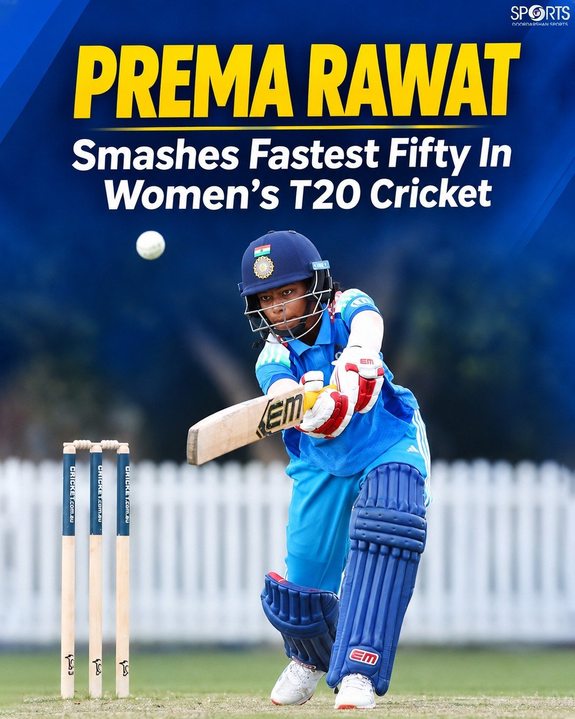
Prema Rawat Creates Record for Fastest Fifty in Women’s T20 Cricket
Indian cricketer Prema Rawat created a new record for the fastest half-century in women’s T20 cricket on 2 November 2026.
Representing Uttarakhand against Hyderabad in the Senior Women’s T20 Trophy, Rawat scored an unbeaten 50 runs from just 14 deliveries. The match was held at the MCA Cricket Stadium in Gahunje, Pune.
Breaking the Previous Record
Rawat reached her half-century in 14 balls, improving upon the previous record of 15 deliveries.
The earlier record was jointly held by:
- Fatima Sana of Pakistan.
- Marie Kelly of England.
- Laura Harris of New Zealand.
It is important to note that Fatima Sana continues to hold the record for the fastest half-century in women’s T20 International cricket, as distinguished from the overall women’s T20 record mentioned in this report.
Performance Against Hyderabad
Rawat’s explosive innings included:
- Runs: 50 not out.
- Balls faced: 14.
- Fours: 3.
- Sixes: 6.
- Strike rate: 357.
Uttarakhand posted a total of 187 runs for the loss of two wickets. Hyderabad managed only 98 runs for eight wickets, resulting in an 89-run victory for Uttarakhand.
Besides her batting performance, Rawat also contributed with the ball. The leg-spinner claimed two wickets for 12 runs in four overs and was named Player of the Match.
Her performance made the match particularly memorable, combining a record-breaking batting display with an effective bowling contribution.
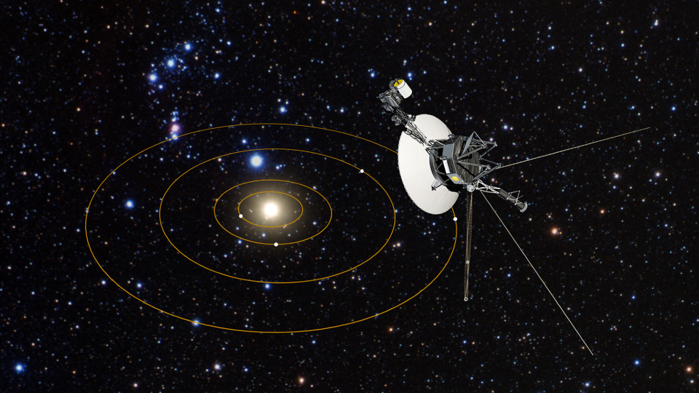
NASA’s Voyager 1 Approaches the Milestone of One Light-Day from Earth
NASA’s interstellar spacecraft Voyager 1 is approaching a remarkable milestone: becoming the first human-made object to travel one light-day away from Earth.
According to the projection in the supplied material, Voyager 1 is expected to reach this distance at 10:16 UTC on 18 November 2026.
At that point, it will be approximately 25.902 billion kilometres (16.094 billion miles) from Earth.
Understanding One Light-Day
A light-day represents the distance travelled by light in 24 hours. Since light travels at an extremely high speed, reaching this distance is a major achievement in the history of space exploration.
As of 3 November 2026, Voyager 1 was approximately 25.86 billion kilometres away from Earth.
Its radio signals required around 23 hours, 57 minutes and 49 seconds to reach our planet.
This creates a significant communication delay:
- A command sent from Earth takes nearly 24 hours to reach the spacecraft.
- A response from Voyager 1 takes approximately another 24 hours to return.
- A complete communication cycle therefore takes roughly two days.
Temporary Communication Interruption
NASA’s Deep Space Network reportedly failed to detect Voyager 1’s signal during scheduled communication attempts, resulting in a 48-hour loss of contact.
Communication was restored on 20 October 2026.
Engineers at NASA’s Jet Propulsion Laboratory traced the problem to a group of thrusters that had stopped functioning. Backup thrusters subsequently took over, activating the spacecraft’s fault protection system.
Efforts to Extend the Mission
NASA is replacing power-intensive heating devices to conserve the spacecraft’s remaining electrical power and extend its operational life.
Voyager 1 was launched on 5 September 1977 and is travelling through interstellar space at approximately 61,000 kilometres per hour.
Its projected direction of travel is towards Gliese 445 (AC+79 3888) in the constellation Ursa Minor.
Its twin spacecraft, Voyager 2, is expected to reach the one-light-day distance from Earth in November 2035.
The Voyager missions continue to provide valuable information about the outer reaches of our Solar System and interstellar space.
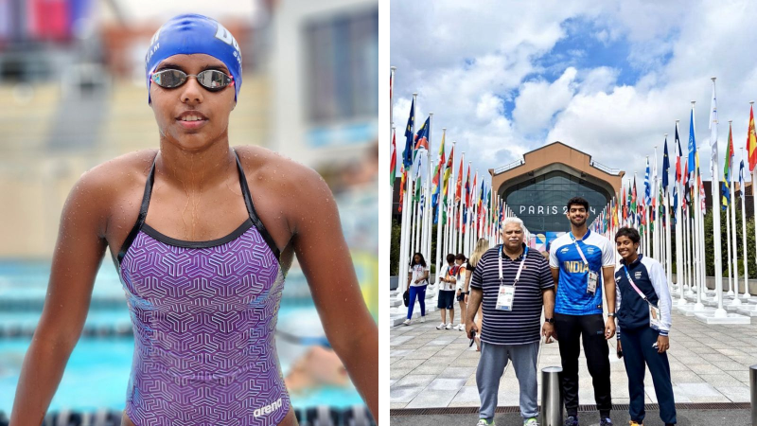
Dhinidhi Desinghu Wins Historic Swimming Bronze at Youth Olympic Games
Indian swimmer Dhinidhi Desinghu, aged 16, created history by winning a bronze medal in the women’s 100-metre freestyle event at the Youth Olympic Games in Dakar, Senegal.
Her achievement made her the first Indian swimmer to win a medal at the Youth Olympic Games.
National Record in 100m Freestyle
Desinghu completed the race in 56.27 seconds, setting a new national record.
She improved upon her previous national mark of 56.57 seconds, which she had established at the Senior National Championships in June.
The medal winners were:
| Position | Athlete | Country | Timing |
|---|---|---|---|
| Gold | Ana Bobanovic | Croatia | 55.89 seconds |
| Silver | Alyssa Lawson | New Zealand | 56.13 seconds |
| Bronze | Dhinidhi Desinghu | India | 56.27 seconds |
Desinghu had also topped her qualifying heat with a timing of 56.80 seconds, becoming the first Indian female swimmer to reach a Youth Olympic final.
Achievements Beyond the 100m Event
The 100m freestyle is not her primary event. She also holds the national women’s 200m freestyle record of 2:01.81, set at the Asian Age Group Championships in July.
She had earlier represented India at the 2024 Paris Olympics, becoming the youngest member of the Indian contingent at just 14 years of age.
India’s Judo Achievement
India also secured a silver medal in women’s judo through Khushbu Rajakbhai Darjada, aged 15.
She won the medal in the 63kg category, becoming India’s second Youth Olympic judo medallist.
The first Indian to achieve this distinction was Thangjam Tababi Devi, who secured silver in the 44kg category at the 2018 Youth Olympic Games.
Important Facts About Youth Olympic Games
- The age eligibility for the Youth Olympic Games is determined using the athlete’s age on 31 December of the competition year.
- The universality principle provides opportunities for under-represented nations to participate.
- The event also features adapted sports formats, including 3×3 basketball, futsal and beach handball.
Desinghu’s bronze medal represents an important milestone for Indian swimming and provides encouragement for the country’s emerging athletes.
Review Questions
Q1. In which year was the United Nations Mission for the Referendum in Western Sahara (MINURSO) established?
(A) 1988
(B) 1990
(C) 1991
(D) 1995
Answer: (C) 1991
Q2. MINURSO was established following a ceasefire agreement between which two parties?
(A) Morocco and Algeria
(B) Morocco and the Polisario Front
(C) Spain and Morocco
(D) Algeria and Mauritania
Answer: (B) Morocco and the Polisario Front
Q3. Which Buddhist stupa was dedicated to Prime Minister Narendra Modi by Bhutan?
(A) Stupa No. 54
(B) Stupa No. 76
(C) Stupa No. 88
(D) Stupa No. 108
Answer: (B) Stupa No. 76
Q4. How many Buddhist stupas were consecrated in Gelephu Mindfulness City, Bhutan, on 1 November 2026?
(A) 54
(B) 76
(C) 100
(D) 108
Answer: (D) 108
Q5. Who established the record for the fastest half-century in women’s T20 cricket by scoring 50 runs in just 14 balls?
(A) Smriti Mandhana
(B) Prema Rawat
(C) Harmanpreet Kaur
(D) Shafali Verma
Answer: (B) Prema Rawat
Q6. Prema Rawat represented which state against Hyderabad in the Senior Women’s T20 Trophy?
(A) Himachal Pradesh
(B) Uttarakhand
(C) Rajasthan
(D) Haryana
Answer: (B) Uttarakhand
Q7. NASA’s Voyager 1 spacecraft was launched on which date?
(A) 5 September 1977
(B) 10 October 1978
(C) 20 August 1977
(D) 15 November 1979
Answer: (A) 5 September 1977
Q8. Voyager 1 is projected to become the first human-made object to reach a distance of one light-day from Earth on which date?
(A) 3 November 2026
(B) 10 November 2026
(C) 18 November 2026
(D) 20 December 2026
Answer: (C) 18 November 2026
Q9. Dhinidhi Desinghu won a bronze medal in which event at the Youth Olympic Games in Dakar, Senegal?
(A) Women’s 50m freestyle
(B) Women’s 100m freestyle
(C) Women’s 200m freestyle
(D) Women’s 100m butterfly
Answer: (B) Women’s 100m freestyle
Q10. Who became India’s second Youth Olympic Games judo medallist by winning silver in the women’s 63kg category?
(A) Thangjam Tababi Devi
(B) Khushbu Rajakbhai Darjada
(C) Dhinidhi Desinghu
(D) Ana Bobanovic
Answer: (B) Khushbu Rajakbhai Darjada