
In Current Affairs for 06 January 2026, we will see the latest national and international current affairs news. These important current affairs will be beneficial for your upcoming NDA, CDS, CDS OTA, AFCAT, TA, Agniveer Army, Agniveer Navy, Agniveer Air Force, Women Military Police, INET, MNS, ACC exams, SCO, PCSL, CAPF, and SSB interviews, and direct entries for Army, Navy, and Air Force like SSC Tech, TGC, JAG, NCC, TES, 10+2 Cadet. Download a PDF file about current events at the end of this article. Let us now see the Current Affairs.
Current Affairs 06 January 2026
World Day of War Orphans: Remembering the Forgotten Victims of Conflict
World Day of War Orphans is observed annually on 6 January to highlight the silent suffering of children who lose one or both parents due to wars and armed conflicts. These children often endure deep emotional trauma, lack of family care, insecurity, and social neglect. The day underlines the urgent need for protection, rehabilitation, psychological support, and social inclusion for war-affected children.
The global concern for war orphans gained momentum after World War II in 1945, when the massive scale of human loss exposed the vulnerability of millions of children. Organisations such as SOS Enfants en Détresses played a key role in drawing international attention to the moral responsibility of societies to safeguard and rebuild the lives of children orphaned by violence. The observance serves as a reminder that peace-building must include compassion and long-term support for the youngest victims of conflict.

India’s Largest Inland Rainbow Trout Farm: A Leap in Fisheries Innovation
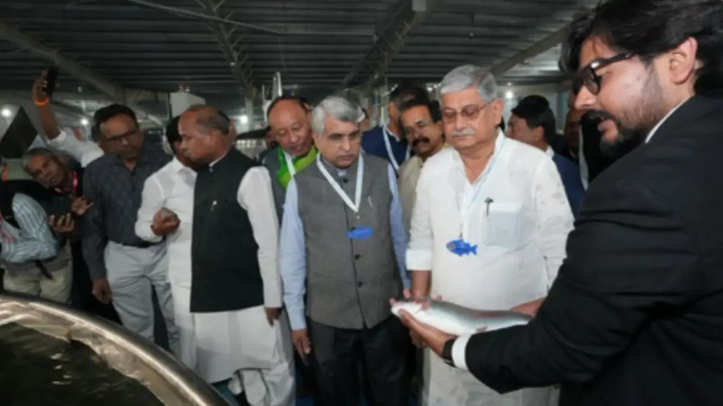
India’s fisheries sector has achieved a significant technological breakthrough with the launch of the largest integrated inland Rainbow Trout farm in Telangana. Traditionally, trout farming was restricted to cold Himalayan regions, but advanced aquaculture technologies have now made it possible to cultivate this cold-water species in warm inland climates.
The project was inaugurated by Union Minister Rajiv Ranjan Singh in the Ranga Reddy district and has been developed by startup Smart Green Aquaculture with an investment of around ₹50 crore. Located in the Deccan Plateau region, the facility uses innovative engineering solutions to maintain optimal conditions for trout rearing.
Rainbow Trout is a nutrient-rich, high-value fish with strong demand in both domestic and international markets. The initiative is expected to boost nutritional security, create employment opportunities, and enhance export potential. By combining technology with sustainable aquaculture practices, the project marks an important step toward climate-resilient and modern fisheries in India.
Rare Eastern Imperial Eagle Sighted at Mudumalai Tiger Reserve
In an encouraging development for wildlife conservation, the Eastern Imperial Eagle, a rare migratory bird of prey, was spotted at the Mudumalai Tiger Reserve during the 2025–26 winter season. The sighting reinforces Mudumalai’s growing importance as a winter habitat for long-distance migratory raptors visiting the Indian subcontinent.
A pair of these eagles was documented by wildlife photographer Murali Moorthy, with one image also capturing the bird alongside an endangered Egyptian vulture, adding ecological significance to the observation. The species breeds in Central and Western Asia and migrates southward during winter, occasionally reaching India.
As a top predator, the Eastern Imperial Eagle plays a crucial role in controlling rodent and small mammal populations, indicating a balanced ecosystem. However, the species faces threats from habitat loss, human disturbance, and declining prey availability.
Key Facts:
- Type: Large bird of prey
- Scientific Name: Aquila heliaca
- Family: Accipitridae
- Subfamily: Aquilinae
1000 Years of Somnath: A Symbol of India’s Civilisational Strength
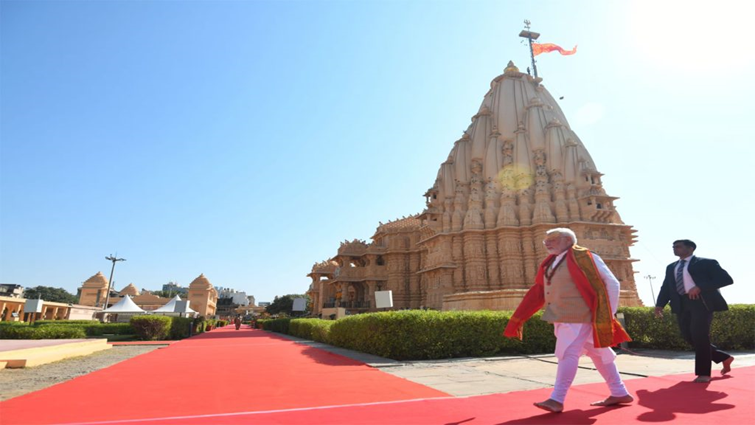
Prime Minister Narendra Modi commemorated 1,000 years since the first attack on the Somnath Temple in 1026 AD, describing the shrine as a powerful symbol of India’s enduring civilisation and spiritual strength. In an Op-Ed marking the occasion, the Prime Minister emphasised that Somnath represents not just a place of worship, but the unwavering faith and courage of generations who preserved India’s cultural identity despite repeated invasions.
Somnath holds immense spiritual importance as the first of the 12 Jyotirlings mentioned in the Dwadasha Jyotirling Stotram. Situated at Prabhas Patan on Gujarat’s western coast, the temple has historically been a centre of religion, culture, and maritime trade.
The Prime Minister recalled that Sardar Vallabhbhai Patel, after visiting Somnath in 1947, resolved to rebuild the temple. This vision was fulfilled in 1951, when the reconstructed temple was inaugurated in the presence of Dr. Rajendra Prasad, India’s first President.
Madras High Court Upholds Lighting of Karthigai Deepam
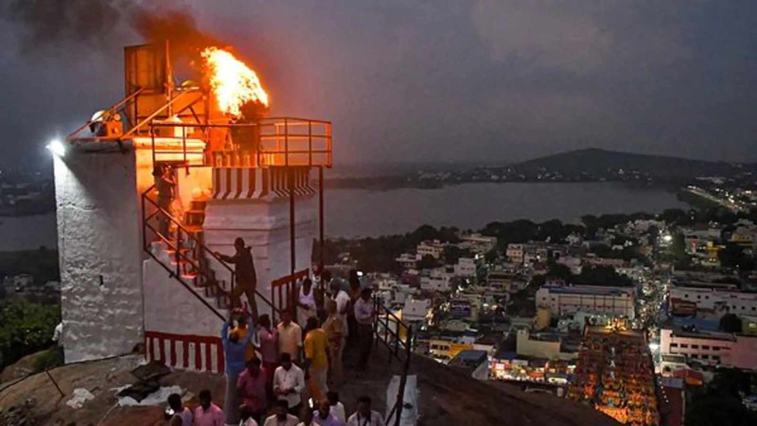
The Madurai Bench of the Madras High Court upheld the decision permitting the lighting of the Karthigai Deepam at the Deepathoon stone pillar atop Thirupparankundram Hill. The court ruled that the ritual forms an essential part of the religious practices of the Subramaniya Swamy Temple and cannot be restricted by executive prohibitory orders.
The Bench observed that the state does not have the authority to interfere in essential religious practices, particularly when the land involved does not belong to the objecting party. Addressing claims by the Tamil Nadu Waqf Board regarding ownership and access, the court clarified that disputes related to title, easement, and right of passage cannot be decided through writ proceedings.
The ruling stressed that such issues must be addressed through a proper civil suit, and the present case was limited only to examining the legality of the directive allowing the lighting of the Deepam.
Review Questions
- World Day of War Orphans is observed every year on which date?
A. January 5
B. January 6
C. January 10
D. February 1
Answer: B. January 6 - The primary purpose of World Day of War Orphans is to highlight:
A. Child labour issues
B. Education of refugee children
C. Suffering of children orphaned due to wars
D. Rights of displaced adults
Answer: C. Suffering of children orphaned due to wars - Which organisation emphasized the need to protect and rehabilitate children
orphaned by conflict?
A. UNICEF
B. Red Cross
C. Save the Children
D. SOS Enfants en Détresses
Answer: D. SOS Enfants en Détresses - India’s largest integrated inland Rainbow Trout farm has been inaugurated in
which state?
A. Himachal Pradesh
B. Uttarakhand
C. Telangana
D. Karnataka
Answer: C. Telangana - The largest inland Rainbow Trout farm in India is located in which district of
Telangana?
A. Medchal
B. Ranga Reddy
C. Warangal
D. Nizamabad
Answer: B. Ranga Reddy - Which species of fish is being reared at India’s largest inland trout farm despite
the warm climate?
A. Rohu
B. Catla
C. Atlantic Salmon
D. Rainbow Trout
Answer: D. Rainbow Trout - The Eastern Imperial Eagle belongs to which family?
A. Falconidae
B. Strigidae
C. Accipitridae
D. Anatidae
Answer: C. Accipitridae - The scientific name of the Eastern Imperial Eagle is:
A. Aquila chrysaetos
B. Aquila heliaca
C. Haliaeetus leucocephalus
D. Milvus migrans
Answer: B. Aquila heliaca - Somnath Temple is regarded as spiritually significant because it is:
A. The largest Shiva temple in India
B. The oldest temple in Gujarat
C. One of the four Char Dhams
D. The first of the 12 Jyotirlings
Answer: D. The first of the 12 Jyotirlings - The Madras High Court ruled that lighting of the Karthigai Deepam is:
A. A cultural festival only
B. Subject to executive prohibitory orders
C. An essential religious practice
D. Dependent on Waqf Board approval
Answer: C. An essential religious practice