





In Current Affairs for 15 July 2026, we will see the latest national and international current affairs news. These important current affairs will be beneficial for your upcoming NDA, CDS, CDS OTA, AFCAT, TA, Agniveer Army, Agniveer Navy, Agniveer Air Force, Women Military Police, INET, MNS, ACC exams, SCO, PCSL, CAPF, and SSB interviews, and direct entries for Army, Navy, and Air Force like SSC Tech, TGC, JAG, NCC, TES, 10+2 Cadet. Download a PDF file about current events at the end of this article. Let us now see the Current Affairs.
Current Affairs 15 July 2026
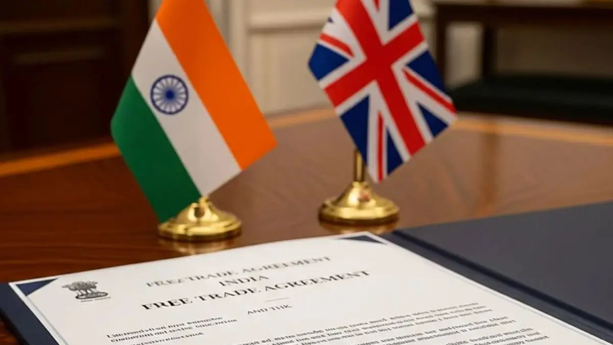
India–UK Free Trade Agreement Comes into Force, Strengthening Bilateral Economic Partnership
India and the United Kingdom have entered a new phase in their economic relationship with the implementation of the Comprehensive Economic and Trade Agreement (CETA) on 15 July 2026. The agreement is expected to significantly boost trade, investment, and business collaboration between the two countries while creating new opportunities for industries, professionals, and exporters.
The agreement aims to increase bilateral trade to nearly USD 100 billion by 2030, compared to the current trade volume of around USD 55–60 billion. Under the pact, several categories of Indian exports will receive zero-duty market access, making Indian products more competitive in the UK market and opening new avenues for exporters.
The Ministry of Commerce has highlighted several key objectives of the agreement, including expanding bilateral trade and investment, improving market access for businesses, strengthening supply-chain partnerships, creating employment opportunities, and establishing long-term economic cooperation between the two nations.
Current trade figures already indicate a strong economic partnership. During FY 2025–26, trade in goods reached USD 25.12 billion, while trade in services stood at USD 35.44 billion in 2024, reflecting the growing importance of the India–UK economic relationship.
An important feature accompanying the trade agreement is the India–UK Double Contribution Convention (DCC). This arrangement exempts Indian professionals working temporarily in the United Kingdom from paying social security contributions in the UK for up to five years, provided they continue contributing to India’s social security system.
The convention is expected to generate annual savings of more than USD 600 million, benefiting over 75,000 Indian professionals and approximately 900 Indian companies operating in the United Kingdom. The measure is expected to reduce employment costs while encouraging greater professional mobility between the two countries.
The implementation of the India–UK Comprehensive Economic and Trade Agreement marks a major milestone in bilateral relations. By promoting trade liberalisation, investment, and easier movement of skilled professionals, the agreement is expected to strengthen economic ties and contribute to sustained growth for both nations.
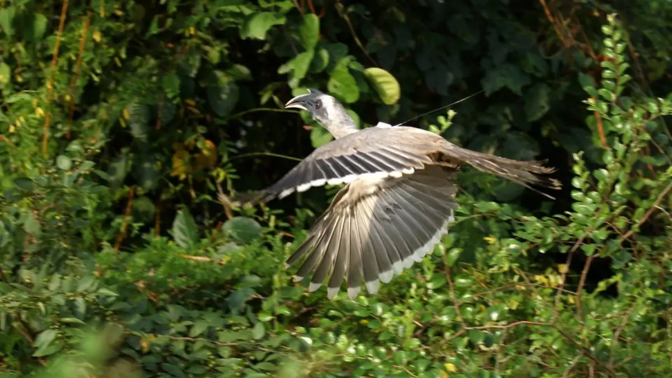
Indian Grey Hornbill Returns to Gir Forest After Six Decades
The Indian Grey Hornbill has successfully returned to Gir Forest in Gujarat after being absent from the region for nearly 60 years, marking a significant achievement in wildlife conservation. The successful reintroduction demonstrates the effectiveness of scientific conservation efforts aimed at restoring locally extinct species.
The species had gradually disappeared from Gir during the 1950s and 1960s, largely due to excessive hunting and habitat-related pressures. Recognising the ecological importance of hornbills, the Gujarat Forest Department, along with conservation partners, initiated a carefully planned reintroduction programme to restore the bird to its natural habitat.
As part of the conservation initiative, 40 Indian Grey Hornbills were released into the Gir ecosystem in two phases. The first phase during 2021–22 saw the release of 28 hornbills, followed by another 12 birds in 2023. Continuous scientific monitoring has confirmed that the birds have adapted well, established nesting sites, and successfully reproduced in the wild.
Hornbills play a crucial ecological role as seed dispersers, helping regenerate forests by spreading seeds across large areas. Their successful return is expected to strengthen the biodiversity and long-term ecological health of Gir Forest.
The findings of the project have been documented in a scientific study examining the birds’ movement patterns, habitat use, nesting behaviour, and overall adaptation. The success of the programme highlights how planned conservation and habitat protection can restore species once considered locally extinct.
India Releases First Trial Index of Services Production
India has taken a major step towards improving the measurement of its services sector with the release of the country’s first trial Index of Services Production (ISP) by the Ministry of Statistics and Programme Implementation (MoSPI) on 14 July 2026.
The Index of Services Production is designed as a monthly indicator that measures short-term changes in the output of the formal services sector. It complements the existing Index of Industrial Production (IIP), which tracks industrial output, thereby providing a more comprehensive picture of India’s economic performance.
The inaugural trial index uses 2024–25 as the base year and covers 19 formal services sub-sectors, representing nearly 60% of India’s organised services economy. The index is intended to improve economic analysis, policy formulation, and national accounts by offering regular information on services-sector performance.
The April 2026 data revealed strong growth across the sector. Out of the 19 sub-sectors, 14 recorded double-digit year-on-year growth. Among the fastest-growing segments were accommodation and food services (37.2%), retail trade (30.8%), administrative and support services (28.7%), and real estate activities (27.7%).
The introduction of the ISP is expected to enhance the government’s ability to monitor economic trends, support evidence-based policymaking, and strengthen India’s statistical framework for measuring service-sector growth.

India to Host Fifth BIMSTEC National Security Advisers’ Meeting
India will host the 5th BIMSTEC National Security Advisers’ Meeting in New Delhi on 16 July 2026, reaffirming its commitment to strengthening regional security cooperation among the member countries of the Bay of Bengal Initiative for Multi-Sectoral Technical and Economic Cooperation (BIMSTEC).
Established in 1997, BIMSTEC brings together Bangladesh, Bhutan, India, Myanmar, Nepal, Sri Lanka, and Thailand to promote cooperation across areas such as security, trade, connectivity, energy, and people-to-people exchanges.
The National Security Advisers’ Meeting serves as an important platform for discussing regional security challenges. Key issues expected to feature in the meeting include cybersecurity, terrorism, trafficking, transnational crime, satellite cooperation, and the protection of critical digital infrastructure.
Bangladesh, the current Chair of BIMSTEC, has confirmed its participation, with its delegation to be led by the Prime Minister’s Defence Adviser, Brigadier General (Retd.) Dr. A.K.M. Shamsul Islam.
India has consistently played a leading role in strengthening cybersecurity cooperation within BIMSTEC. It hosted the First BIMSTEC Experts Group Meeting on Cyber Security in 2022 and the Second Experts Group Meeting in January 2025, both in New Delhi. These meetings focused on developing a regional action plan for information sharing, capacity building, and coordinated responses to cyber threats.
The upcoming meeting is expected to further strengthen regional collaboration in addressing emerging security challenges while promoting peace, stability, and resilience across the Bay of Bengal region.
Review Questions
1. The India–UK Comprehensive Economic and Trade Agreement (CETA) came into effect on:
A) 1 January 2026
B) 15 July 2026
C) 26 January 2026
D) 15 August 2026
Answer: B) 15 July 2026
Explanation: The India–UK Comprehensive Economic and Trade Agreement (CETA) became operational on 15 July 2026, marking a major milestone in bilateral economic relations.
2. India and the United Kingdom have set a target to increase bilateral trade to approximately how much by 2030?
A) USD 75 Billion
B) USD 80 Billion
C) USD 90 Billion
D) USD 100 Billion
Answer: D) USD 100 Billion
Explanation: Under the CETA, both countries aim to increase bilateral trade from around USD 55–60 billion to USD 100 billion by 2030.
3. The India–UK Double Contribution Convention (DCC) mainly benefits:
A) Students studying in the UK
B) Tourists visiting the UK
C) Indian professionals working temporarily in the UK
D) Indian exporters only
Answer: C) Indian professionals working temporarily in the UK
Explanation: The DCC exempts eligible Indian professionals from paying UK social security contributions for up to five years, avoiding double contributions.
4. The successful reintroduction of the Indian Grey Hornbill has taken place in which National Park/Forest?
A) Kaziranga National Park
B) Jim Corbett National Park
C) Gir Forest
D) Ranthambore National Park
Answer: C) Gir Forest
Explanation: The Indian Grey Hornbill has returned to Gir Forest in Gujarat after an absence of nearly 60 years.
5. The Indian Grey Hornbill plays an important ecological role as a:
A) Pollinator
B) Seed disperser
C) Predator
D) Scavenger
Answer: B) Seed disperser
Explanation: Hornbills help regenerate forests by dispersing seeds over large distances.
6. Which ministry released India’s first Trial Index of Services Production (ISP)?
A) Ministry of Commerce & Industry
B) Ministry of Finance
C) Ministry of Statistics and Programme Implementation (MoSPI)
D) Ministry of Corporate Affairs
Answer: C) Ministry of Statistics and Programme Implementation (MoSPI)
Explanation: MoSPI released the country’s first Trial Index of Services Production (ISP) on 14 July 2026.
7. The base year for the newly introduced Index of Services Production (ISP) is:
A) 2022–23
B) 2023–24
C) 2024–25
D) 2025–26
Answer: C) 2024–25
Explanation: The ISP uses 2024–25 as its base year.
8. India will host the 5th BIMSTEC National Security Advisers’ Meeting in which city?
A) Mumbai
B) Kolkata
C) New Delhi
D) Chennai
Answer: C) New Delhi
Explanation: The meeting is scheduled to be held in New Delhi on 16 July 2026.
9. Which of the following countries is NOT a member of BIMSTEC?
A) Bangladesh
B) Thailand
C) Nepal
D) Pakistan
Answer: D) Pakistan
Explanation: BIMSTEC comprises Bangladesh, Bhutan, India, Myanmar, Nepal, Sri Lanka, and Thailand.
10. BIMSTEC was originally established in which year?
A) 1995
B) 1997
C) 2000
D) 2005
Answer: B) 1997
Explanation: BIMSTEC was established in 1997 as BIST-EC before being renamed the Bay of Bengal Initiative for Multi-Sectoral Technical and Economic Cooperation (BIMSTEC).


