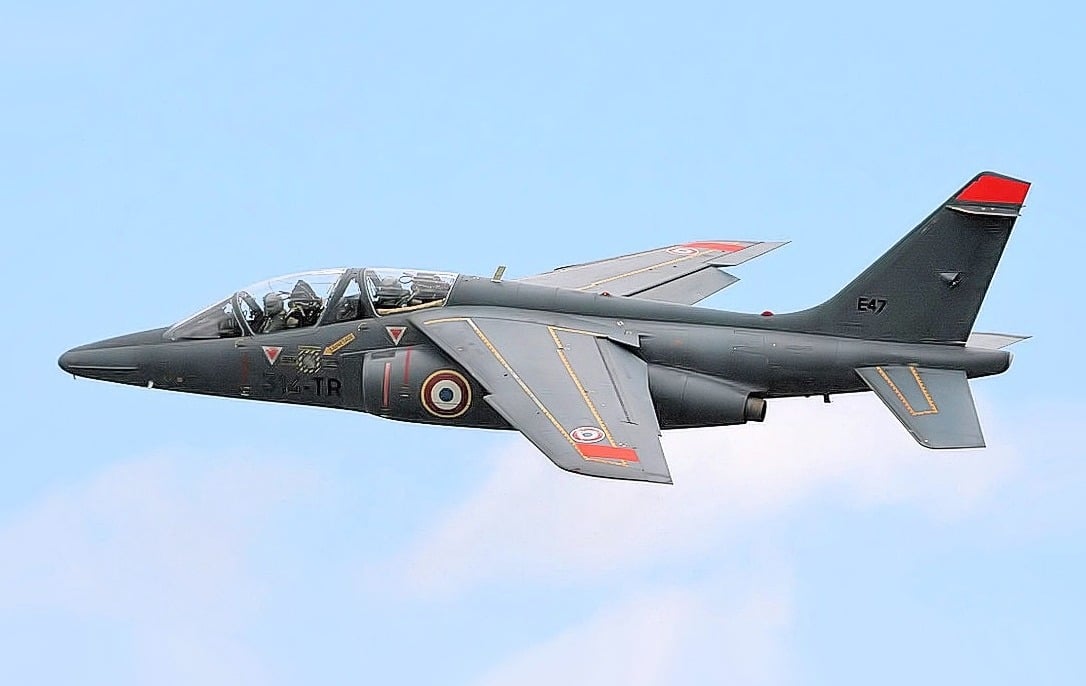
The European Union (EU) has initiated a proposal call aimed at developing a future multirole light aircraft (FMLA) that incorporates stealth capabilities, designed to fulfill diverse operational requirements. This initiative, which has a budget of 15 million euros (approximately $17.5 million), seeks to address significant capability deficiencies stemming from the aging fleet of European light multirole aircraft, some of which, like the Dassault Alpha Jet, have been operational for three to four decades.
Light multirole and light attack aircraft serve as cost-effective solutions for asymmetric warfare, proving particularly adept in operations from austere locations that lack substantial infrastructure. The envisioned FMLA will be equipped with precision-guided munitions, enabling it to conduct a variety of air-to-ground missions, including light attack, drone interception, close air support, and intelligence, surveillance, and reconnaissance missions.
A recent notice from the European Commission highlights that beyond its primary military function, the light multirole aircraft must be adaptable for civil security roles and internal EU needs, such as search and rescue operations, border surveillance, and disaster relief efforts. This emphasis reflects a broader vision of the aircraft’s versatility.
The upcoming study will evaluate the replacement requirements for light multirole aircraft within the 2035-2040 timeframe, focusing on potential development opportunities within the framework of the European Defence Fund and its affiliated nations.
Incorporating stealth technology into the design of light aircraft marks a significant advancement, particularly as modern detection technologies evolve. The specifications for the FMLA indicate an emphasis on reducing its radar signature through the use of radiation-absorbing paints and coatings, though the design requirements do not explicitly detail airframe shaping or traditional stealth design features.
Additionally, the FMLA is expected to be equipped with systems that can mitigate electronic interference, including defenses against electromagnetic pulse effects, and facilitate manned-unmanned collaborative operations.
Expected features of the turboprop-powered aircraft include a maximum takeoff weight of 7,500 kilograms (16,535 pounds) and the capability for short take-off and landing. The aircraft will be designed to operate effectively in various challenging environments, such as sandy, dusty, saline, stormy, and extreme temperatures, while also enduring heavy rain and high winds, as well as mountainous terrains.
Furthermore, the aircraft will utilize existing and cutting-edge coastal and littoral communication networks, with the ability to identify, localize, and engage targets during collaborative missions under the supervision of human operators. This multi-faceted approach underscores the EU’s commitment to modernizing its air capabilities while addressing both military and civilian operational needs.