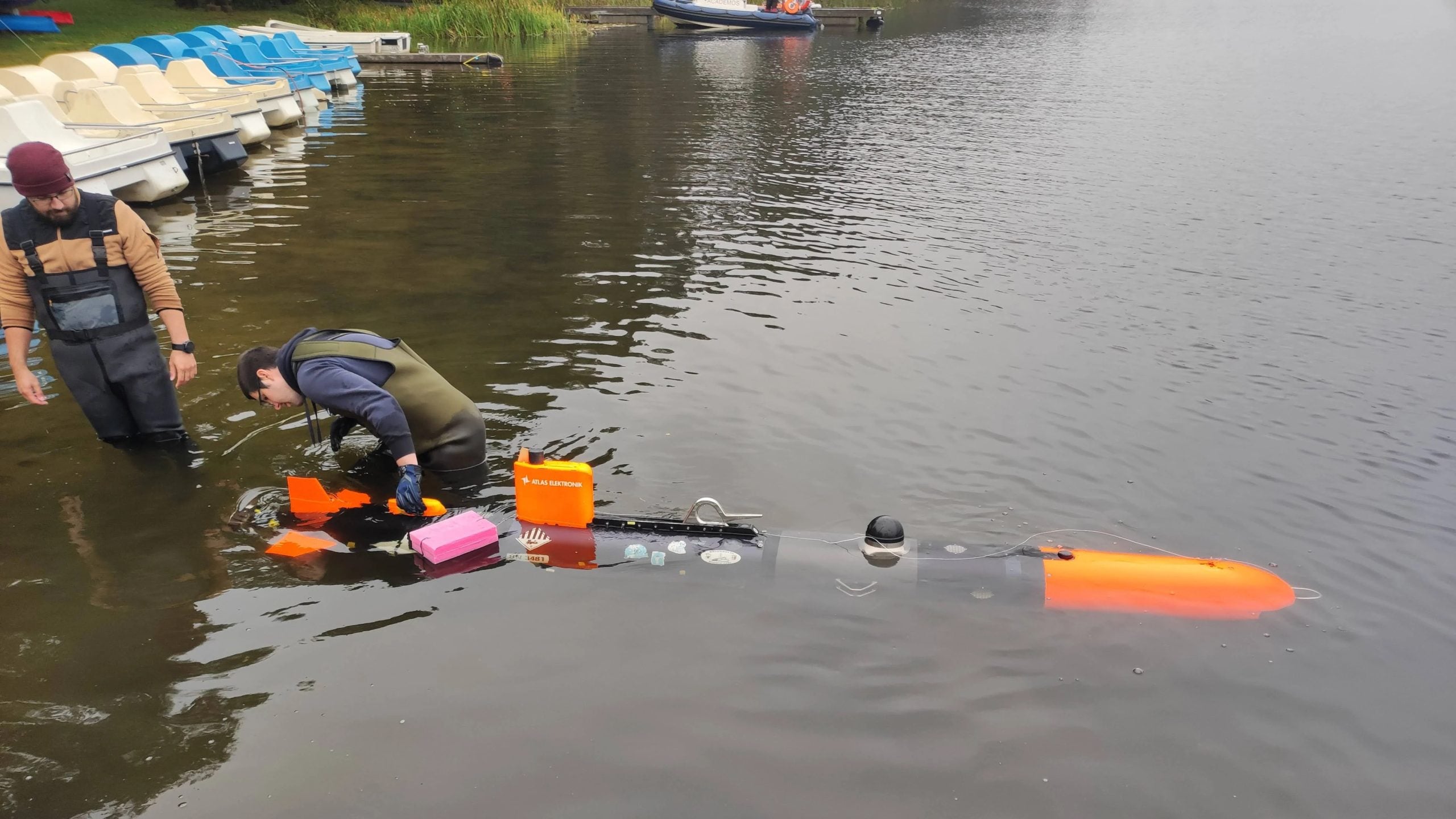
In a significant leap forward for naval capabilities, Europe is making strides with an underwater drone swarm project aimed at revolutionizing maritime operations. The Swarm of Biomimetic Underwater Vehicles (SABUVIS), currently in its fourth year and managed by the European Defence Agency (EDA), represents a transformative approach to how navies may conduct surveillance, mine countermeasures, and operations in contested maritime environments.
SABUVIS is designed to employ a fleet of networked autonomous platforms that work together as a coordinated swarm, rather than operating as isolated units. This innovative methodology enhances mission execution, allowing for greater speed, cost efficiency, and resilience. The use of lower-cost autonomous vehicles enables the distribution of risk, complicates adversarial responses, and maintains mission effectiveness even if individual platforms are compromised.
The project features collaboration among four European nations, with Poland taking the lead role alongside Germany, Portugal, and Slovenia. Its second phase, SABUVIS II, has focused on overcoming major challenges associated with underwater autonomy. Key issues addressed include the absence of satellite-based tracking beneath the water’s surface, limited communication bandwidth, high latency, and the unpredictable elements of the underwater environment.
Among the essential advancements made during SABUVIS II are the development and assessment of three complementary concepts for underwater operations. These include scalable, lower-cost autonomous underwater vehicle swarms, biomimetic vehicles optimized for agility in shallow or cluttered waters, and hybrid systems that integrate underwater drones with autonomous surface platforms.
This implementation builds on earlier initiatives, notably the EDA’s SALSA (Smart Adaptive Long- and Short-range Acoustic network) project, which has advanced underwater acoustic networking technologies to foster connectivity and data exchange among various autonomous platforms.
The EDA underscored that SABUVIS II demonstrated the viability of executing missions without reliance on a single platform. By utilizing heterogeneous systems governed by common standards and interfaces, the project has paved the way for enhanced interoperability.
A series of field trials marked the culmination of the project’s second phase, which took place in early February across Poland, Germany, and Portugal during the REPMUS 2025 exercise. These trials showcased the capabilities of mixed swarms of underwater drones operating in realistic conditions, highlighting coordinated movements, reliable data exchanges, precise formation control, and adaptive mission execution.
These demonstrations not only tested swarm behavior under realistic operational scenarios but also enhanced the integration of various systems through robust command-and-control architectures, ensuring that autonomous vehicles developed by different nations and manufacturers can effectively collaborate. This evolution in naval technology could redefine how maritime defense strategies are formulated and executed in the future.