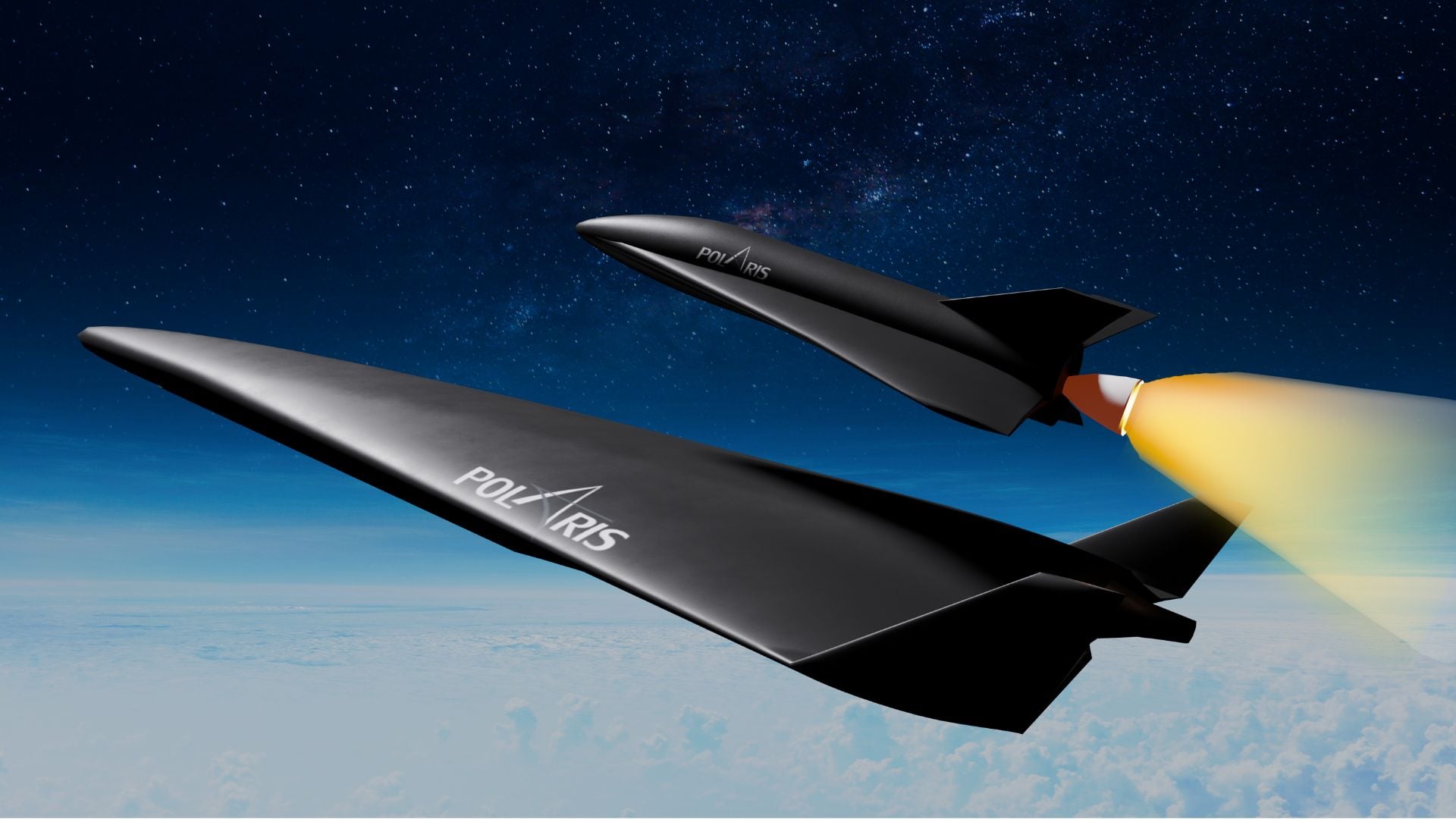
The German arms procurement agency has made a significant move in advancing hypersonic technology by contracting Polaris Spaceplanes for the development and flight testing of a two-stage, reusable hypersonic test vehicle. This initiative is part of the Hypersonic Test and Experimentation Vehicle (HYTEV) program, with the concept originally developed between 2024 and 2025. Anticipations are set for the vehicle to be ready for flight by the end of 2027.
HYTEV aims to establish a hypersonic testbed and experimental platform that supports a range of activities including defense-related research, scientific projects, and institutional studies. Beyond its primary functions, the vehicle is designed to serve as a spaceplane for reconnaissance missions, venturing beyond the Earth’s atmosphere.
Polaris Spaceplanes expressed pride in the partnership, highlighting the Bundeswehr’s sustained trust in their expertise. They noted that to their knowledge, no similar contract has been awarded to any entity in Europe, or possibly worldwide, making this endeavor particularly groundbreaking.
The vehicle’s design showcases a two-stage spacecraft featuring horizontal takeoff and landing capabilities, utilizing a pair of turbofan engines for its conventional flight and cruise phases. Once in the upper stage, it transitions to rocket propulsion, enabling it to reach hypersonic speeds before the separation of stages. This upper stage has the flexibility to be configured for various roles, including the carriage of experimental payloads or the launch of small satellites.
The aircraft will have a takeoff mass and size comparable to that of a fighter jet, with a notable payload capacity of up to 1,000 kilograms (2,205 pounds) for low-Earth orbit missions.
To complement these developments, Polaris Spaceplanes has been working on advancing key propulsion technologies. In 2023, the company was tasked with creating a linear aerospike rocket engine for a spaceplane demonstrator. By 2024, they successfully completed an in-flight ignition test for the engine, designated AS-1. This engine has since been evaluated through the company’s MIRA II and MIRA III small-scale demonstrators, which have been operational for over a year and have achieved several important testing milestones.
As this project moves forward, experts are eager to see how these innovations will contribute to defense capabilities and broaden the understanding of hypersonic travel.