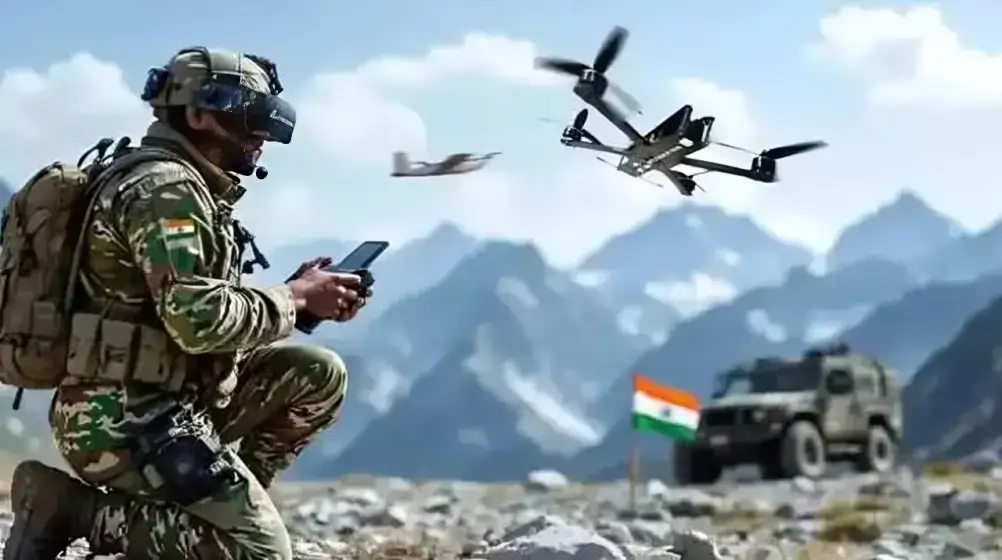
In a remarkable shift aimed at modernizing its combat capabilities, the Indian Army has successfully formed a large-scale modern warfare force, comprising over 100,000 trained drone operatives. Concurrently, it has introduced the technology-driven Bhairav Special Forces to address the complexities of contemporary and future battlefields.
This initiative is part of a broader restructuring effort designed to counter multi-domain threats characterized by hybrid warfare, where drones, precision strikes, and rapid maneuvers play vital roles in military effectiveness.
Bhairav: A New Age Special Force
The Bhairav units are being developed by Army Headquarters, inspired by lessons learned from global military conflicts and the Indian Army’s own operational experiences. These units are envisioned as high-speed offensive forces, capable of executing tasks typically reserved for Special Forces within both tactical and operational areas.
Reports indicate that approximately 15 Bhairav battalions have already been formed and strategically positioned across critical formations on both borders, with ambitions to increase this number to around 25 battalions in the near future. These new units aim to fill the operational gap between the elite Para (Special Forces) and regular Infantry battalions, offering commanders flexible and technologically advanced strike options.
Drone-Centric Combat Capability
A standout feature of this transformation is the creation of a substantial pool of soldier-drone operators. Each Bhairav operative is trained in the operation, deployment, and integration of drones during real combat scenarios, including the targeting of enemy bases and formations situated deep within hostile territories.
A commanding officer from a desert-based Bhairav battalion highlighted the need for modern forces that effectively blend technology, endurance, and independent operational capability in today’s rapidly evolving conflicts.
‘Sons of the Soil’ Concept in the Desert
The desert battalion has embraced the ‘Sons of the Soil’ concept, predominantly recruiting troops from Rajasthan. This strategy is intended to leverage a localized understanding of terrain, climate, language, and cultural conditions. Commanders believe that drawing from regional martial traditions strengthens the cohesion and resilience of the unit.
Operational Validation and Exercises
Over the past five months, the Bhairav battalions have undergone rigorous training incorporating cutting-edge technologies and unmanned systems. Their operational readiness was put to the test during Exercise Akhand Prahar, attended by Lt Gen Dhiraj Seth, where the troops demonstrated impressive speed, coordination, and precision.
Part of a Broader Restructuring
In parallel with the Bhairav units, the Indian Army has also established Rudra Brigades, which are integrated all-arms formations combining infantry, mechanized units, armor, artillery, special forces, drones, and dedicated logistics. The Artillery, Mechanized Infantry, and Armoured Corps are simultaneously being outfitted with advanced unmanned and surveillance capabilities to enhance battlefield effectiveness.
Looking Ahead
The Bhairav units are expected to feature prominently in the Army Day Parade scheduled for January 15 in Jaipur, symbolizing the Army’s evolution into a more agile, capable, and decisive force. Officials assert that this transformation reflects India’s commitment to staying ahead of evolving threats by skillfully blending manpower, technology, and modern military doctrine.