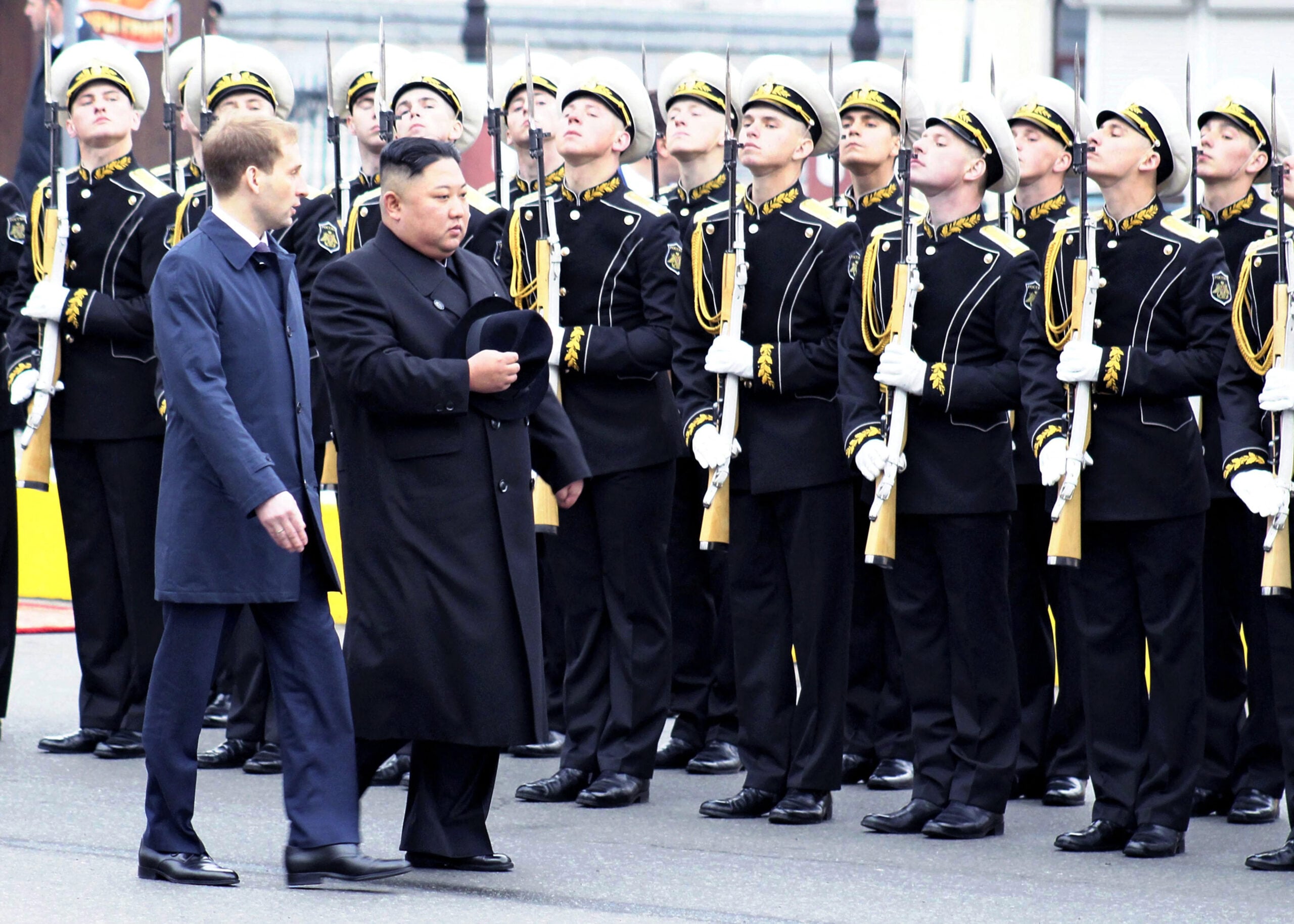
North Korean leader Kim Jong Un recently expressed admiration for troops stationed in what he termed an “alien land,” acknowledging their contributions in a New Year message directed at soldiers engaged in overseas operations. This statement, disseminated by state media, highlights Pyongyang’s deepening ties with Moscow amid the ongoing conflict in Ukraine, although Kim refrained from explicitly mentioning the country by name.
In his message, Kim celebrated the “heroic” efforts of North Korean personnel, whom he praised for their commitment and courage in defending the nation’s honor. He urged the troops to remain fearless in their duties, acknowledging the sacrifices they make while serving far from home. “As the whole country is enveloped in a festive atmosphere of greeting the new year, I all the more miss you, who are fighting bravely on the battlefields in the alien land even at this moment, true to the order of your homeland,” Kim stated, according to the Korean Central News Agency.
Kim emphasized the support that the soldiers have from both Pyongyang and Moscow, reinforcing the notion of an “invincible alliance” between North Korea and Russia during this time of conflict. South Korean and Western intelligence sources estimate that North Korea has deployed thousands of troops to assist Russia’s prolonged invasion of Ukraine. Reports indicate that at least 600 North Korean soldiers have died and many others have been wounded.
In exchange for military support, analysts suggest that North Korea is receiving various forms of aid from Russia, including financial assistance, military technology, and vital food and energy supplies. An alarming aspect of these military deployments is a reported order from the North Korean leadership, instructing soldiers to take their own lives if faced with the prospect of capture.
Kim’s address included a call to his troops to fight with resolve “for the fraternal Russian people,” further evidencing the strong connection being forged between the two nations amid ongoing international scrutiny.
Adding another layer to the narrative, two North Korean soldiers who had been captured by Ukrainian forces expressed hopes of starting anew in South Korea. This sentiment was conveyed in a letter received by AFP, where they thanked those advocating for their release, viewing their circumstances not as a misfortune but as an opportunity for a new beginning. The two men, who had been held since January 2025 after sustaining injuries on the battlefield, expressed a deep emotional attachment to South Koreans, referring to them as “parents and siblings” and revealing their desire to integrate into South Korean society.
This intertwining of military alliances and personal stories underscores the complex geopolitical dynamics in the region, as well as the human impact of the ongoing conflict.