




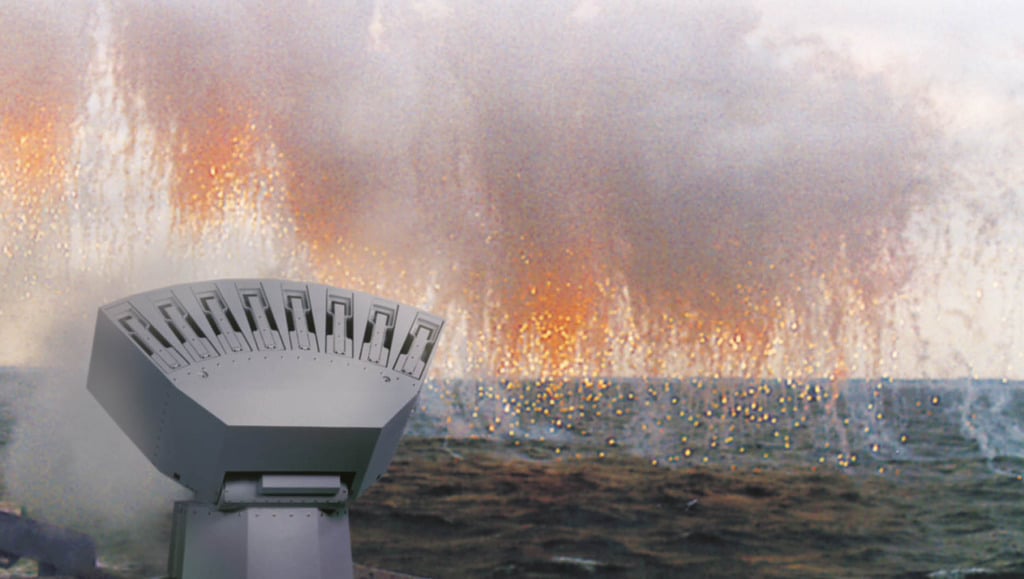
Kuwait has taken a significant step to enhance the capabilities of its naval fleet by awarding a contract to Rheinmetall for the installation of advanced naval decoy systems on its Al Dorra-class guided-missile boats. This initiative aims to bolster the country’s defenses against anti-ship missiles and other guided threats.
The multi-million-euro contract will see eight boats of the Kuwaiti Naval Forces receiving the Multi Ammunition Softkill System (MASS), with deliveries anticipated to start within the year and complete by the second quarter of 2029. This procurement underscores Kuwait’s commitment to modernizing its naval assets and ensuring maritime security.
In addition to the MASS, the agreement includes the supply of Omnitrap-ER decoy ammunition, along with necessary system integration and verification activities. The latest-generation decoys are designed to possess extended range capabilities and improved flight trajectories, enhancing their effectiveness against contemporary threats, specifically imaging radar- and infrared-guided anti-ship missiles.
The Multi Ammunition Softkill System serves as an off-board soft-kill countermeasure, functioning by deploying multispectral Omni Trap decoys that divert incoming missiles and other sensor-guided threats. Notably, the system can autonomously release decoys based on various factors, including environmental conditions, the vessel’s navigation data, and the characteristics of the incoming threats.
MASS offers flexibility in its deployment, featuring up to six launchers, each capable of carrying 32 decoys. This system can be integrated into a range of naval platforms—from offshore patrol vessels to large frigates—and can operate independently or be linked to existing command-and-control and weapon-control systems.
The Al Dorra-class program is a crucial element of Kuwait’s largest naval shipbuilding initiative in over 15 years. These stealth patrol vessels are being constructed by Abu Dhabi Shipbuilding in collaboration with the UAE-based EDGE Group, which serves as the prime contractor. Designed to reinforce maritime security, these vessels will play vital roles in coastal patrol, search-and-rescue missions, and the safeguarding of offshore energy resources.
Recent developments within the Al Dorra program include a contract awarded to the French company HGH for the installation of SPYNEL 360-degree infrared surveillance systems aboard the vessels. Additionally, Italian defense giant Leonardo secured a contract worth 320 million euros (approximately $370 million) to provide naval combat systems, further advancing the program’s capabilities.
Earlier transactions also included a significant agreement with Singapore’s ST Engineering, which was tasked with designing and supplying platform systems for the fleet in a deal valued at around 600 million Singapore dollars (approximately $467 million). These efforts collectively signify Kuwait’s strategic dedication to enhancing its naval forces and securing its maritime interests in a rapidly evolving defense landscape.


