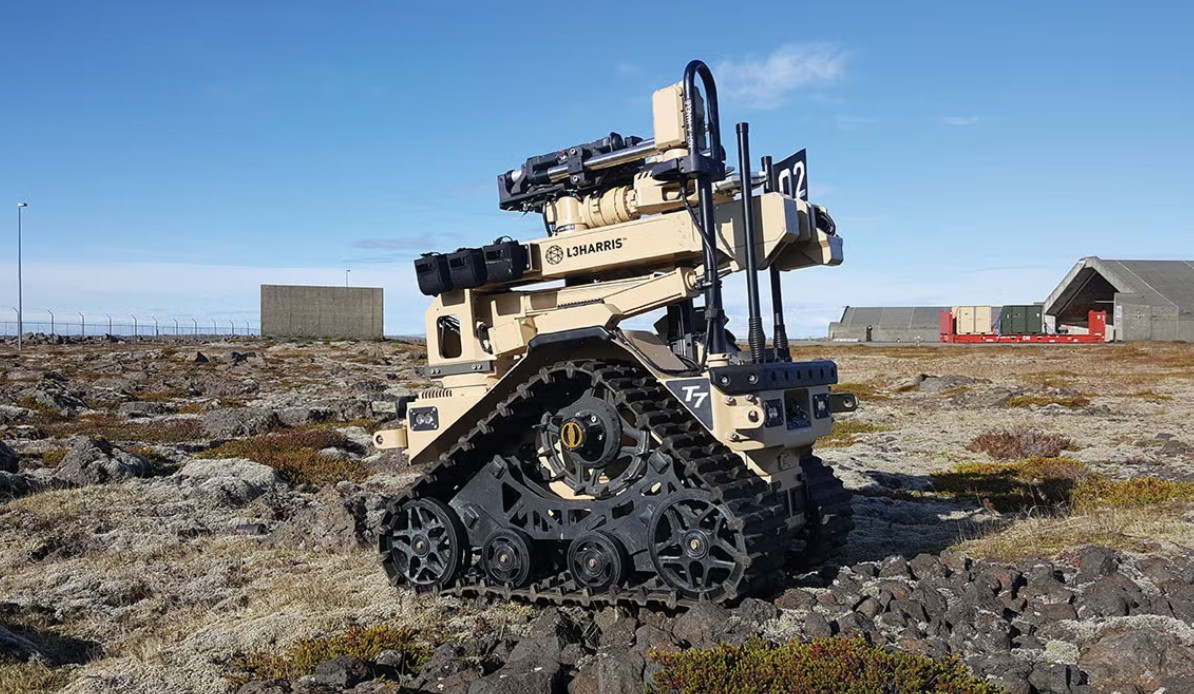
L3Harris Technologies has announced a significant contract with the US Navy and US Marine Corps for the provision of 34 large T7 robotic systems, specifically designed for explosive ordnance disposal (EOD) operations. This advanced technology aims to enhance safety and efficiency during high-risk EOD missions, allowing operators to detect and neutralize explosive threats from a distance.
The T7 robotic systems are equipped with advanced mobility and manipulation capabilities, enabling them to navigate complex environments while under remote control. This innovative approach not only reduces the risk to personnel but also ensures effective handling of potentially dangerous situations.
Deliveries of the T7 systems, as part of a multi-year contract, are set to commence later this year. Alongside the robotic units, L3Harris will also offer training programs for both the machines and their operators, ensuring that military personnel are well-prepared to utilize the technology effectively.
This new contract builds upon previous success, including a notable 2021 order from the US Air Force for over 100 robots, highlighting the growing reliance on robotic systems in military operations. The T7, along with its counterpart, the medium T4 robot, is currently utilized by the Australian Defence Force and the UK Ministry of Defence for their own EOD tasks.
Beyond explosive ordnance disposal, the T7 robotic system supports various applications including hazardous materials response, intelligence, surveillance and reconnaissance, as well as special weapons and tactics operations. The robot is designed for ease of use, operated via an intuitive interface that allows for precise control and dexterous manipulation. This capability is crucial for executing complex missions in environments that could pose significant dangers to human operators.
Weighing in at 710 pounds (322 kilograms) with its arms and batteries installed, the T7 relies on twelve BB-2590 batteries, offering more than eight hours of operational capability depending on the specific tasks. The robotic system can achieve speeds of up to 4.5 miles (7.2 kilometers) per hour, making it a versatile asset in the field.
For enhanced situational awareness, the T7 is fitted with a comprehensive array of cameras, including front and rear driving cameras, a pan-tilt-zoom mast camera with 30× zoom, a zoomable gripper camera, an optional mid-arm camera, and four fender-mounted corner cameras. The robot is also capable of lifting significant weights, handling over 250 pounds (113 kilograms) near its chassis and more than 60 pounds (27 kilograms) at full arm extension.
This latest development underscores the military’s commitment to incorporating cutting-edge technology to enhance operational capabilities while prioritizing safety and effectiveness in hazardous conditions.