




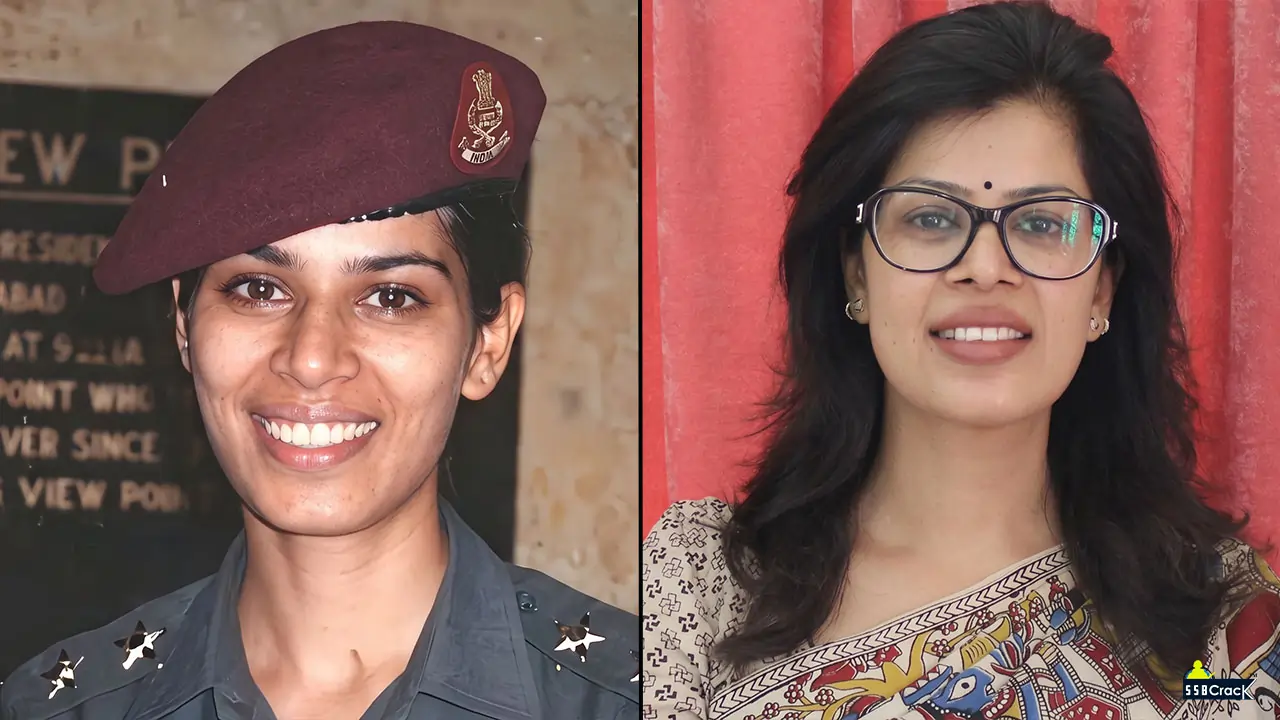
Captain Ruchi Sharma’s story is one of courage, determination, and breaking barriers at a time when opportunities for women in the Indian Armed Forces were still extremely limited. Long before women began entering combat-support and elite operational roles in larger numbers, she stepped into one of the toughest military environments in the country and became the first Indian woman to earn the coveted maroon beret as an operational paratrooper. Her journey not only challenged traditional perceptions within the military establishment but also inspired an entire generation of young women to believe that no role was beyond their capability.
Born into a family with strong military values, Ruchi Sharma grew up in an atmosphere shaped by discipline, patriotism, and self-confidence. Her father served in the Indian Army, and his influence played a significant role in shaping her personality and ambitions. From an early age, she learned the importance of perseverance, responsibility, and national service. Unlike many young girls of her generation who were encouraged toward more conventional careers, Ruchi Sharma was raised to believe in independence and ambition.
She completed her education in Chandigarh and graduated from MCM DAV College for Women in 1995 as a science student. During her college years, she was known for her confidence, determination, and willingness to take on challenges. Initially, she had considered pursuing a career in medicine and dreamt of becoming a brain surgeon. However, the call to serve the nation eventually became stronger than any other ambition.
In 1996, at just 20 years of age, she joined the Indian Army as a Short Service Commission officer. It was a period when women officers were still relatively new to the armed forces outside medical branches, and opportunities for operational exposure were limited. She was commissioned into the Army Ordnance Corps (AOC), but her ambitions extended far beyond a conventional support role. She wanted to push her physical and mental limits and serve in one of the Army’s most elite environments.
Driven by that determination, she volunteered for paratrooper training — a decision that surprised many at the time. The Parachute Regiment has long been regarded as one of the toughest and most respected arms of the Indian Army. Operational paratroopers are trained for airborne insertion behind enemy lines, high-risk missions, and independent operations in hostile environments. The training standards were uncompromising, and very few candidates successfully completed the course.
At the Paratroopers Training School in Agra, Ruchi Sharma underwent rigorous airborne and commando-style training designed to test physical endurance, mental resilience, and tactical capability. The training included punishing physical exercises, long-distance runs with heavy loads, obstacle courses, and repeated airborne drills. One of the most demanding tasks involved a 40-kilometre endurance run carrying additional weight, a challenge that pushed trainees to their absolute limits.
Despite the hardships, she persevered through every stage of the course. In 1997, she successfully completed the Basic Airborne Course and achieved what no Indian woman had achieved before — earning the maroon beret as an operational paratrooper. Her first jump from an aircraft became a defining moment in her life. She later recalled the experience as unforgettable, filled with both excitement and adrenaline.
The achievement was historic not only because she became the first Indian woman to qualify operationally as a paratrooper, but because she did so in an era when women were rarely associated with physically demanding military roles. Her success challenged long-standing assumptions about women’s capabilities in elite military training and opened conversations about expanding opportunities for women within the armed forces.
Following her qualification, Captain Ruchi Sharma served in difficult operational areas, including Ladakh, where harsh weather and high-altitude conditions demanded exceptional endurance and adaptability. During her service, she earned widespread respect for her professionalism, discipline, and commitment to duty.
Her accomplishments were formally recognised through several honours and awards. In 1999, she received the General Oberoi Trophy for “Best Women Adventurer” in her corps. She was also awarded the President’s Gold Medal for excellence and later received the prestigious First Ladies Award from the President of India for her pioneering role in advancing women’s participation in the armed forces.
Her growing public recognition also made her a symbol of changing times in the Indian military. In 1998, she appeared on the cover of a leading national magazine under the headline “The Changing Face of the Indian Army.” At a time when discussions around women in combat roles were still highly limited, her story represented a new generation of Indian women determined to challenge barriers through performance and perseverance.
Despite her successful military career, Captain Sharma made the difficult decision to retire voluntarily in 2003 after seven years of service in order to focus on raising her daughter, Varija. She later reflected that had permanent commission opportunities been available more broadly for women officers during that period, she would likely have continued serving in uniform for much longer. Her decision reflected the realities faced by many women officers of her generation, who often had to balance military careers with family responsibilities in a system that offered limited long-term opportunities.
Even after retirement, her commitment to service and leadership continued. She transitioned into the field of education and served as the Principal of an Army school, where she mentored young students and promoted values of discipline, patriotism, and confidence. Through motivational interactions and public engagements, she continued encouraging young women to pursue ambitious careers without fear of societal limitations.
Her story received renewed national attention during the Prime Minister’s #SheInspiresUs campaign on International Women’s Day in 2020. The Ministry of Defence highlighted her contribution as the first operational woman paratrooper of the Indian Army and recognised her continuing role in inspiring future generations.
Today, as women officers increasingly enter combat-support branches, command roles, and even fighter aviation and special operations support environments, Captain Ruchi Sharma’s achievement remains a landmark moment in the evolution of the Indian Armed Forces. Long before institutional reforms expanded opportunities for women, she proved through action that courage, resilience, and determination are not defined by gender.
Her maroon beret became far more than a military qualification. It became a symbol of possibility — proof that barriers can be broken through dedication, discipline, and unwavering resolve. Captain Ruchi Sharma’s journey continues to inspire countless young Indians who dream of serving the nation with honour, courage, and pride.


