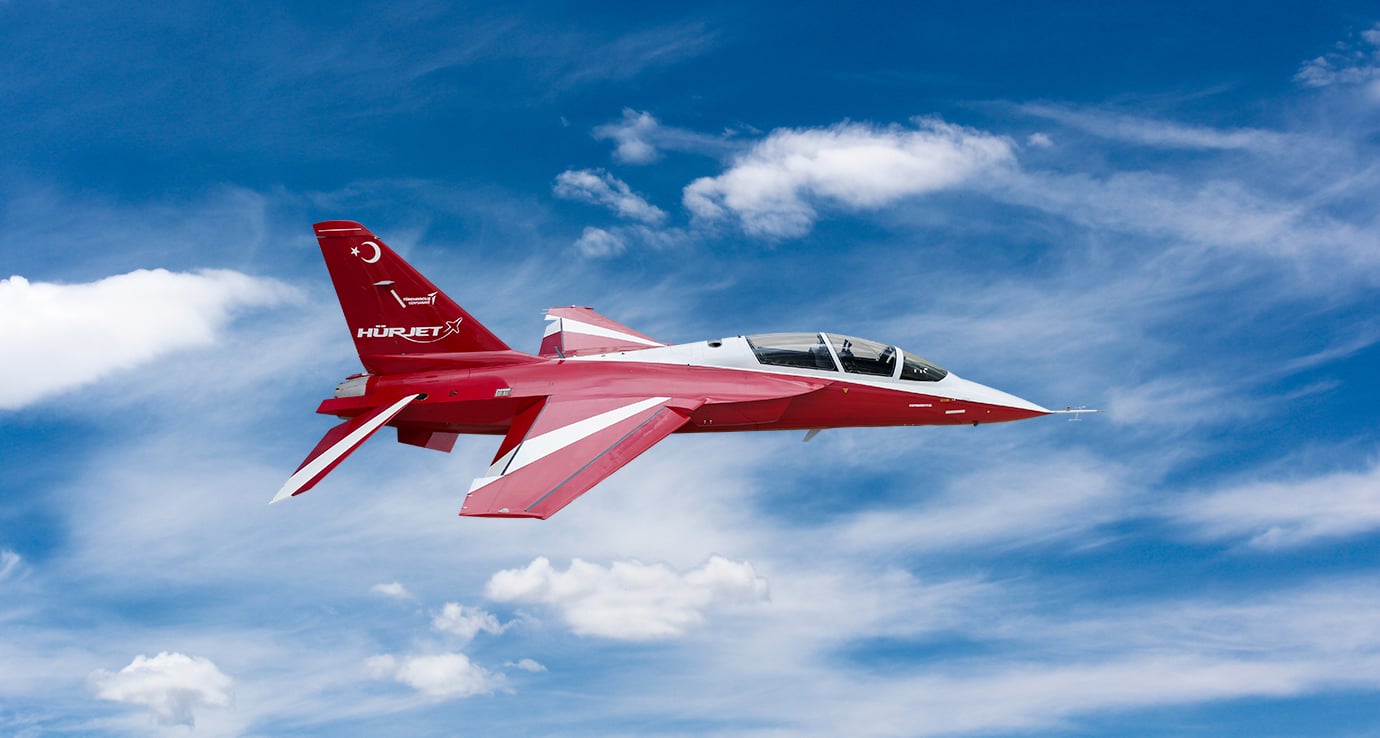
Spain is taking significant steps towards modernizing its air combat training capabilities by replacing its aging F-5 fleet with the acquisition of 30 Hürjet trainers from Turkey. This transition marks a crucial shift in how the country prepares its next generation of combat pilots.
The Spanish government has selected Airbus Defence and Space to spearhead the development of a new Integrated Training System for the Spanish Air and Space Force, incorporating the Hürjet aircraft produced by Turkish Aerospace. This initiative represents more than just the procurement of new jets; it encompasses the establishment of a comprehensive training ecosystem that integrates aircraft, advanced simulators, infrastructure enhancements, and long-term logistical support.
Under the planned acquisition, the initial delivery of the Hürjet aircraft will be in a baseline configuration, which will subsequently be modified to meet specific Spanish military requirements. Airbus, appointed as the national coordinator for this initiative, will oversee the conversion of the fleet and the establishment of a dedicated aircraft conversion center in Spain. Additionally, the company will refurbish the Fighter and Attack School located at the Talavera la Real Air Base in Extremadura to accommodate the new training regime.
The first batch of aircraft is expected to arrive between 2028 and 2029, after their certification in Spain. Following this, conversion work is set to commence, with the initial two aircraft being modified at Airbus’s facilities in Getafe. The remaining 28 jets will undergo conversion at the new facility in Spain. Final deliveries of all aircraft are projected to be complete between the latter half of 2031 and 2035.
The Hürjet brings several essential features to Spain’s training pipeline. Designed as a supersonic, tandem-seat jet, it effectively bridges the gap between basic flight training and advanced frontline fighters such as the Eurofighter Typhoon. The aircraft replicates critical aspects of modern combat jets, including high-speed maneuvers, advanced avionics systems, and contemporary digital cockpit layouts.
Notably, the Hürjet’s open-architecture design allows for the customization of mission systems, training software, and onboard simulators to align with national needs. This adaptability is crucial for preparing pilots for real-world scenarios. Moreover, when used in conjunction with ground-based simulators and virtual training tools, the aircraft enables pilots to practice complex mission scenarios on the ground prior to flight. This innovative approach not only reduces training costs but also enhances the overall realism and safety of training exercises, ensuring that Spanish pilots are well-prepared for future challenges in the airspace.