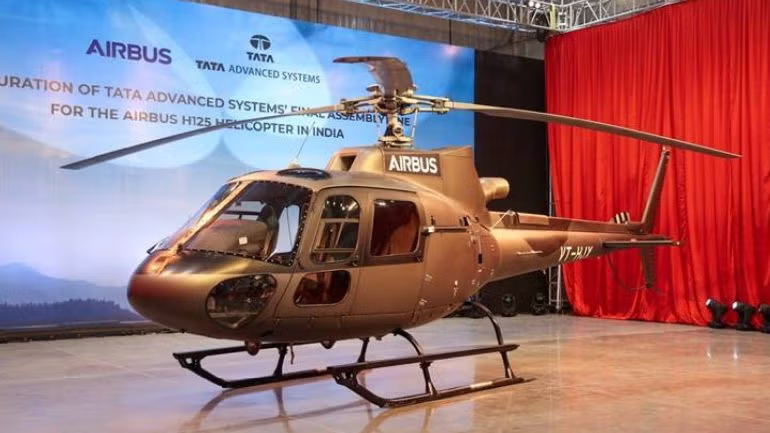
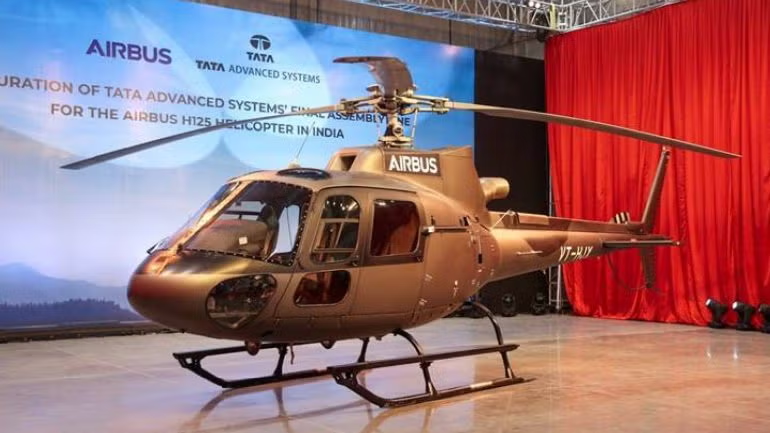
In a major boost to India’s aerospace manufacturing capabilities, Tata Advanced Systems Limited (TASL) and Airbus have officially opened the country’s first private-sector final assembly line (FAL) for the Airbus H125 helicopter in Vemagal, Karnataka.
Tata & Airbus Launch India’s First Private Sector H125 FAL
The assembly facility was virtually inaugurated on 17 February 2026 by Prime Minister Narendra Modi and French President Emmanuel Macron, with India’s Defence Minister Rajnath Singh and France’s Armed Forces Minister Catherine Vautrin also attending.
A Milestone for ‘Make in India’ and Aerospace Manufacturing
The H125 FAL represents a landmark step in India’s journey toward self-reliance in aerospace and defence. It is the first time a private Indian company will manufacture, integrate, test, and support an advanced rotary-wing aircraft domestically — a major departure from traditional overseas assembly.
This facility complements Airbus’s existing partnerships in India, including the C295 military aircraft assembly line, and is a key part of the government’s AatmaNirbhar Bharat (self-reliant India) vision.
What the Facility Will Do
The new H125 assembly line will:
- Assemble Airbus H125 helicopters for civil and para-public markets.
- Potentially produce the military variant H125M in the future.
- Provide local maintenance and lifecycle support to operators in India and the region.
- Create direct and indirect employment opportunities in aerospace manufacturing.
The first “Made in India” H125 helicopter is expected to be delivered in early 2027, and will also be available for export across South Asia.
About the Airbus H125
The Airbus H125 is one of the world’s most popular single-engine helicopters, known for its versatility and performance in civil, surveillance, rescue, and utility missions. It has flown millions of hours globally and holds a strong reputation for reliability in high-altitude and “hot & high” operating environments.
Strategic Significance
This initiative not only strengthens India-France defence and industrial cooperation but also deepens India’s participation in the global aviation supply chain. By enabling localized production, the project reinforces the Make in India strategy and supports broader aerospace ecosystem development, including design, maintenance, and export potential.