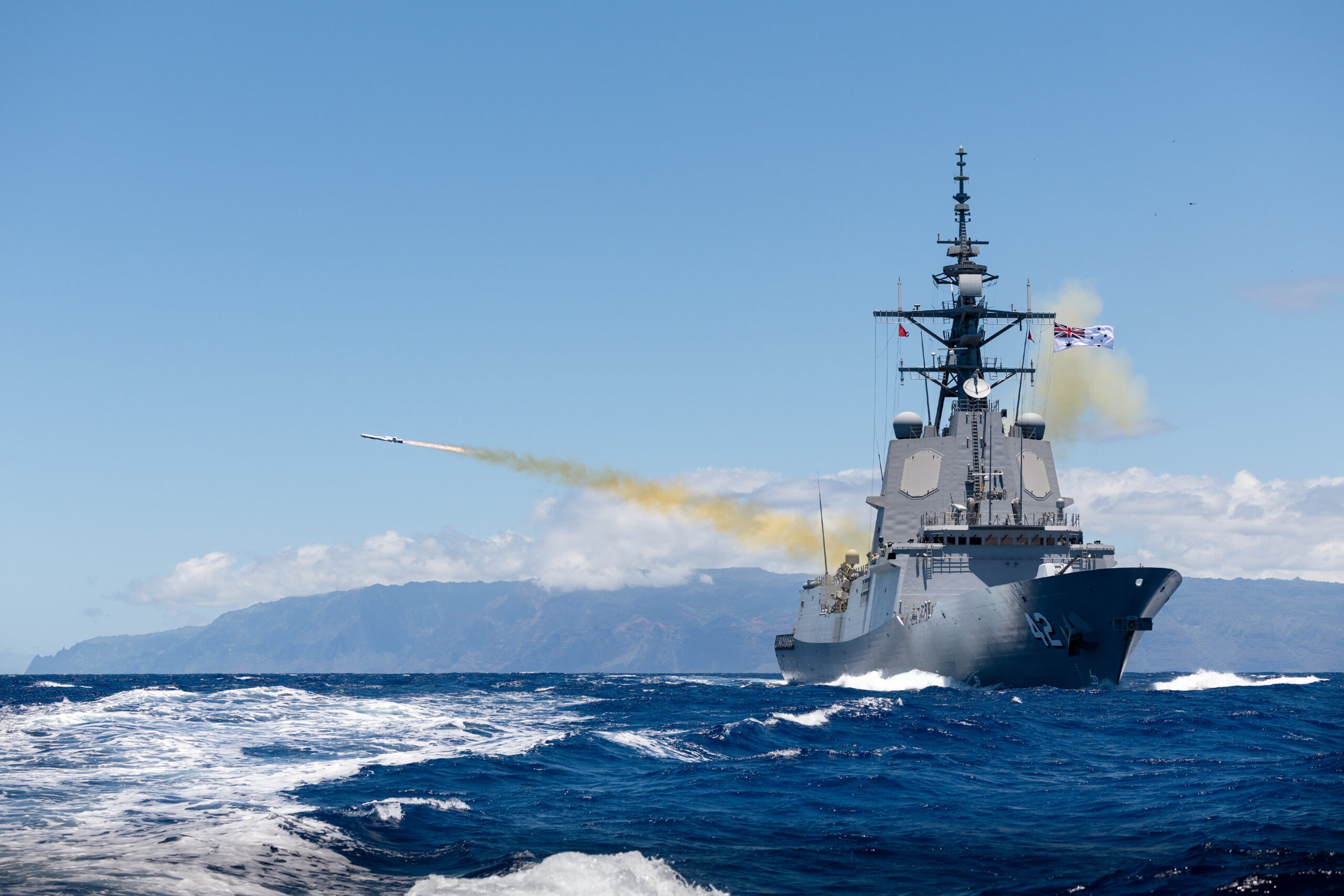
The Naval Strike Missile (NSM) has emerged as one of the most sophisticated and versatile anti-ship and land-attack cruise missiles currently in use by Western militaries. This compact missile is specifically designed to enable surface vessels and coastal forces to engage enemy ships and coastal targets from significant distances, even in the face of contemporary air defense systems.
Development and Origins
Developed by Kongsberg Defence & Aerospace in Norway in the early 2000s, the NSM arose from Norway’s quest for a successor to the outdated Penguin anti-ship missile. The development objective was clear: create a next-generation weapon capable of operating effectively in challenging coastal environments, maintaining low-altitude flight to evade radar detection, and delivering precise strikes against maritime targets.
The design emphasizes autonomy, target discrimination, and survivability, crucial features for Norway, whose complex coastline and fjords often complicate reliable radar and GPS use. Since its debut, the NSM has been increasingly adopted by the US Navy and other NATO allies, including Poland, Germany, and Canada.
Technical Specifications and Functionality
The NSM is a subsonic missile propelled by a turbojet engine, with launch capabilities from ships, coastal installations, or mobile ground vehicles. It boasts a range exceeding 185 kilometers (115 miles), allowing operators to engage targets well beyond the horizon while remaining outside the range of many enemy countermeasures.
Instead of relying solely on radar or GPS for targeting, the missile employs a passive infrared imaging seeker. This innovative feature allows the NSM to recognize and classify targets based on their shape and thermal characteristics, making it significantly more resistant to jamming attempts, especially in complex maritime environments.
Once launched, the NSM follows terrain-referenced and sea-skimming flight profiles, maintaining a low altitude to evade detection. As it approaches its target, the missile executes evasive maneuvers, enhancing its chances of successfully striking the intended target. The NSM carries a 158-kilogram (348-pound) warhead designed for blast-fragmentation, which can penetrate ship hulls and inflict substantial internal damage.
Key Attributes
-
Passive Seeker Technology: By employing imaging infrared rather than radar, the NSM minimizes its likelihood of detection and is less vulnerable to electronic countermeasures.
-
Multi-Role Capability: The missile is effective against both maritime and land-based targets, expanding its strategic utility.
-
Launch Flexibility: The NSM can be deployed from various platforms, including naval ships, coastal defense systems, and mobile ground vehicles.
-
Network Compatibility: It integrates seamlessly with modern datalink systems, supporting coordinated or autonomous targeting.
- Compact Design: Its smaller size allows even smaller naval vessels like corvettes or littoral combat ships to deploy long-range strike capabilities.
Limitations
Despite its advanced features, the NSM does possess certain limitations. Its relatively small warhead may necessitate targeting vulnerable points, such as the engine or command center, rather than relying purely on explosive mass to incapacitate larger ships. Additionally, its subsonic speed can limit its effectiveness against heavily armored or larger surface combatants and provides adversaries with a longer window to react.
The NSM is best employed against smaller to medium-sized vessels or in littoral scenarios where it can exploit its strengths. However, in high-intensity blue-water operations against larger ships, its shortcomings might become pronounced.
Global Adoption and Strategic Significance
The NSM has achieved widespread adoption among NATO and allied forces, thanks in part to its modular design, which allows for modernizing naval arsenals without necessitating entirely new launch systems. The missile’s capabilities are particularly relevant in cluttered littoral zones, where distinguishing between military and civilian targets poses significant challenges.
Looking ahead, the NSM’s blend of autonomy, precision, and adaptable platforms positions it well within a naval strategy that increasingly emphasizes distributed operations and multi-domain deterrence. Its ability to strike both maritime and high-value coastal targets further expands its role, ensuring that the NSM will remain a critical asset in future naval engagements.