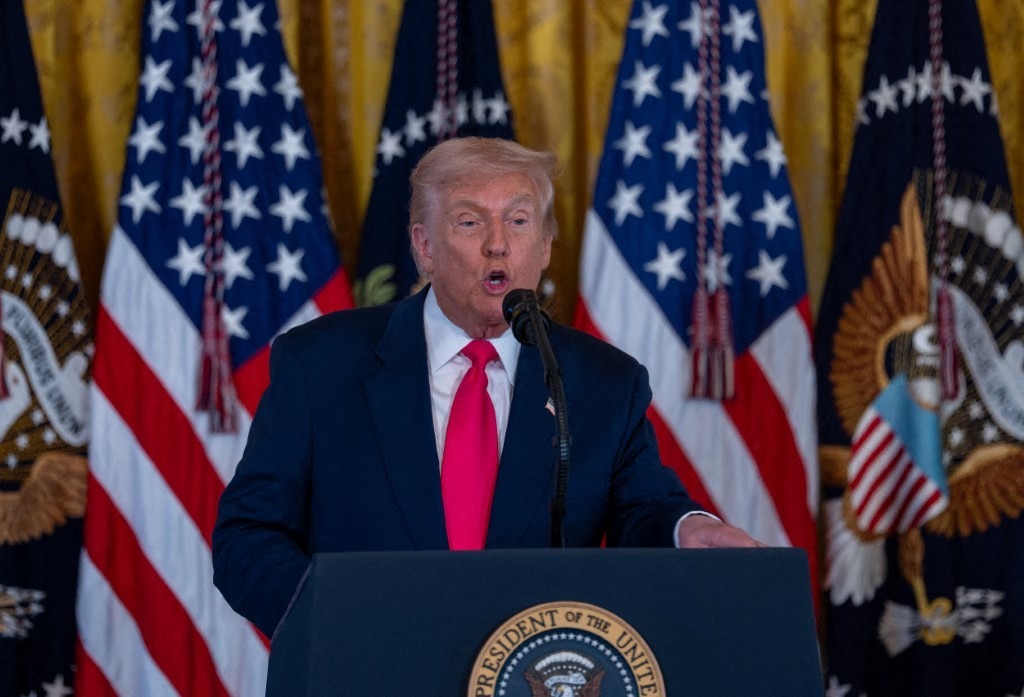
President Donald Trump announced plans on Wednesday to significantly enhance the U.S. defense budget for the year 2027, proposing an increase of 50% to a staggering $1.5 trillion. This ambitious proposal is framed as a necessary response to what Trump characterized as “troubled and dangerous times.”
In his remarks on Truth Social, Trump emphasized his intention to strengthen the military, which is already funded at historic levels. He indicated that this financial commitment is essential for maintaining national security and building a “Dream Military” that would ensure the safety of the nation regardless of potential adversaries.
The president attributed the feasibility of this substantial funding increase to revenue generated from the sweeping tariffs he has implemented across various sectors, affecting both allies and rivals. Despite the U.S. currently leading global military spending, the proposed hike would further widen the gap with competitors such as China and Russia, raising concerns about sparking an arms race.
Trump’s announcement comes in the context of NATO’s recent commitments to augment defense spending to 5% of GDP by 2035, a decision influenced by increasing pressure from the U.S. leader.
However, the announcement has not been without criticism. While it promises considerable benefits to defense contractors, it features a conflicting stance from Trump himself. He pointedly criticized defense companies for prioritizing shareholder returns through massive dividends and stock buybacks, suggesting that these practices detract from necessary investments in infrastructure and equipment.
In particular, Trump proposed capping executive salaries at $5 million and prohibiting stock buybacks and dividends until certain issues are addressed, although he did not elaborate on how these measures would be implemented. His comments spurred a negative reaction in financial markets, with stock prices for major defense firms like Lockheed Martin and General Dynamics dropping by more than 4%, and Northrop Grumman declining by over 5%.
Trump specifically called out Raytheon, citing complaints from the Defense Department regarding the company’s responsiveness and efficiency. He urged Raytheon to enhance its investments in facilities and equipment, threatening potential loss of government contracts if the company fails to improve.
The sweeping budget increase, combined with the president’s critical stance toward defense contractors, reflects a complex approach to defense spending that aims to balance ambition with accountability in the industry.