




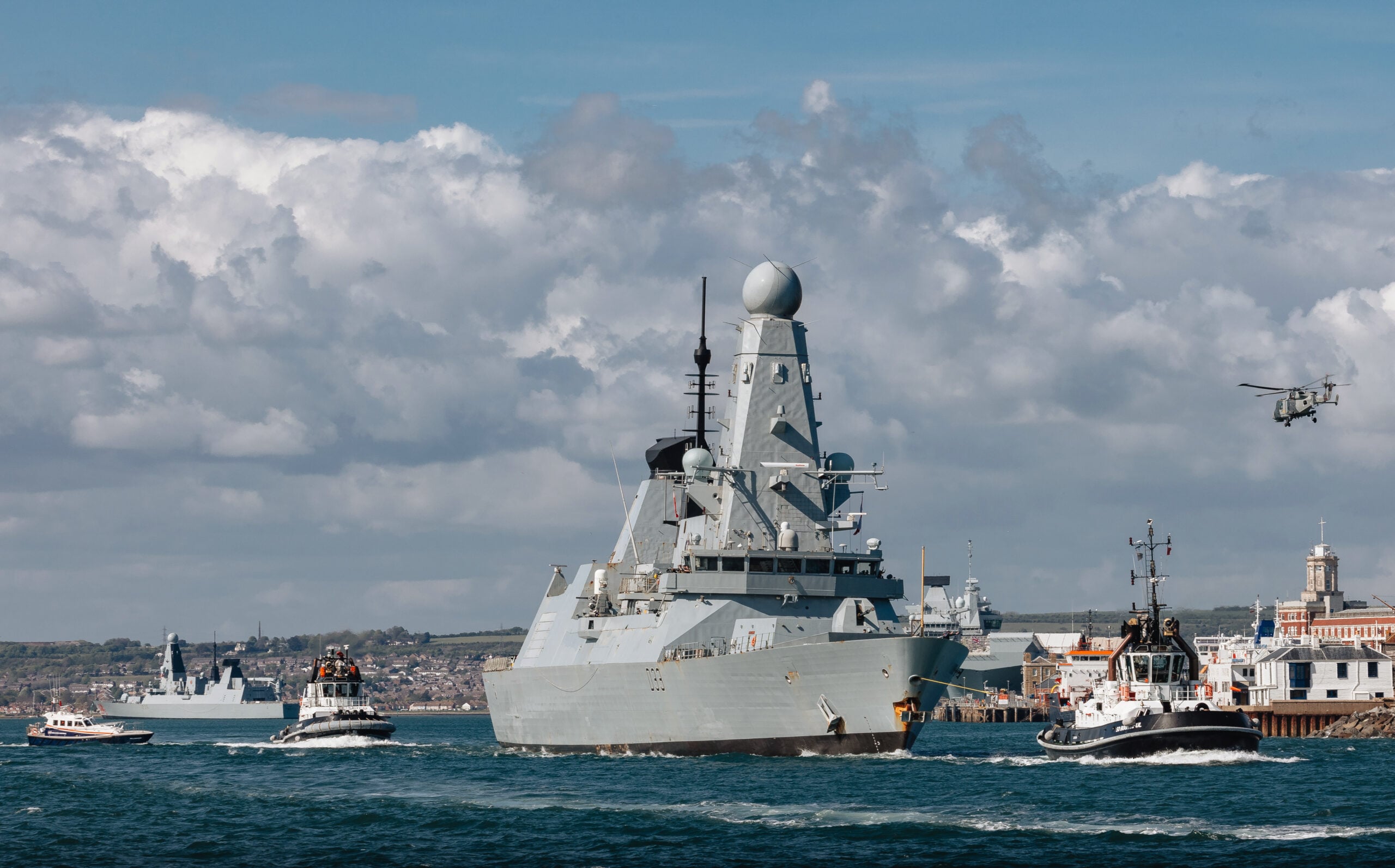
The UK government has announced a significant shift in its naval capabilities, unveiling plans to replace the aging Type 45 Daring-class guided-missile destroyers with a new class of warships designed to enhance the Royal Navy’s operational versatility. These vessels, known as the Common Combat Vessel (CCV), will be equipped to operate unmanned aerial, surface, and underwater systems, marking a strategic pivot towards a hybrid fleet concept. The CCVs are expected to enter service in the early 2030s, succeeding the earlier plans for the Type 83 destroyers.
Funds allocated under the recent Defense Investment Plan will initiate the design phase for these new vessels, which aim to leverage manned-unmanned teaming rather than relying solely on a limited number of large, expensive ships. This approach is envisioned to improve operational efficiency and cost-effectiveness.
The CCVs are set to function as command hubs for multi-domain drone operations while enhancing air defense capabilities and extending operational coverage without a proportional increase in crew size or overall cost. This innovation in naval architecture aligns with a wider modernization initiative, which will see the CCVs deployed alongside the existing fleet of eight Type 26 City-class frigates and five Type 31 Inspiration-class frigates.
Additionally, the Royal Navy will integrate a range of autonomous systems into its operational framework, including the Type 91 surface-to-air missile barge, Type 92 underwater sensing vessel, Type 93 submarine, and Type 94 surface sensing vessel. This suite of capabilities underscores the UK’s commitment to adapting to emerging maritime threats, particularly in response to increased Russian military activity in the North Atlantic and Arctic regions.
Defence Secretary Dan Jarvis highlighted the significance of the CCVs in addressing modern threats. He emphasized that the vessels would be built in the UK, thereby supporting local jobs and industries while enhancing the Royal Navy’s readiness for contemporary conflict scenarios. “Developed with exceptional British innovators, the new ships will be British-built, supporting jobs across the nation and giving the Royal Navy a capability built for modern warfare,” Jarvis stated.
The introduction of the CCVs also aligns with Britain’s broader maritime initiatives, including the Atlantic Bastion, Atlantic Shield, and Atlantic Strike, which focus on securing subsurface infrastructure and strengthening NATO’s collective force in response to geopolitical challenges.


