




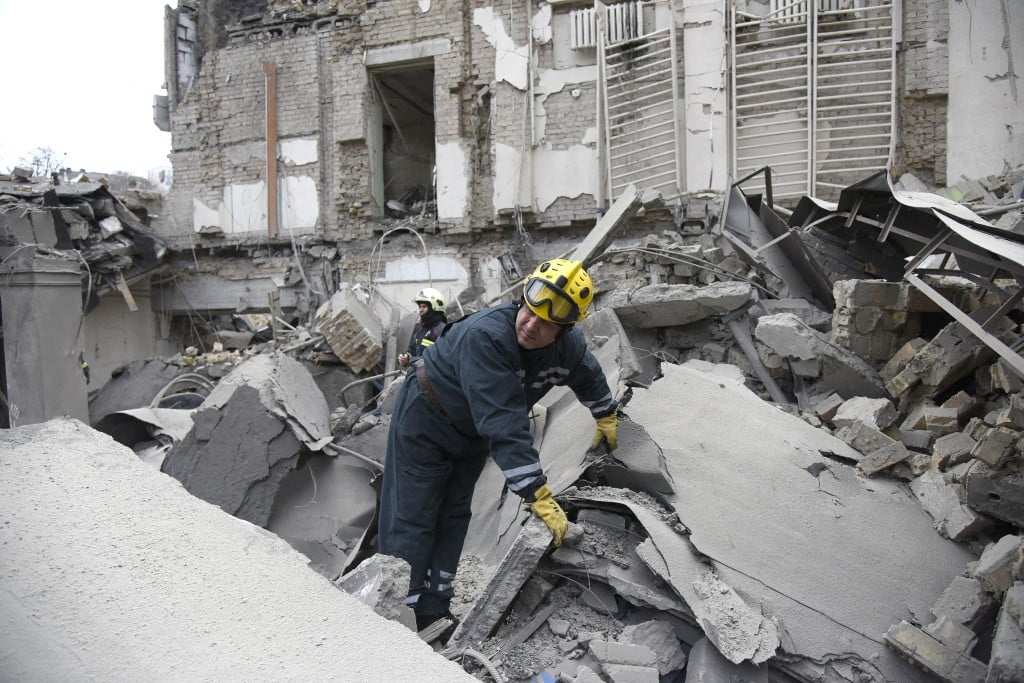
In a significant escalation of hostilities, four individuals were reported dead and fuel sales were halted across Russian-occupied Crimea following a substantial strike by Ukrainian forces over the weekend. The attacks reportedly targeted military and energy installations, underscoring the strategic importance of Crimea to Russia’s military operations in Ukraine.
Crimea’s Moscow-backed governor, Sergey Aksyonov, confirmed the casualties, stating that in addition to the fatalities, 28 others sustained injuries during the drone assault on the Kerch peninsula, which directly borders Russia. Aksyonov emphasized that fuel sales at petrol stations would be suspended starting at 9:00 AM local time, with exemptions only for state enterprises.
The ramifications of the Ukrainian offensive extended beyond Crimea, as one person died on a ferry during the strikes and an oil terminal in Russia’s Krasnodar region also came under fire. Local electricity provider Krymenergo reported power outages in parts of the peninsula as a result of the attacks.
In response to the situation, Ukrainian President Volodymyr Zelensky took to social media to state that the strikes were part of Ukraine’s “long-range sanctions” targeting Russian military logistics and critical infrastructure. Zelensky asserted that these operations represent just retribution for Russia’s persistent aggressions against Ukrainian civilians. He further disclosed that Ukrainian forces aimed their strikes at the strategic Crimean Bridge, along with radar systems and air defense installations.
In recent months, Ukraine has intensified its drone operations, demonstrating a newfound ability to reach deep into Russian territory, aiming to disrupt supply chains and affect Russia’s oil revenues — a critical funding source for the ongoing conflict. The Ukrainian military’s capability to target areas previously considered secure reflects a significant shift in the operational landscape.
Additionally, the effects of the conflict have begun to manifest within Russia itself, where some petrol stations have initiated fuel rationing in response to supply constraints. A report from Energy Intelligence, a United States-based research firm, indicated a considerable reduction in Russian oil refining capacity, estimated to be around one-third offline due to Ukrainian strikes.
Meanwhile, the broader conflict, considered the largest in Europe since World War II, continues with peace negotiations stalled. The front lines appear static, though both nations remain engaged in exchanges marked by increasing intensity and strategic maneuvering.


