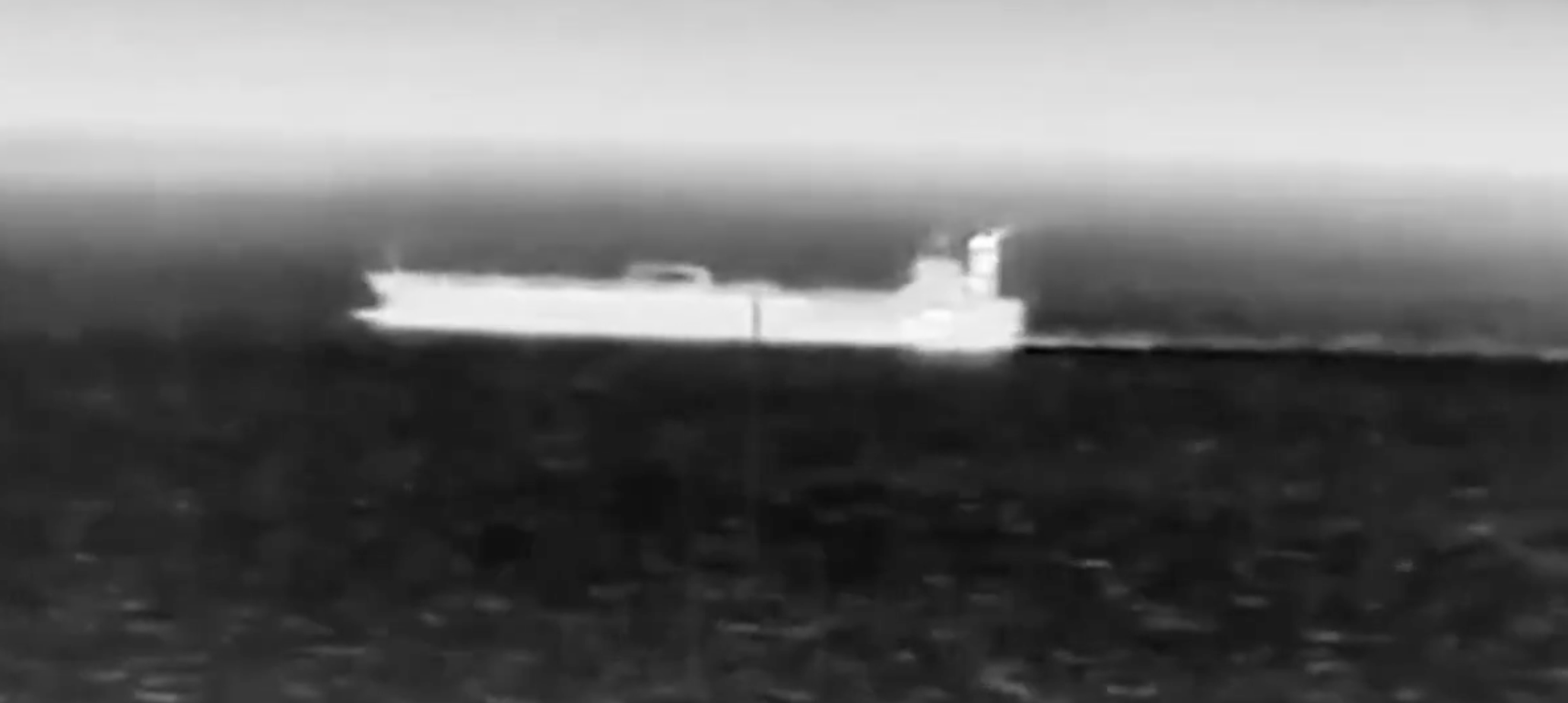
Ukraine has announced a significant military operation involving aerial drones that targeted a Russian tanker, identified as part of what officials describe as a “shadow fleet,” in the neutral waters of the Mediterranean Sea. This attack marks Ukraine’s first military engagement in this region since the onset of the ongoing conflict nearly four years ago.
This “shadow fleet” is said to comprise up to 1,000 ships, which frequently change flags and ownership, making it challenging to track and enforce international sanctions. The fleet has been crucial for Russia’s crude oil exports, allowing it to generate vital revenue amidst stringent embargoes. Analysts and several European leaders have raised concerns that some vessels within this fleet are involved in not just oil trade, but also in sabotage and hostile operations across Europe.
A source within Ukraine’s Security Service (SBU) described the operation as a “new, unprecedented special operation,” carried out approximately 2,000 kilometers from Ukrainian borders. However, specific details about the drone deployment—including the launch location and flight path—remain undisclosed.
The SBU clarified that the targeted tanker was empty during the attack, alleviating fears of environmental repercussions from the incident. According to the Ukrainian source, the vessel, named QENDIL and flying the flag of Oman, reportedly sustained critical damage and is no longer operational for its intended purposes. The tanker was en route from Sikka, India, to the Russian port of Ust-Luga when it encountered the strike, having made a U-turn near the coasts of Greece and Libya.
The SBU source emphasized that the tanker was integral in circumventing Western sanctions and funding Russia’s military operations. They asserted that it constituted a legitimate target in light of its involvement in facilitating Russia’s war efforts.
The message from Ukraine is clear: officials intend to communicate that the conflict extends beyond its borders, asserting that they will pursue military operations against Russian interests anywhere in the world. In recent months, Ukraine has claimed responsibility for similar operations against Russia-linked tankers near Turkey’s Black Sea coast, indicating a broader strategy to disrupt Russian maritime operations.