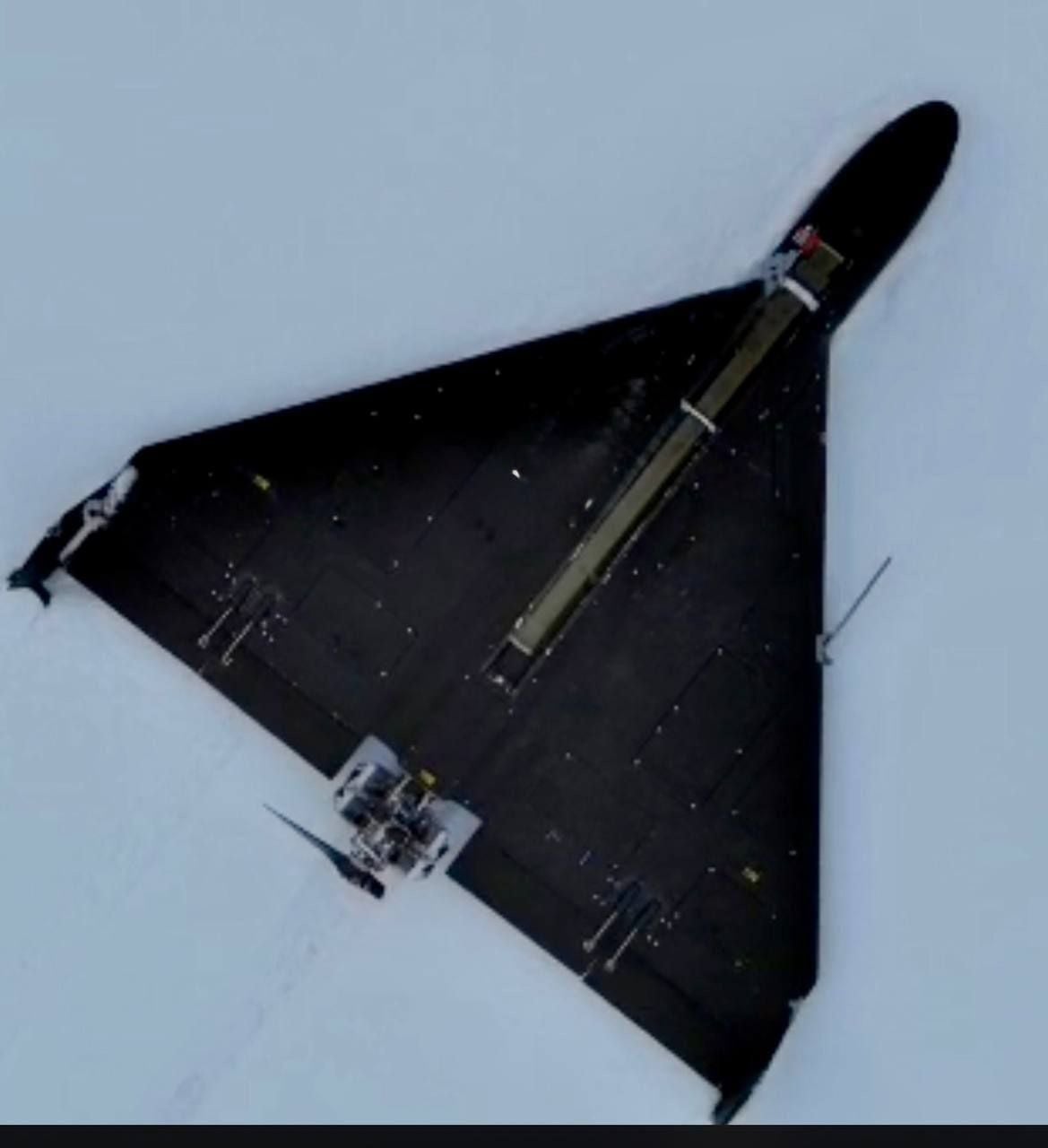
Ukrainian Armed Forces recently reported the downing of a Russian Shahed one-way attack drone, notable for being equipped with a man-portable air defense system (MANPADS). This incident marks the first known use of a Shahed variant—known as Geran within the Russian military—modified to carry such a defense system, underscoring an ongoing evolution in its operational application by Russian forces.
The drone was reportedly intercepted in the northern Chernihiv region of Ukraine. Reports from the Unmanned Systems Forces of Ukraine indicate that the drone was fitted with a radio modem and camera allowing it to be operated remotely from Russian territory. This advancement suggests a significant shift in the operational capabilities of these drones as Russia seeks to enhance their role on the battlefield.
This incident follows an earlier revelation of a Shahed drone armed with an R-60 air-to-air missile, indicating a strategic initiative by the Russian military to deter Ukrainian aerial assets, including both fixed and rotary-wing aircraft engaged in counter-drone operations.
Despite the innovative nature of the MANPADS modification, experts express skepticism regarding its effectiveness in real-world scenarios. As of now, there have been no confirmed incidents of Ukrainian aircraft being downed by these modified Shahed drones. The MANPADS in question is the 9K333 Verba, which theoretically has a range of up to 6.5 kilometers (approximately 4 miles). However, the successful employment of such a system would require advanced situational awareness and maneuverability to lock onto a target accurately.
Analysts suggest that the primary target focus of this modified drone may not be advanced fighter jets but rather the Ukrainian Mi-8/Mi-17 helicopters and Mi-24 gunships typically utilized in counter-drone roles.
The ongoing modifications to the Shahed drone underline Russia’s attempts to adapt to the challenges of modern warfare. Recent variants appear designed for more dynamic engagements, extending their capabilities beyond traditional programmed strikes against stationary targets. These adaptations reportedly involve integrating advanced technologies such as cameras and cellular modems for reconnaissance, real-time imaging transmission, and possibly control via Ukrainian wireless networks, thereby creating opportunities for more precise targeting.
Alternatively, communication and control could be sustained via line-of-sight datalinks near the frontline or through relay networks, in which larger drones serve as airborne communications nodes, managing a fleet of one-way attack drones over greater distances.
This development in drone warfare highlights the fluid nature of military technology and tactics as both sides continue to adapt to the realities of the conflict.