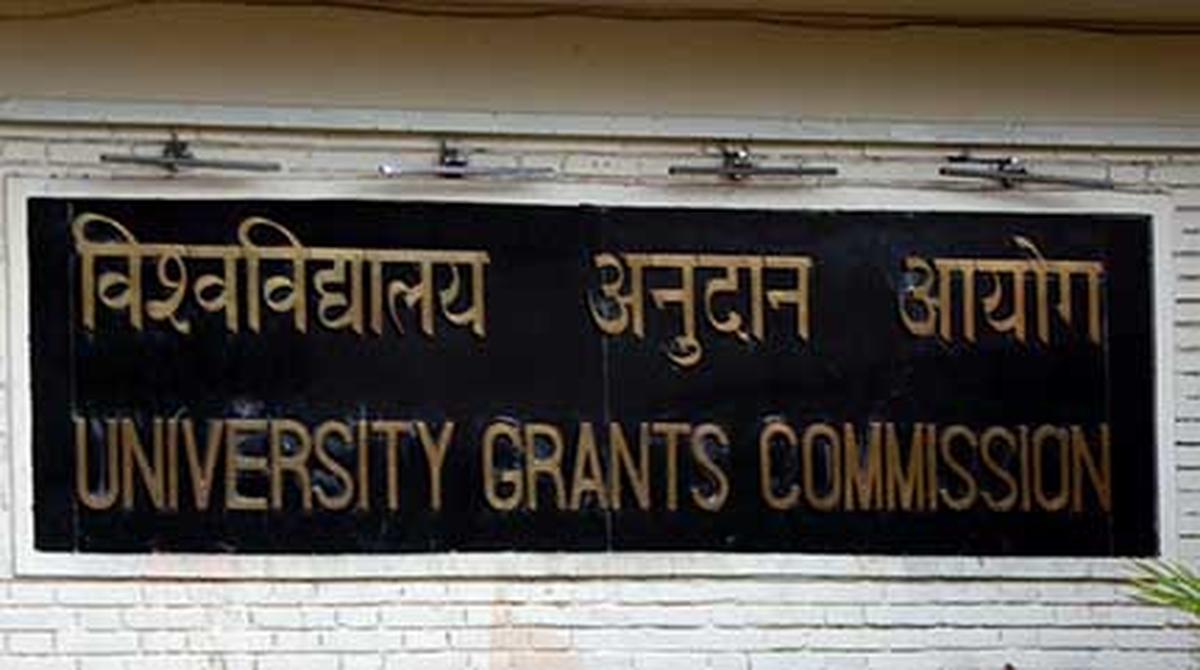
The University Grants Commission (UGC) of India plays a pivotal role in the regulation and development of higher education, making it a significant subject for aspirants preparing for Services Selection Board (SSB) interviews. In SSB assessments, candidates are evaluated on their awareness of national institutions, policy frameworks, and current affairs, particularly those influencing education, equity, and governance. This article provides a comprehensive overview of the UGC, its historical evolution, functions, recent developments, and its relevance to SSB interviews, equipping candidates with structured knowledge for informed discussions.
Historical Background and Establishment
The UGC was established on December 28, 1953, under the University Grants Commission Act, 1956, enacted by the Parliament of India. Modeled after the University Grants Committee of the United Kingdom, it was created to address the post-independence need for a centralized body to coordinate, determine, and maintain standards in higher education. The commission’s inception was influenced by recommendations from the University Education Commission (1948-1949), chaired by Dr. S. Radhakrishnan, which emphasized the importance of funding and quality assurance in universities.
Over the decades, the UGC has evolved from a funding agency to a comprehensive regulatory authority. It gained statutory status in 1956, empowering it to allocate grants, recognize universities, and enforce academic standards. Today, headquartered in New Delhi, the UGC operates under the Ministry of Education, Government of India, and comprises a chairperson, vice-chairperson, and members appointed by the central government.
Core Functions and Responsibilities
The UGC’s mandate is multifaceted, focusing on the promotion and coordination of university education. Its primary functions include:
- Funding Allocation: Disbursing grants to eligible universities and colleges for infrastructure development, research, and faculty enhancement. This includes schemes like the Major Research Projects and the UGC-NET for fellowships.
- Quality Assurance: Establishing and monitoring standards through regulations on curriculum, examinations, and accreditation. It collaborates with bodies like the National Assessment and Accreditation Council (NAAC) to evaluate institutional performance.
- Policy Formulation: Issuing guidelines on admissions, reservations, anti-ragging measures, and equity in education. For instance, it oversees the implementation of reservations for Scheduled Castes (SC), Scheduled Tribes (ST), Other Backward Classes (OBC), and Economically Weaker Sections (EWS).
- Recognition and Deemed Status: Granting “deemed university” status to institutions and maintaining a list of recognized universities to prevent the proliferation of fake degrees.
- Research Promotion: Facilitating initiatives such as the Consortium for Academic and Research Ethics (CARE) to uphold integrity in scholarly publications.
These responsibilities ensure that higher education aligns with national goals, such as those outlined in the National Education Policy (NEP) 2020, which emphasizes multidisciplinary learning and internationalization.
Recent Developments and Controversies
As of January 30, 2026, the UGC remains in the spotlight due to evolving policies and legal challenges. On January 23, 2026, the UGC notified the Promotion of Equity in Higher Education Institutions Regulations, 2026, aimed at eliminating discrimination based on caste, religion, gender, race, place of birth, or disability. These regulations expanded protections to include SC, ST, and OBC categories, mandating institutions to establish equal opportunity cells and grievance redressal mechanisms, with penalties for non-compliance. This marked an update from the 2012 norms, reflecting a commitment to inclusive education.
However, the regulations triggered protests from general category students, who viewed them as potentially discriminatory and vague in defining caste-based issues, raising concerns about misuse. In a landmark intervention, the Supreme Court of India, on January 29, 2026, stayed the implementation, deeming the rules “too sweeping” and “vague.” The Court directed a re-examination while reinstating the 2012 regulations, with further hearings scheduled for March 19, 2026.
Additionally, the UGC has addressed emerging issues through recent guidelines. On January 23, 2026, it issued directives on preventing ocular trauma in educational settings, and on January 14, 2026, it circulated a draft policy on mental health and well-being for stakeholder input. These initiatives underscore the UGC’s adaptive role in responding to contemporary challenges like student welfare and institutional safety.
Relevance to SSB Interviews
In SSB interviews, particularly during the Group Discussion (GD), Personal Interview (PI), and Lecturette rounds, topics like the UGC test a candidate’s grasp of educational governance and its intersection with social justice. Officers in the Indian Armed Forces are expected to exhibit leadership qualities informed by national policies, and discussing the UGC allows candidates to demonstrate analytical skills on issues such as:
- Equity and Reservations: How UGC policies align with constitutional provisions (Articles 14, 15, and 16) and their implications for merit-based selections in defense services.
- Current Affairs Integration: Linking recent UGC controversies to broader themes like judicial oversight, student unrest, and policy reforms under NEP 2020.
- National Development: The UGC’s contribution to building a skilled workforce, which indirectly supports defense preparedness through research in science and technology.
Aspirants should prepare by analyzing pros and cons: while UGC regulations promote inclusivity, critics argue they may inadvertently foster division. Balanced views, supported by facts, reflect the Officer Like Qualities (OLQs) such as reasoning ability and social adaptability.
In conclusion, the UGC exemplifies India’s commitment to equitable higher education, a topic that resonates with SSB’s emphasis on informed, principled leadership. Candidates are advised to stay updated through official sources and credible news outlets to articulate well-reasoned perspectives during interviews.